
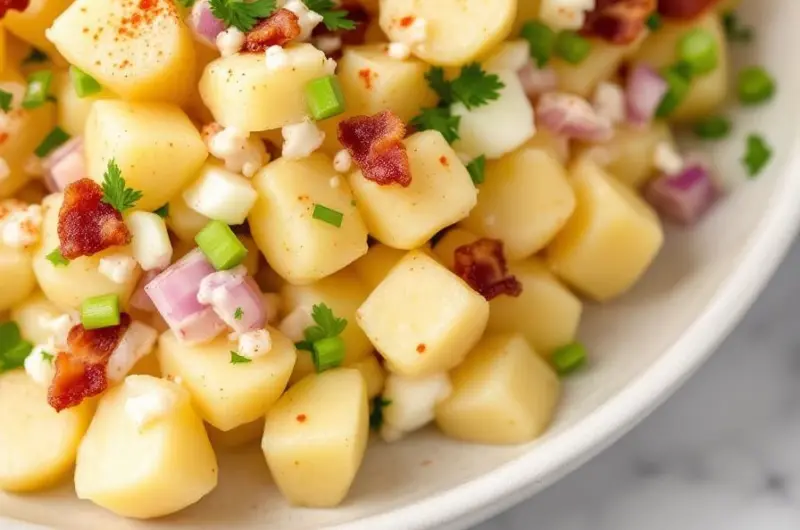
I start by boiling potatoes, whole, in salted water until they’re just tender enough to give gently under a fork. The steam rises, carrying a faint earthy smell, and I keep an eye on the clock to avoid overdoing it.
Once cooled slightly, I peel and chop them while still warm, feeling the soft resistance give way under the knife, releasing a warm, starchy aroma with each cut. This step is messier than it looks—peels slip, water drips, but that’s part of the process.
the satisfying squish as you mash warm potatoes, feeling their soft resistance give way under your fork, releasing a starchy steam that carries a faint buttery aroma.
Grocery Staples and Substitutes
- Potatoes: I go for starchy varieties like Russets or Yukon Golds—they mash up smooth and fluffy, with that soft, warm feel. Swap in waxy potatoes if you prefer a firmer bite that holds shape better.
- Mayonnaise: The creamy binder, it makes everything cling and adds richness. Use a good-quality, tangy mayo, or Greek yogurt for a lighter, slightly tart twist—just watch for a thinner consistency.
- Vinegar: Brightens the whole salad with a sharp punch. Apple cider vinegar is my go-to, but lemon juice works for a fresher, citrus hit—adjust to taste to tame or boost the tang.
- Mustard: Adds a subtle heat and depth. Yellow mustard is classic, but Dijon gives a more complex, spicy note—skip if you’re not a mustard fan, but it’s a real flavor anchor.
- Celery: For crunch and a peppery bite. Chop it finely, and if you hate the stringy texture, soak slices briefly in cold water beforehand. Carrots are a decent substitute if you want sweetness.
- Red onion: I use it raw for sharpness, but soaking diced onion in cold water for 10 minutes mellows the bite. Shallots can be a milder alternative if you prefer subtler aroma.
- Herbs: Fresh parsley or dill lift the dish with herbal freshness. If you don’t have fresh, dried works in a pinch but adds less vibrancy—use half as much dried to avoid overpowering.
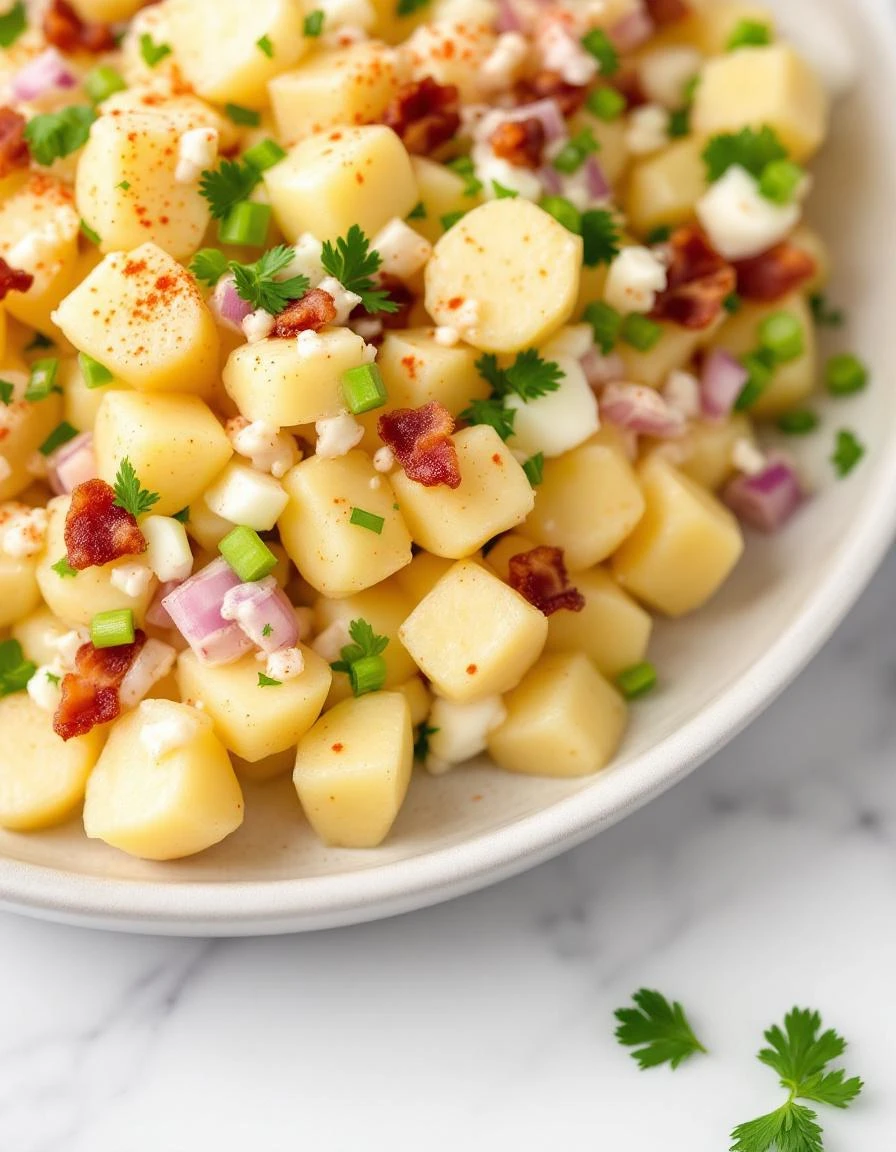
Classic Potato Salad
Ingredients
Equipment
Method
- Place the peeled potatoes in a large pot and cover with salted water. Bring to a boil over medium-high heat, then reduce to a simmer and cook until they are just tender when pierced with a fork, about 15-20 minutes.
- Drain the potatoes thoroughly in a colander and let them cool slightly for a few minutes. Peel and chop the potatoes into bite-sized pieces while still warm, which helps them mash easily.
- In a large mixing bowl, gently mash the warm potatoes with a fork or potato masher until smooth and fluffy, feeling the soft resistance give way as they break apart.
- Add the mayonnaise, vinegar, and mustard to the mashed potatoes. Mix well until the mixture is creamy and smooth, ensuring all the potatoes are coated evenly.
- Fold in the chopped celery and soaked red onion, giving the salad a satisfying crunch and sharpness with each bite.
- Stir in the freshly chopped herbs and season with salt and pepper to taste. Adjust the seasoning as needed, tasting for brightness and balance.
- Cover the bowl with plastic wrap and refrigerate for at least an hour to let the flavors meld and the salad chill thoroughly.
- Once chilled, give the salad a gentle stir to redistribute the flavors, then serve it cold, garnished with extra herbs if desired.
Common mistakes and how to fix them
- FORGOT to drain potatoes completely? Tackle this by blotting with a clean towel before mixing.
- DUMPED in too much mayo? Start with half and add gradually, tasting as you go.
- OVER-TORCHED the onions? Sauté on medium-low to keep their sweetness and avoid bitterness.
- MISSED the seasoning? Always taste and adjust salt, acid, and herbs before serving.
Make-Ahead and Storage Tips
- Prep the potatoes and chop the vegetables a day ahead. Keep them separate in airtight containers to prevent flavors from blending too soon.
- Potato salad can be made 1-2 days in advance. Store it in the fridge, covered tightly, to maintain freshness.
- The flavors, especially herbs and vinegar, become more integrated after a day, but the potatoes can absorb too much moisture if left too long—best within 48 hours.
- Refrigerate the salad and avoid freezing, as potatoes tend to become mealy and lose texture when frozen.
- Reheat is not typical, but if serving warm, let it sit at room temperature for 10 minutes, check the texture, and adjust seasoning as needed.
FAQs
1. Which potatoes work best?
Use cold, firm potatoes like Yukon Gold or Russets to ensure they mash smoothly without falling apart. The texture should be soft but still hold shape when cut.
2. Should I chill it before serving?
Chill the salad for at least an hour before serving. The coolness enhances the crunch of the celery and sharpness of the onion, making each bite crisp and refreshing.
3. How do I fix bland flavor?
Adjust the acidity by adding more vinegar or lemon juice if it tastes flat. The tang should feel bright and lively, balancing the creaminess.
4. How long does it last?
Store in an airtight container in the fridge for up to 2 days. The flavors meld together, but the potatoes might absorb moisture, so keep it covered tightly.
5. Can I serve it warm?
Serve the salad straight from the fridge. If it’s too cold, let it sit at room temperature for 10 minutes until the flavors wake up and the texture softens slightly.

Hi, I’m Isabella Cury, the creator behind Elevating Simple. Food has always been my passion, but it’s not just about creating meals—it’s about taking everyday ingredients and transforming them into something extraordinary.
My journey in the culinary world has been a blend of education, dedication, and a deep love for sharing food with others. Through this blog, I aim to inspire people to find joy in simple, flavorful cooking.


