
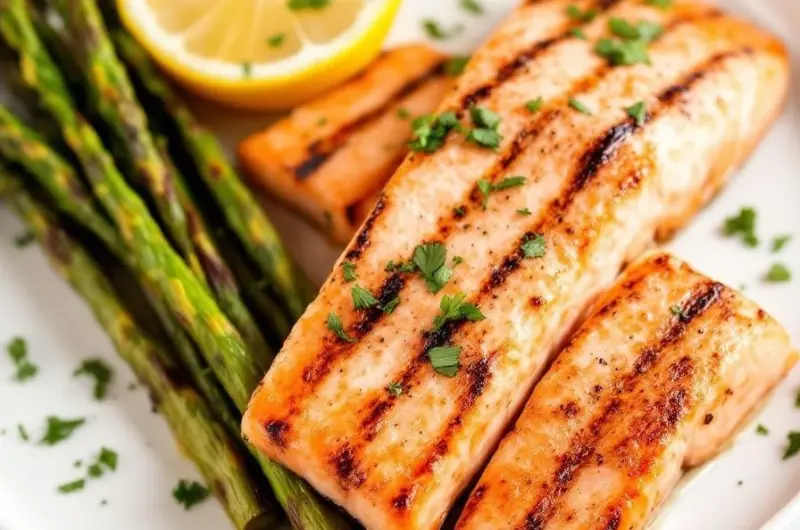
I start by getting the grill hot—really hot—to sizzle the salmon skin down first, then turn down the heat to get a gentle cook through. The asparagus I toss with a little oil, salt, and lemon zest, laying them on the grill just long enough to get those charred lines and a smoky aroma.
Chasing that crunch is key, so I don’t overcook the asparagus; they should still have a bit of bite. The salmon’s skin crisps up, crackling as I flip it, and I keep an eye on the flesh to prevent it from drying out or sticking.
The satisfying crack of the asparagus as you bite into it, contrasting with the tender, flaky salmon—every bite a mix of crunch and melt.
What goes into this dish
- Salmon fillets: I look for skin-on, firm fish with a bright, slightly translucent flesh—ideal for crisping the skin. If unavailable, skip the skin and focus on even thickness for uniform cooking.
- Asparagus: Fresh, firm spears with tight tips are best. If you only have thicker stalks, give them a bit more time on the grill. Thin ones cook quickly and can burn easily, so keep a close eye.
- Olive oil: Use a good-quality, fruity olive oil to toss the asparagus—brings out a smoky, nutty aroma when grilled. Skip if you prefer a more neutral oil, but don’t skip oil altogether to prevent sticking.
- Lemon zest and juice: Brightens the whole dish with a fresh, citrusy punch. If you’re out of lemons, a splash of vinegar can add some tang, but it won’t have the same lemon-bright aroma.
- Salt and pepper: Essential for seasoning—go coarse salt for that satisfying crunch, and freshly ground black pepper for a smoky spice. Adjust to taste, but don’t skimp on seasoning the salmon skin for crispiness.
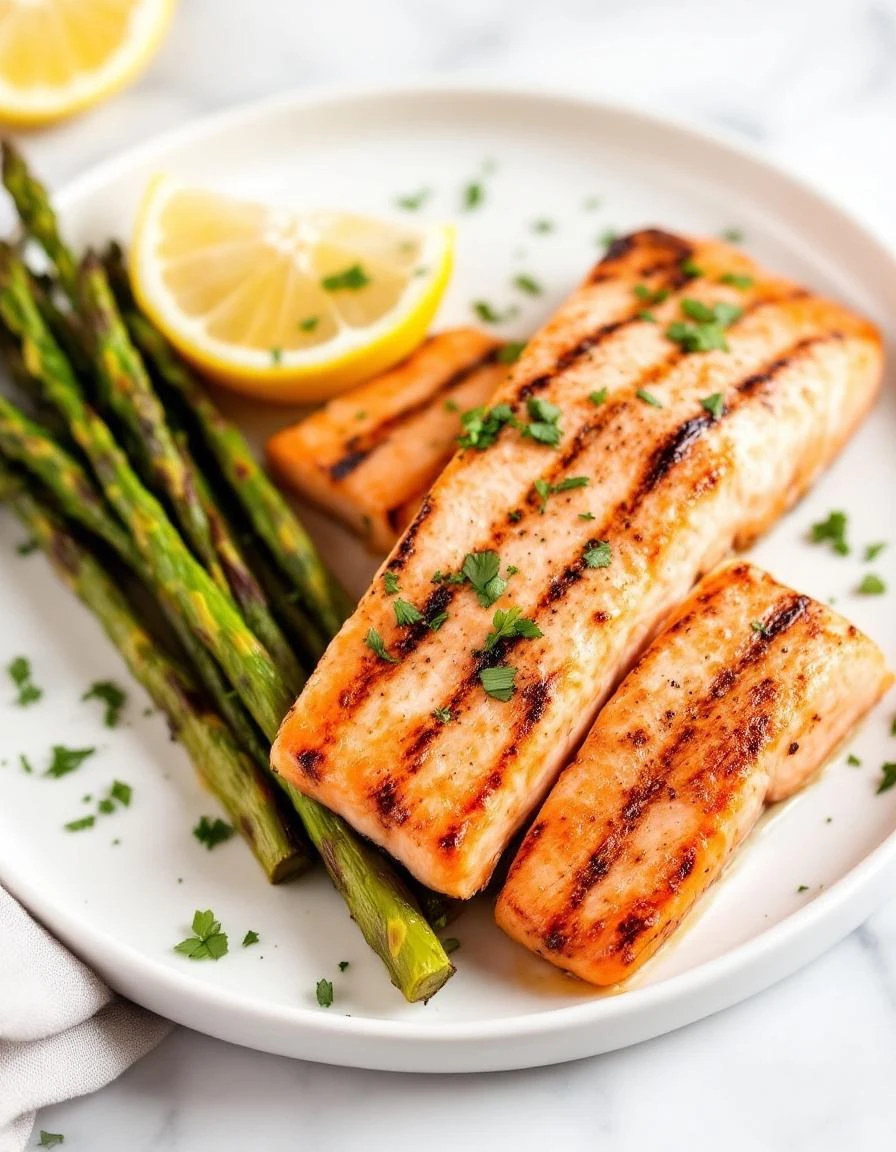
Grilled Salmon with Charred Asparagus
Ingredients
Equipment
Method
- Pat the salmon fillets dry with a kitchen towel, then season generously with salt and pepper on both sides.
- Toss the asparagus spears with olive oil, lemon zest, and a pinch of salt, ensuring they’re evenly coated.
- Preheat the grill to high heat until it’s hot and slightly smoky, then clean the grates with a towel lightly coated in oil to prevent sticking.
- Place the salmon fillets skin-side down on the hot grill, pressing gently to ensure contact and prevent curling. Grill for about 3-4 minutes until the skin is crispy and golden, then flip carefully with tongs.
- Reduce the heat slightly and continue grilling the salmon for another 4-5 minutes, until the flesh feels firm and flakes easily when tested with a fork.
- Meanwhile, place the asparagus on the grill, laying them across the grates for even charring. Grill for 3-4 minutes, turning occasionally, until they develop dark grill marks and a smoky aroma.
- Remove the salmon and asparagus from the grill; let the salmon rest for a minute, then serve with the charred asparagus on the side, finished with a squeeze of fresh lemon juice.
Common Mistakes and How to Fix Them
- FORGOT to oil the grill grates, causing sticking—apply oil before heating.
- DUMPED the asparagus too early, leaving them undercooked—wait for charred lines.
- OVER-TORCHED the salmon skin, making it bitter—reduce heat once skin crisps.
- FORGOT to pat the salmon dry, resulting in steaming—dry skin helps crisp.
Make-Ahead and Storage Tips
- You can prep the asparagus and lemon zest a few hours ahead—keep them in the fridge, covered, to keep freshness bright.
- Salmon fillets can be seasoned and stored in an airtight container for up to 24 hours before grilling—this helps the flavors meld.
- Grilled leftovers will keep well in the fridge for up to 2 days; reheat gently to avoid drying out the fish.
- The flavors change slightly in the fridge—salmon might lose some of its initial smoky richness, so adjust seasoning after reheating.
- Reheat in a warm oven or a skillet over low heat—check for warmth and a slight crispness before serving again.
FAQs
1. How do I know when the salmon is done?
The salmon’s flesh should feel firm but spring back when pressed, and the skin should be crispy and crackling as you bite into it, giving that satisfying crunch.
2. How can I tell if the asparagus is fresh?
Look for bright green tips and firm stalks. If they snap easily when bent, they’re fresh. The oozy, smoky aroma when grilled means they’re just right.
3. What oil works best for grilling?
Use a reliable, good-quality olive oil that bubbles slightly when heated. It should smell nutty and fragrant—like toasted almonds—just before it hits the grill.
4. Can I substitute lemon with something else?
If the lemon juice is fresh, it adds a bright, tangy aroma that cuts through the smoky flavor. Dried lemon zest offers a concentrated citrus punch with a hint of bitterness.
5. What are common cooking mistakes?
Overcooking makes the salmon dry and the asparagus mushy. Keep a close eye, flip the fish at the right moment, and remove the asparagus when it shows charred lines but still has a firm bite.

Hi, I’m Isabella Cury, the creator behind Elevating Simple. Food has always been my passion, but it’s not just about creating meals—it’s about taking everyday ingredients and transforming them into something extraordinary.
My journey in the culinary world has been a blend of education, dedication, and a deep love for sharing food with others. Through this blog, I aim to inspire people to find joy in simple, flavorful cooking.


