Ingredients
Equipment
Method
- Crack the eggs into a small bowl and whisk lightly just until the yolks and whites are combined, about 10 seconds. Set aside.
- Place your non-stick skillet over the lowest heat setting and add the butter, allowing it to melt slowly until it just begins to foam softly and releases a faint nutty aroma.
- Pour the whisked eggs into the skillet, then immediately start stirring gently in slow, circular motions with a silicone spatula. Keep the heat very low and listen for a soft sizzling sound as the eggs start to set at the edges.
- Continue stirring slowly and steadily, making soft folds, for about 2 minutes. The eggs should begin to form soft, glossy curds and turn a pale, creamy yellow. Maintain low heat to prevent overcooking.
- Once the eggs are mostly opaque but still slightly runny on top, add a splash of heavy cream if using, and keep stirring gently for another 1-2 minutes until the mixture is velvety and just set but still moist.
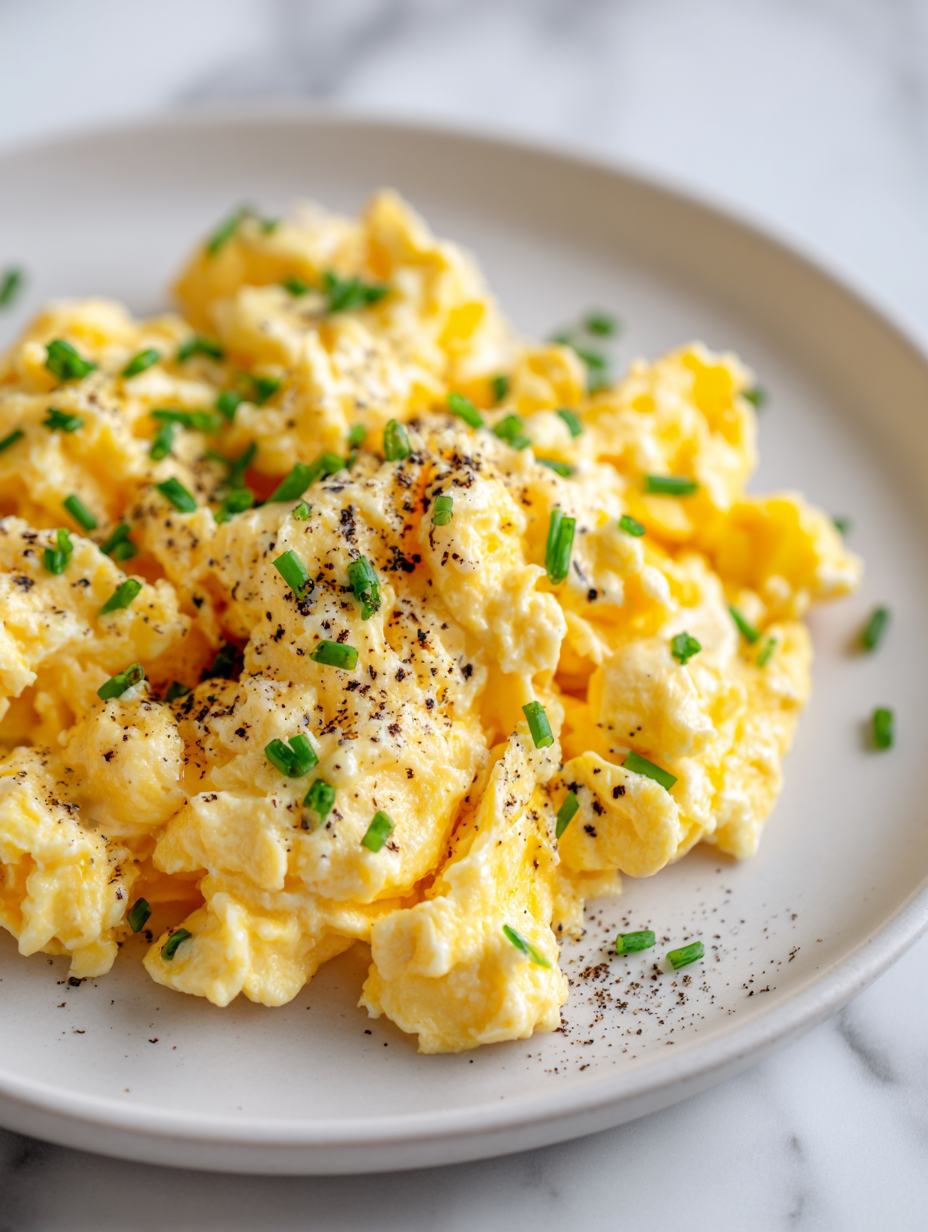
- Remove the skillet from the heat as soon as the eggs are soft, creamy, and slightly glossy. Let them rest for about 10 seconds to finish setting with residual warmth.
- Season with a pinch of sea salt and freshly cracked black pepper, then give a gentle final stir to distribute the seasoning evenly.
- Serve immediately on a warm plate, enjoying the soft, custard-like texture and rich, buttery aroma.
Notes
Patience and low heat are key to achieving the perfect creamy texture. Use a silicone spatula for gentle stirring, and remove from heat just before the eggs are fully set to prevent overcooking.