
What draws me to this sweet potato carrot soup isn’t just the vibrant color—it’s the way roasting transforms humble root vegetables into something deep and complex. There’s a certain magic in caramelizing their edges, bringing out a natural sweetness that’s hard to replicate with boiling or steaming. It’s like each bite carries a whisper of that slow, smoky oven magic.
This soup feels like comfort food with a twist, a reminder that simple ingredients can become something richer when handled with a little patience. I love how the roasted veggies offer a gentle, earthy sweetness, balanced by a hint of spice or herbs. It’s a cozy bowl that feels like a small celebration of fall’s bounty, even in the dead of winter.
Focusing on the earthy sweetness that emerges when roasting sweet potatoes and carrots before blending, which deepens the flavors and adds a caramelized complexity that’s often overlooked in simpler soups.
The magic of caramelized roots
- This soup reminds me of childhood afternoons spent helping my grandma peel and chop root vegetables, the earthy smell filling the kitchen and making everything feel simpler.
- I find a strange joy in roasting sweet potatoes and carrots together—watching their edges caramelize, turning into something almost sweet, almost smoky, that’s addictive.
- There’s a quiet pride in turning humble ingredients into a vibrant, nourishing bowl—each spoonful feels like a small act of care.
- Nostalgia hits me hard when I see the orange and deep amber colors blend—it’s like capturing the essence of autumn in a bowl.
The magic of caramelized roots
This soup came about during a chilly weekend when I had a bunch of sweet potatoes and carrots sitting on the counter, looking a little tired. I remembered how roasting those roots once brought out a deep caramel flavor that made any dish special. Suddenly, I thought—why not blend that into a warm, soothing soup? The process of caramelizing the vegetables first adds a richness and complexity I couldn’t get from boiling alone. It’s a simple idea, but it turns humble roots into something unexpectedly layered and comforting.
Trivia and historical notes
- Sweet potatoes and carrots have been staples in various cultures for centuries, valued for their natural sweetness and versatility.
- The idea of roasting root vegetables to enhance flavor dates back to ancient times when open fires and embers were used to caramelize and intensify natural sugars.
- In traditional European cuisines, carrot soups were often made with simple ingredients, but roasting added a depth that was appreciated in rustic, peasant dishes.
- Sweet potato and carrot pairings became popular in modern health-conscious cooking in the early 2000s, emphasizing nutrient density and natural sweetness without added sugars.
Key ingredients and their tweaks
- Sweet potatoes: I love their natural, earthy sweetness and creamy texture when roasted. Swap with butternut squash for a milder, slightly nutty flavor that still adds richness.
- Carrots: Their bright flavor and vibrant color make the soup lively. If you prefer a subtler taste, parsnips can be a good substitute, offering a slightly sweeter note.
- Olive oil: Used generously for roasting, it adds a smoky depth. For a nuttier aroma, try toasted sesame oil, but use sparingly—it’s quite potent.
- Garlic: It brings a warm, pungent note that enhances sweetness. If you’re out, a pinch of onion powder can boost flavor without overpowering.
- Vegetable broth: I prefer homemade or low-sodium for depth. A splash of coconut milk near the end adds creaminess and a hint of sweetness, if you want to switch it up.
- Spices (cumin, coriander): They add earthy warmth. Ground ginger or turmeric can be swapped in for a different aromatic punch, both adding a fresh, spicy glow.
- Salt & pepper: Essential for balancing flavors. A pinch of smoked salt can deepen the caramel notes, while a squeeze of lemon brightens the finish.
Spotlight on key ingredients
Sweet potatoes:
- I love their earthy sweetness and creamy texture when roasted. Swap with butternut squash for a milder, slightly nutty flavor that still adds richness.
- Carrots: Their bright flavor and vibrant color make the soup lively. If you prefer a subtler taste, parsnips can be a good substitute, offering a slightly sweeter note.
- Olive oil: Used generously for roasting, it adds a smoky depth. For a nuttier aroma, try toasted sesame oil, but use sparingly—it’s quite potent.
Carrots:
- Their bright flavor and vibrant color make the soup lively. If you prefer a subtler taste, parsnips can be a good substitute, offering a slightly sweeter note.
- Garlic: It brings a warm, pungent note that enhances sweetness. If you’re out, a pinch of onion powder can boost flavor without overpowering.
Notes for ingredient swaps
- Sweet potatoes: I love their earthy sweetness and creamy texture when roasted. Swap with butternut squash for a milder, slightly nutty flavor that still adds richness.
- Carrots: Their bright flavor and vibrant color make the soup lively. If you prefer a subtler taste, parsnips can be a good substitute, offering a slightly sweeter note.
- Olive oil: Used generously for roasting, it adds a smoky depth. For a nuttier aroma, try toasted sesame oil, but use sparingly—it’s quite potent.
- Garlic: It brings a warm, pungent note that enhances sweetness. If you’re out, a pinch of onion powder can boost flavor without overpowering.
- Vegetable broth: I prefer homemade or low-sodium for depth. A splash of coconut milk near the end adds creaminess and a hint of sweetness, if you want to switch it up.
- Spices (cumin, coriander): They add earthy warmth. Ground ginger or turmeric can be swapped in for a different aromatic punch, both adding a fresh, spicy glow.
- Salt & pepper: Essential for balancing flavors. A pinch of smoked salt can deepen the caramel notes, while a squeeze of lemon brightens the finish.
Equipment & Tools
- Oven: Roast the vegetables evenly and develop caramelization.
- Baking sheet: Hold the vegetables during roasting.
- Peeler and knife: Prepare the vegetables for roasting.
- Large pot: Cook the blended soup and meld flavors.
- Immersion blender or regular blender: Puree the soup to a smooth consistency.
- Ladle and measuring cups: Serve and measure liquids accurately.
Step-by-step guide to sweet potato carrot soup
- Preheat your oven to 200°C (390°F). Line a baking sheet with parchment paper for easy cleanup.
- Peel the sweet potatoes and carrots. Cut them into roughly 2.5 cm (1-inch) chunks—uniform size helps them roast evenly.
- Toss the vegetables with 2-3 tablespoons of olive oil, ensuring each piece is well coated. Sprinkle with salt and pepper.
- Spread the vegetables in a single layer on the prepared baking sheet. Roast for 35-40 minutes, turning halfway through, until edges are caramelized and veggies are tender. Smell the sweet, smoky aroma filling your kitchen.
- While roasting, heat a tablespoon of olive oil in a large pot over medium heat (about 160°C/320°F). Add 3 minced garlic cloves. Sauté until fragrant, about 30 seconds to 1 minute—look for a golden hue and a rich garlic scent.
- Transfer roasted vegetables to the pot. Add 750 ml (3 cups) of vegetable broth. Bring to a gentle simmer, about 10 minutes, to meld flavors. If the soup looks too thick, add a splash more broth.
- Use an immersion blender directly in the pot, or carefully transfer the hot mixture to a blender. Blend until smooth and creamy—aim for a velvety texture. Be cautious with hot liquids; vent the lid slightly to prevent splatters.
- Taste and adjust seasoning with salt, pepper, or a squeeze of lemon if desired. For an extra layer, stir in a splash of coconut milk or a pinch of smoked paprika.
- Ladle into bowls and serve hot. Garnish with fresh herbs or a drizzle of olive oil if you like. Let the soup rest for 5 minutes, then enjoy the aroma and silky texture.
Allow the soup to rest for 5 minutes before serving; this helps flavors settle and enhances the silky texture. Garnish as desired and serve in warm bowls.
How to Know It’s Done
- Edges of vegetables are deeply caramelized and fragrant after roasting.
- Garlic is golden and fragrant, not burnt or bitter.
- Soup is smooth, velvety, with a balanced sweet and smoky aroma.
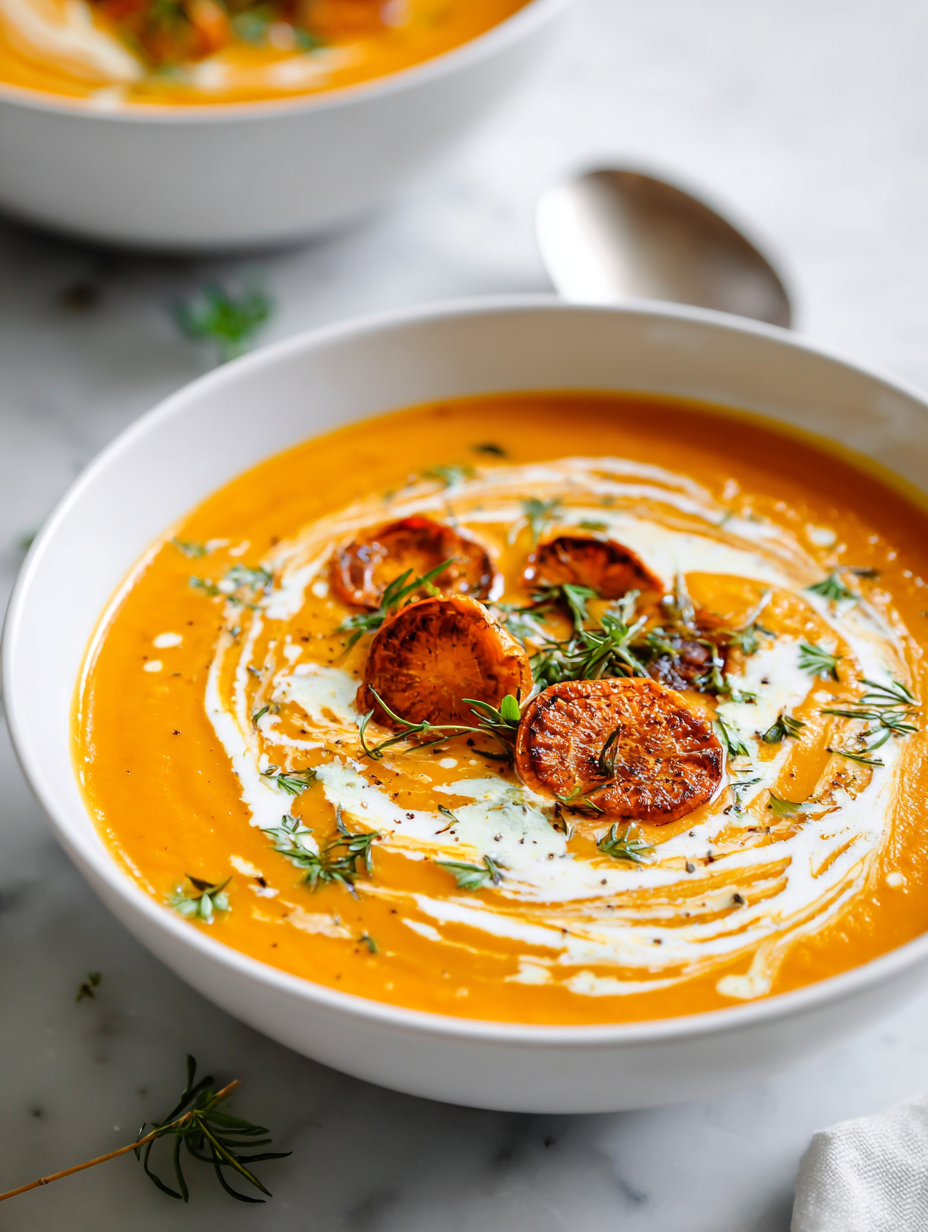
Roasted Sweet Potato and Carrot Soup
Ingredients
Equipment
Method
- Preheat your oven to 200°C (390°F). Line a baking sheet with parchment paper.
- Peeled the sweet potatoes and carrots, then chop them into roughly 2.5 cm (1-inch) chunks for even roasting. Place them in a large bowl.
- Toss the vegetables with 2 tablespoons of olive oil, ensuring each piece is coated evenly. Sprinkle with a pinch of salt and pepper for flavor.
- Spread the coated vegetables in a single layer on the prepared baking sheet. Roast in the oven for 35-40 minutes, turning halfway through, until edges are caramelized and vegetables are tender and fragrant.
- While the vegetables roast, heat a tablespoon of olive oil in a large pot over medium heat. Add the minced garlic and sauté for about 30 seconds until fragrant and golden, filling your kitchen with a warm aroma.
- Transfer the roasted vegetables into the pot with garlic. Pour in the vegetable broth and bring to a gentle simmer, allowing the flavors to meld for about 10 minutes.
- Use an immersion blender directly in the pot, or carefully transfer the mixture to a blender. Puree until smooth and velvety, about 1-2 minutes, ensuring the soup is silky and uniform.
- Stir in the coconut milk for extra creaminess, then season with salt, pepper, and a squeeze of lemon juice to brighten the flavors. Adjust seasoning to taste.
- Ladle the hot soup into bowls, garnish with herbs or a drizzle of olive oil if desired, and enjoy the rich, comforting flavors of this caramelized root vegetable soup.
Pro tips for perfect soup
- Use high heat for roasting—around 200°C (390°F)—to develop deep caramelization and smoky edges.
- Toss vegetables thoroughly in oil—don’t skimp—so they roast evenly and caramelize uniformly.
- Keep an eye on garlic during sautéing; golden and fragrant is perfect—burnt garlic turns bitter quickly.
- When blending, vent your lid slightly to avoid splatters from hot soup—safety first and less mess.
- For extra creaminess, stir in a splash of coconut milk just before serving—adds a subtle, sweet richness.
- Taste and adjust seasoning at the end—salt, lemon, or spices—flavor deepens as the soup rests a few minutes.
- If your soup seems too thick, thin with a bit more broth or water—aim for a velvety, spoon-coating consistency.
Common mistakes and how to fix them
- FORGOT to check caramelization; if veggies are too pale, roast longer before blending.
- DUMPED the garlic; if burnt, reduce heat or add later with broth to avoid bitterness.
- OVER-TORCHED the soup; if dark spots appear, lower heat and stir gently to prevent bitterness.
- FORGOT to taste before serving; if bland, add a pinch more salt or a squeeze of lemon for brightness.
Quick fixes and pantry swaps
- When soup is too thick, splash in hot broth and blend briefly to loosen.
- If vegetables aren’t caramelized enough, extend roasting time or increase oven temp slightly.
- Splash lemon juice or vinegar if soup tastes flat—brightens and enhances natural sweetness.
- Patch burnt edges by scooping out unburned parts; don’t scrape overly charred bits into the soup.
- Shield the garlic if it’s browning too fast—lower heat or add later to prevent bitterness.
Prep, store, and reheat tips
- Peel and chop the sweet potatoes and carrots ahead of time; store in an airtight container in the fridge for up to 2 days. The earthy aroma will become more pronounced as they sit.
- Roast the vegetables in advance, then cool and refrigerate for up to 24 hours. Reheat in the oven or microwave until warmed through, the caramelized edges will reawaken with a fragrant, smoky scent.
- Soup can be made a day ahead; store in a sealed container in the fridge for up to 3 days. The flavors will deepen, especially if you let it sit for a few hours before reheating.
- Reheat gently over low heat, stirring occasionally. The soup may thicken slightly—add a splash of broth or water to loosen it and bring back the silky texture. Expect a warm, inviting aroma and smooth consistency.
Common questions about sweet potato carrot soup
1. Why roast the vegetables before blending?
Roasting caramelizes the natural sugars, giving the soup a rich, smoky sweetness and deeper flavor.
2. Can I make this soup without roasting?
If you skip roasting, the soup will be simpler and less complex, with a more straightforward earthy flavor.
3. How long do I roast the vegetables?
Roasting typically takes about 35-40 minutes at 200°C (390°F). Check for caramelized edges and tender vegetables.
4. How do I blend the soup smoothly?
Use an immersion blender or carefully transfer to a regular blender. Puree until smooth and velvety, about 1-2 minutes.
5. How do I know when the soup is ready?
The soup is done when it’s silky, flavorful, and heated through—around 10 minutes simmer after blending.
6. Can I make this dairy-free?
For a dairy-free version, use coconut milk or olive oil instead of butter. It keeps the soup creamy and vibrant.
7. What are good ingredient substitutions?
Swapping with parsnips or butternut squash adds different sweetness and creaminess, but keep an eye on cooking times.
8. What makes these ingredients special?
Sweet potatoes offer earthy sweetness and creamy texture; carrots add vibrant color and bright flavor; both caramelize beautifully in the oven.
9. What if my soup is too thick?
If the soup turns out too thick, add a splash of broth or water and blend again until smooth and pourable.
10. When should I season the soup?
Always taste and adjust seasoning at the end—salt, lemon juice, or spices—so the flavor balances perfectly after resting.
This soup feels like a quiet victory, especially on cool days when the kitchen smells of roasting roots and warm spices. Each spoonful offers a gentle reminder that simple ingredients, prepared with care, can turn into something deeply satisfying. It’s a dish that’s both humble and a little bit special, perfect for cozy evenings or when you need a nourishing boost.
In the end, what sticks with me is that slow, caramelized flavor—those rich, smoky notes that linger on the palate long after the last sip. It’s a reminder that patience in the kitchen often rewards us with layers of flavor we didn’t expect. Sometimes, the best meals are the ones that quietly warm the soul, no fuss needed.