
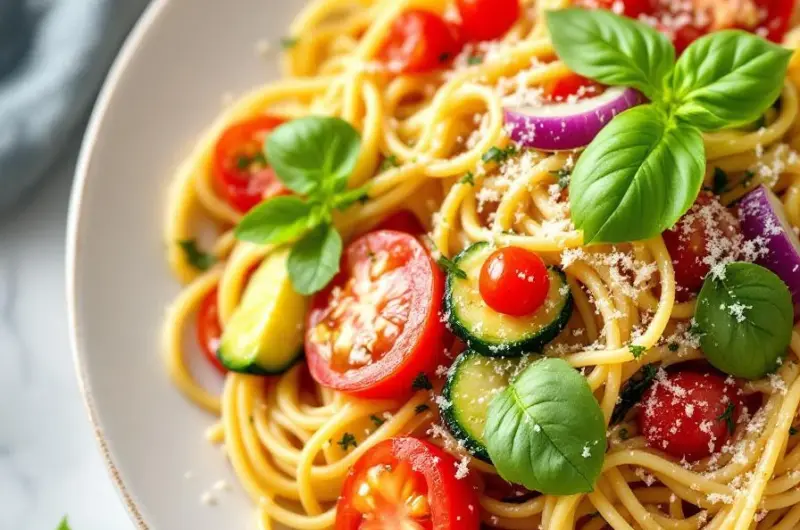
Cooking pasta Primavera is all about managing multiple pots and pans at once—boiling water, chopping vegetables, and sautéing everything in quick succession. The sound of water bubbling and the clatter of chopping boards fill the kitchen, making it lively and a bit chaotic.
Once you toss the cooked pasta with sautéed veggies and a splash of pasta water, everything comes together fast. The mix of steam, sizzling, and that first forkful—there’s a real tactile pleasure in feeling the textures and flavors merge.
The gentle sizzle of vegetables hitting hot oil, each piece releasing a burst of aroma and a soft hiss, as I toss them in the pan—nothing beats that initial crackle, promising freshness and flavor.
What goes into this dish
- Bell peppers: I like a mix of red and yellow, their sweetness and crunch add a vibrant pop; skip if you prefer milder flavors, but don’t skip the crunch. The aroma of roasted peppers is a smoky-sweet tease.
- Zucchini: Sliced thin, it cooks quickly and stays tender, releasing a fresh, watery aroma. If you’re out, eggplant works, but it’s heartier and takes longer to soften.
- Cherry tomatoes: I toss in ripe, juicy ones—they burst with a sweet-tart splash when heated. Use sun-dried for a concentrated, chewy bite, but fresh is best for that bright, citrusy scent.
- Garlic: I smash and mince it fine, its pungent aroma filling the kitchen with a warm, spicy scent. If you’re sensitive, reduce the amount or try roasted garlic for mellow sweetness.
- Pasta: I prefer penne or rigatoni for their sturdy texture, but spaghetti works too. Cook until just al dente—overcooked pasta turns mushy and dulls the whole dish’s vibrancy.
- Olive oil: I use a good fruity extra virgin, its aroma elevates everything. Skip or use a neutral oil if you’re out, but it won’t capture that rich, fruity note.
- Fresh herbs: Basil and parsley, chopped just before serving, add a bright, aromatic lift. Dried herbs won’t give the same fresh punch—wait to add these last for maximum flavor.
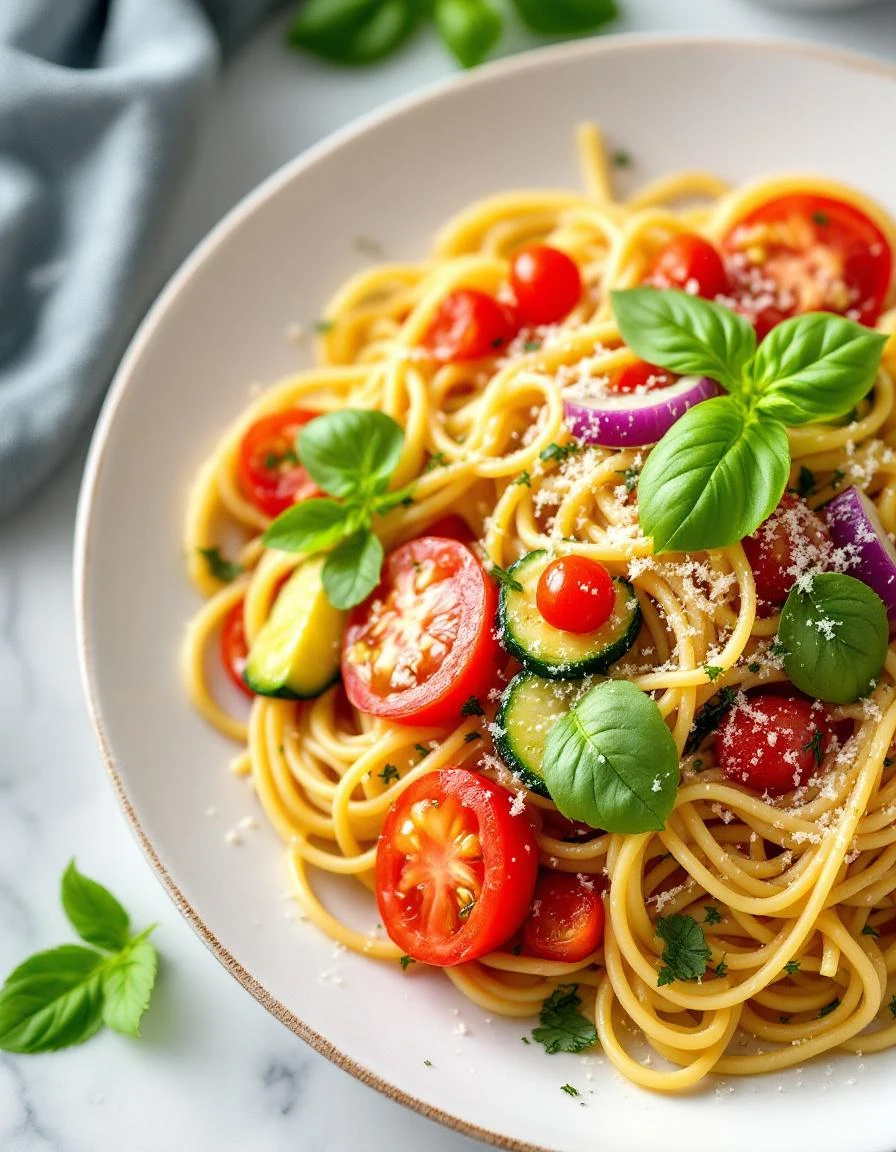
Pasta Primavera
Ingredients
Equipment
Method
- Bring a large pot of salted water to a boil and cook the pasta until just al dente, about 8-10 minutes. Drain and set aside, reserving a splash of pasta water.
- While the pasta cooks, heat olive oil in a skillet over medium heat. Add the minced garlic and sauté for about 30 seconds until fragrant and slightly golden.
- Add the sliced bell peppers and zucchini to the skillet. Sauté for 5-7 minutes, stirring occasionally, until the vegetables are tender but still retain some crunch and have a bright aroma.
- Stir in the halved cherry tomatoes and cook for another 2 minutes until they just start to burst, releasing their juices. The mixture should be lively and fragrant.
- Add the cooked pasta to the skillet with the sautéed vegetables. Toss everything together gently, adding a splash of reserved pasta water to help combine the sauce and veggies smoothly.
- Remove from heat and sprinkle with freshly chopped basil and parsley. Toss lightly to distribute the herbs evenly, infusing the dish with bright, fresh aroma.
- Serve immediately, garnished with extra herbs if desired. Enjoy the vibrant textures and fresh flavors of this colorful pasta Primavera.
Notes
Common mistakes and how to fix them
- FORGOT to taste the pasta water; it should taste salty like the sea for proper seasoning.
- DUMPED in vegetables all at once; instead, add in stages to prevent sogginess and uneven cooking.
- OVER-TORCHED garlic; keep the heat moderate and stir constantly to avoid bitterness.
- MISSED the timing for adding herbs; add fresh herbs at the end to preserve their bright aroma.
Make-Ahead and Storage Tips
- Chop vegetables like peppers, zucchini, and herbs a day ahead to save time and keep everything crisp.
- Cook and drain pasta up to 2 days in advance; store in an airtight container in the fridge to prevent sticking.
- Store sautéed vegetables separately in the fridge for up to 2 days; reheat quickly to preserve crunch.
- Reheat pasta and vegetables in a hot skillet or microwave, stirring often, until steaming and fragrant—watch for overcooking.
- Flavors may mellow slightly after a day; a quick splash of lemon juice or fresh herbs before serving brightens it up.
- Best eaten within 2 days of prep; reheating longer can lead to soggy vegetables and less vibrant flavors.
FAQs
1. How do I know when pasta is al dente?
The pasta should feel slightly firm when bitten—like pressing into a ripe peach, not mushy or overly stiff.
2. How can I tell if my pasta is cooked enough?
Taste a piece—should be tender but still have a slight chew, with the water’s salty seasoning in mind.
3. What if the veggies get soggy after standing?
If the vegetables seem limp or soggy, reheat quickly on high heat, stirring to revive their crunch and aroma.
4. Can I add dried herbs instead of fresh?
Use fresh herbs at the last moment to keep their bright, aromatic punch—dried herbs won’t offer the same vibrancy.
5. How should I reheat leftovers for best flavor?
Reheat in a hot skillet or microwave until steamy, listening for the sizzle and smelling the fragrant oils re-emerge.

Hi, I’m Isabella Cury, the creator behind Elevating Simple. Food has always been my passion, but it’s not just about creating meals—it’s about taking everyday ingredients and transforming them into something extraordinary.
My journey in the culinary world has been a blend of education, dedication, and a deep love for sharing food with others. Through this blog, I aim to inspire people to find joy in simple, flavorful cooking.


