
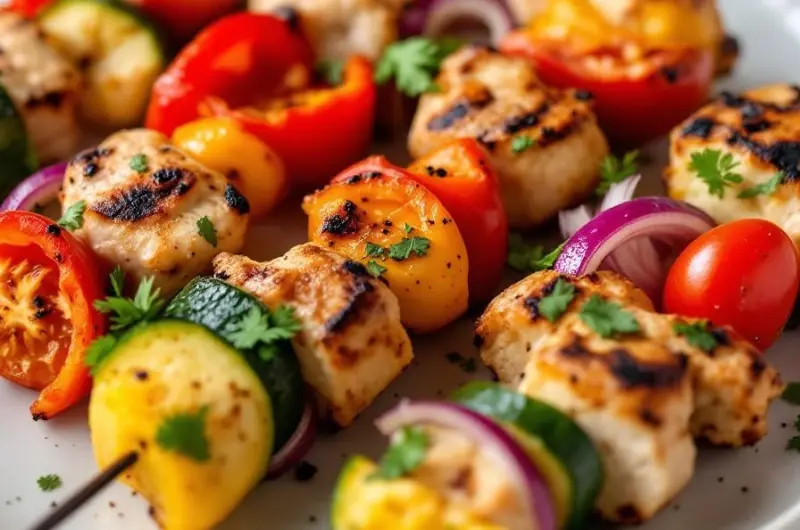
When I thread the chicken chunks onto skewers, I keep the pieces close but not touching. It’s a mess of marinade dribbling down my hands and some raw chicken slipping off the skewers during the turn. The grill’s hot enough that I hear the sizzle as the chicken hits the grates, fat and marinade crackling and bubbling.
I stand there flipping and listening, watching for those nice char lines and a hint of smoke. It’s a noisy, tactile process—no finesse, just real-time adjustments and the smell of cooking meat filling the air.
Listening to the gentle sizzle as the chicken hits the hot grill, the sound of fat crackling and marinade caramelizing—it’s the moment I know everything’s coming together.
What goes into this dish
- Chicken breast or thighs: I prefer thighs—they stay juicy, and the meat’s got a richer flavor. Swap with tofu if you want vegetarian; it soaks up marinade nicely but needs a longer marinade time.
- Bell peppers: Bright, sweet, and slightly smoky after grilling. Use any color—red, yellow, or orange—for a colorful plate. Zucchini or cherry tomatoes work if you want a softer, less crunchy bite.
- Red onion: Adds a nice pungent sweetness and a bit of crunch. Skip if you dislike sharp flavors or substitute with scallions for milder bite.
- Marinade (olive oil, lemon juice, garlic, herbs): It’s the backbone—bright, garlicky, with a citrus zing. You can swap lemon for lime for a different citrus note or add a pinch of smoked paprika for smoky depth.
- Skewers: Wooden skewers work, but soak them for 30 minutes so they don’t burn. Metal skewers are hassle-free but get hot—handle with tongs. Use bamboo sticks for a rustic vibe.
- Salt and pepper: Basic but essential. Adjust to taste, especially if you use salty marinade or seasoning blends.
- Optional: fresh herbs (cilantro, parsley): Adds a fresh burst after cooking. Dried herbs won’t give the same punch, so add them earlier in the marinade.
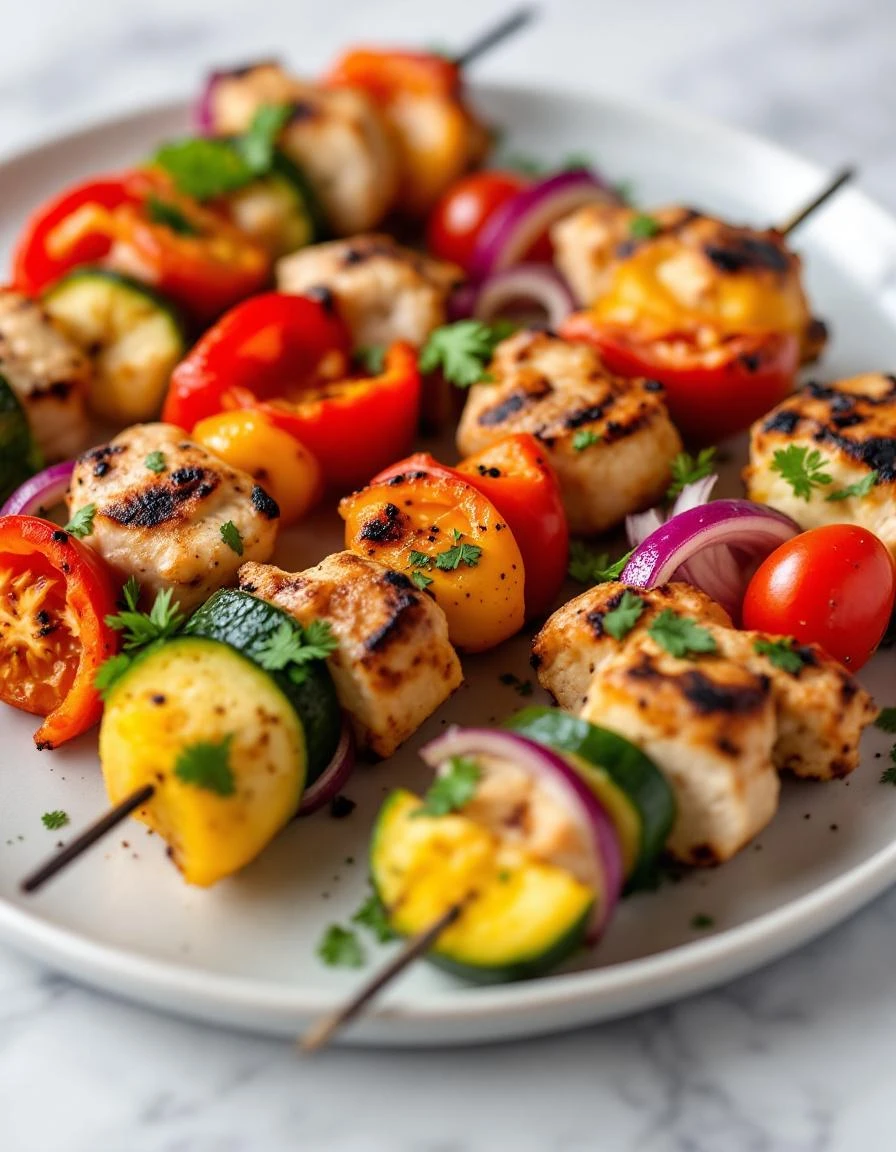
Grilled Chicken Skewers with Vegetables
Ingredients
Equipment
Method
- Cut the chicken thighs into bite-sized chunks and set aside.
- Chop the bell peppers into large, colorful pieces and slice the red onion into thick wedges.
- In a small bowl, whisk together olive oil, lemon juice, minced garlic, dried herbs, salt, and pepper to create a bright marinade.
- Place the chicken chunks in a large bowl and pour over half of the marinade, tossing to coat evenly. Cover and refrigerate for at least 30 minutes, or up to 2 hours for more flavor.
- Thread the marinated chicken pieces onto skewers, keeping the pieces close but not touching for even cooking. Alternate with bell peppers and onion wedges on each skewer.
- Preheat your grill to medium-high heat until hot and you hear a steady sizzle, indicating readiness.
- Place the skewers on the grill grates, listening for the sizzle as the marinade caramelizes and the chicken begins to brown with nice grill marks.
- Flip the skewers regularly, about every 2-3 minutes, to develop even char lines and prevent over-charring. Baste with remaining marinade if desired.
- Cook until the chicken is cooked through, juices run clear, and the vegetables are tender and slightly charred, about 10-15 minutes total.
- Remove the skewers from the grill and let them rest for a few minutes, allowing the flavors to settle and the juices to redistribute.
- Serve the skewers hot off the grill, garnished with fresh herbs if desired, and enjoy the smoky, juicy bites.
Common mistakes and how to fix them
- FORGOT to soak wooden skewers: They might burn; soak at least 30 minutes beforehand.
- DUMPED marinade: Leave some marinade on the chicken for flavor, don’t rinse it off.
- OVER-TORCHED skewers or chicken: Turn the skewers regularly to prevent charring too much.
- MISSED seasoning balance: Taste the marinade before applying, adjust salt and acid to your liking.
Make-Ahead and Storage Tips
- Marinate the chicken and vegetables a few hours ahead or overnight in the fridge for deeper flavor and easier prep on the day.
- Skewered chicken and veggies can be assembled up to 24 hours in advance, kept covered in the fridge—just keep the wooden skewers soaked to prevent burning.
- Store cooked or raw skewers in an airtight container in the fridge for up to 2 days; freeze for up to a month for longer storage.
- Reheat grilled kabobs gently in a warm oven or on a low grill, watching for charring—look for that smoky aroma and heated through texture.
- Flavors can intensify in the fridge, so taste and adjust seasoning if reheating—marinade might become more concentrated or lose brightness.
FAQs
1. How do I tell if the chicken is cooked?
Use thick chicken pieces—juiciness stays put, and the meat resists drying out. Feel the firmness, it shouldn’t be too soft or too hard.
2. When are the kabobs fully cooked?
A little char and a smoky aroma mean it’s ready. Juices should run clear when you cut into a piece.
3. Can I use wooden skewers?
Soak wooden skewers for at least 30 minutes before threading. It prevents them from burning and turning black on the grill.
4. How do I reheat leftovers without drying them out?
Reheat in a warm oven or on a low grill until heated through and slightly crispy. The smell of char and the sizzling sound tell you it’s warming nicely.
5. Can I prepare the skewers ahead of time?
Marinate the chicken at least an hour, preferably overnight. It soaks up the bright citrus and garlic, making every bite juicy and flavorful.

Hi, I’m Isabella Cury, the creator behind Elevating Simple. Food has always been my passion, but it’s not just about creating meals—it’s about taking everyday ingredients and transforming them into something extraordinary.
My journey in the culinary world has been a blend of education, dedication, and a deep love for sharing food with others. Through this blog, I aim to inspire people to find joy in simple, flavorful cooking.


