
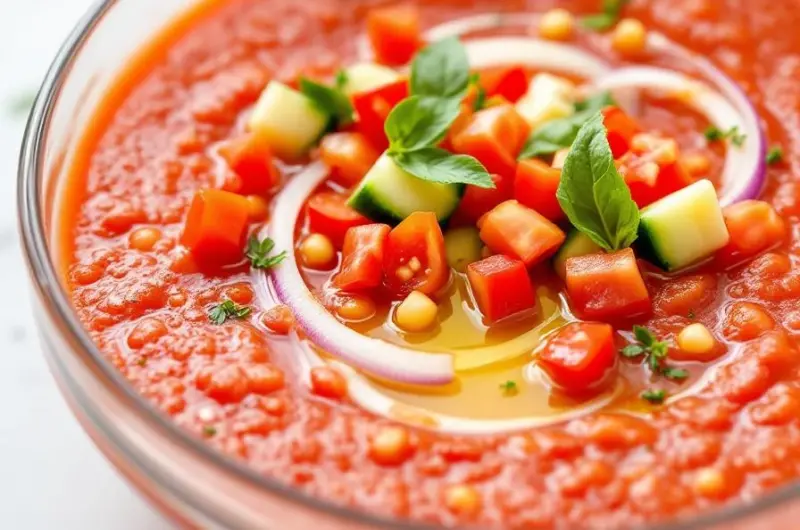
Chopping tomatoes is a messy affair, juice squirting everywhere, seeds slipping through fingers. The sound of the knife against the cutting board is constant, almost rhythmic, as you prep for blending.
Peeling cucumbers involves a quick, tugging scrape, the cool, damp flesh revealing itself beneath. Pouring the crushed garlic and olive oil into the mix fills the air with sharp, fragrant notes, grounding the process in real, tangible action.
The initial chop of ripe tomatoes, the splash of water on the cutting board, and the faint, tangy scent of fresh herbs as they hit the blender—these small, messy moments define the honest process of making gazpacho.
What goes into this dish
- Ripe tomatoes: I go for deep red, slightly soft ones, juicy with a rich, sweet-tart flavor. If yours are too firm, let them sit at room temp to soften; skip if they’re too bland or mealy.
- Cucumbers: Cool, crisp, and slightly watery—perfect for balancing acidity. Use seedless if you want less liquid, or peel for a smoother texture. Skip if you dislike the watery crunch.
- Bell peppers: I like red or yellow for color and sweetness, but green adds a bitter punch. Remove seeds and membranes; roast beforehand for smoky depth, if you like that vibe.
- Garlic: Fresh, pungent garlic gives that sharp bite. Crush it well to release oils. If you’re sensitive, halve the cloves or use less; skip if you prefer milder flavors.
- Vinegar: Sherry or red wine vinegar brightens the soup with tang. Use less if you want a subtler acidity, or substitute lemon juice for a fresher zing.
- Olive oil: Good quality, grassy or fruity oil adds richness. Drizzle as you blend or on top before serving. Skip if you’re oil-averse or want a lighter feel.
- Bread (optional): A slice of crusty bread can thicken the soup. Toast first for crunch or skip if gluten isn’t your thing; it’s mainly for texture.
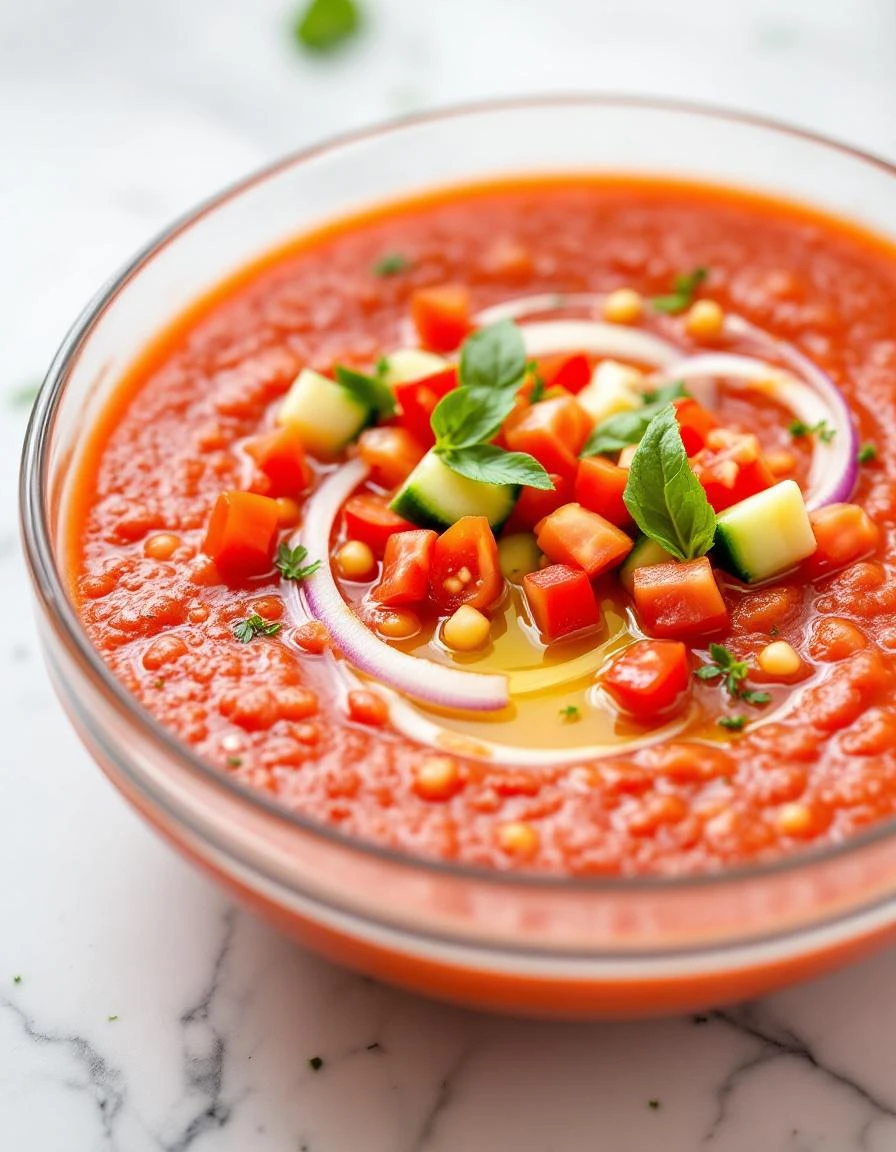
Classic Gazpacho
Ingredients
Equipment
Method
- Start by chopping the tomatoes into rough chunks, feeling the juicy flesh give way as you cut. Place them into your blender.
- Next, peel the cucumber and chop it into smaller pieces, adding them to the blender for a cool, watery crunch.
- Core and seed the bell pepper, then chop it into chunks to add a sweet, vibrant flavor to the mix.
- Add the crushed garlic cloves to the blender, which will release an aromatic, pungent scent as they get mixed in.
- Pour in the red wine vinegar, which brightens the overall flavor, and drizzle the olive oil over the vegetables.
- If using bread for thickening, tear a slice into smaller pieces and add it to the blender for extra body.
- Secure the lid on the blender and blend everything until smooth but still slightly pulpy, about 30 seconds, listening for a gentle whirring sound.
- Taste the gazpacho and adjust with more vinegar or salt if needed, blending again briefly to incorporate adjustments.
- Pour the soup into a bowl or pitcher, then cover and refrigerate for at least 2 hours until thoroughly chilled and flavors meld.
- Before serving, give the gazpacho a good stir to mix any separation and pour into bowls, garnishing with fresh herbs or a drizzle of olive oil if desired.
- Enjoy your refreshing, vibrant gazpacho straight from the fridge, perfect for hot days or as a light appetizer.
Common mistakes and how to fix them
- FORGOT to taste before blending? Always sample and adjust acidity or salt after initial blend.
- DUMPED all ingredients in at once? Blend gradually, starting with a few veggies to control texture.
- OVER-TORCHED the garlic? Add garlic later if you prefer a milder, less bitter flavor.
- SCOURED the surface of the gazpacho? Use a gentle spoon to avoid clouding the vibrant color.
Make-Ahead and Storage Tips
- Chopping and blending can be done a few hours ahead—keep it covered in the fridge to maintain freshness and avoid absorbing other odors.
- Gazpacho tastes brighter and more concentrated after a day; it can sit in the fridge for up to 24 hours before serving.
- Stir before serving to recombine any separation—sometimes the oil floats or the flavors settle.
- Freezing isn’t ideal; texture can change and become slightly mushy upon thawing, so best enjoyed fresh or within a day.
- Reheat isn’t necessary, but if you want slightly warmer soup, do it gently—avoid boiling, just warm to touch, and check for flavor balance.
FAQs
1. How cold should it be served?
Gazpacho is best served very cold, around 40°F, to enhance the fresh, crisp flavors and cool your palate after chopping hot peppers or garlic.
2. What tomatoes work best?
Use ripe, juicy tomatoes—they’ll be sweet, tangy, and give that thick, slightly pulpy texture that makes it feel alive with flavor.
3. My gazpacho tastes dull, what can I do?
If it tastes flat, add a splash more vinegar or a pinch of salt—these bright, sharp touches wake up the raw ingredients.
4. Why does my gazpacho look separated?
Stir well before serving; the oil and liquids tend to separate, and the flavors need a good mix for that bright, balanced punch.
5. How long can I keep it in the fridge?
Leftover gazpacho can sit covered in the fridge for up to 24 hours; flavors deepen, but it loses some of that fresh edge so best enjoyed sooner.

Hi, I’m Isabella Cury, the creator behind Elevating Simple. Food has always been my passion, but it’s not just about creating meals—it’s about taking everyday ingredients and transforming them into something extraordinary.
My journey in the culinary world has been a blend of education, dedication, and a deep love for sharing food with others. Through this blog, I aim to inspire people to find joy in simple, flavorful cooking.


