
Eggplant Parmesan often gets a bad rap for being too greasy or heavy, but I’ve found it can be a light, forgiving dish if you approach it differently. I like to bake or roast the eggplant slices instead of frying, which cuts down on oil and still gives you that soft, tender texture with a slight smoky edge. It’s a good reminder that comfort food doesn’t always have to be soaked in oil or breaded to be satisfying.
This dish became a go-to when I wanted something hearty but not overly indulgent. It’s flexible—layered with fresh herbs, a simple tomato sauce, and plenty of cheese, but adaptable to what’s in your fridge or pantry. It’s also a great way to use up eggplant when it’s at its peak late summer, and I love how forgiving it is if you’re not perfect with each step. Just keep an eye on the cheese and sauce—it’s all about balance and patience in the oven.
Focusing on how eggplant Parmesan can be a forgiving, adaptable dish for cooks who dislike frying or want a lighter, oven-baked version that still delivers comfort and flavor.
A forgiving take on eggplant
- I used to dread frying eggplant, but roasting it changed everything—less mess, more flavor.
- Nothing beats the smell of bubbling cheese and tomato sauce filling the kitchen on a chilly evening.
- Getting that perfect tender eggplant with a slight smoky char feels like a small victory every time.
- I love how forgiving this dish is—perfectly imperfect layers still taste like comfort in every bite.
- Sharing this with friends reminds me that simple, honest food can bring us together quickly.
The story behind this recipe
One summer, I was visiting a friend’s rustic kitchen where she casually roasted thick slices of eggplant over an open flame, imparting a smoky depth that I’d never experienced in this dish. That moment made me rethink how I approached eggplant Parmesan—less frying, more flavor. Since then, I’ve played around with baking instead of frying, aiming for that tender, slightly smoky eggplant with a crisp edge, layered with simple cheese and tomato sauce. It’s funny how a little smoke and patience can turn a humble vegetable into something that feels indulgent but isn’t weighed down.
Trivia and historical tidbits
- Eggplant Parmesan as we know it today evolved in Italian-American kitchens, blending traditional recipes with local ingredients.
- The dish’s roots trace back to Southern Italy, where eggplant was a staple due to its abundance and affordability.
- Originally, eggplant was often salted to reduce bitterness before being cooked, a step many modern recipes skip for convenience.
- In Italy, it’s called ‘Melanzane alla Parmigiana,’ emphasizing the importance of Parmesan cheese, but recipes vary widely.
- The dish gained popularity in the United States mid-20th century, especially among Italian immigrants seeking comfort food.
Key ingredients and tips
- Eggplant: I prefer large, firm eggplants that feel heavy for their size, with shiny skin. Roast or bake until soft—no need to fry for a tender, smoky bite.
- Breadcrumbs: Use panko for extra crunch and a light texture. Toast them lightly before mixing in herbs—adds a nutty aroma and crispness.
- Mozzarella: Fresh mozzarella melts beautifully, creating gooey layers. For a stretchier texture, try low-moisture mozzarella, but don’t skip the creamy flavor.
- Parmesan: Grated Parm gives that salty, umami punch. Freshly grated has a brighter, sharper flavor—skip the pre-grated stuff if you can for better taste.
- Tomato Sauce: Use a simple, thick sauce with ripe tomatoes and a splash of olive oil. Simmer until it thickens slightly—your kitchen will smell like a sun-drenched garden.
- Herbs: Fresh basil or oregano brightens the dish. Tear or chop them just before layering—preserves their vibrant aroma and flavor.
- Olive Oil: A drizzle of good-quality extra virgin olive oil over the assembled dish before baking adds a fruity depth and helps the cheese brown beautifully.
Spotlight on key ingredients
Eggplant:
- I look for large, shiny, heavy eggplants; their soft, tender flesh becomes smoky and mellow when roasted.
- It’s surprisingly forgiving—salting draws out bitterness, but roasting develops a complex, sweet, smoky flavor that’s hard to beat.
Mozzarella:
- Fresh mozzarella melts into gooey, silky layers that stretch and pull; it’s the creamy backbone of the dish.
- When heated, it crackles slightly on top, releasing a mild, milky aroma that signals good melting and flavor.
Notes for ingredient swaps
- Oil-Free: Use a silicone baking mat instead of oil when roasting eggplant to reduce greasiness, though expect a slightly drier texture.
- Vegan Cheese: Substitute with a plant-based mozzarella or cashew-based cheese for a dairy-free version that still melts well.
- Breadcrumbs: Swap regular panko for crushed nuts or seeds for added crunch and a nutty flavor, especially good with a spicy tomato sauce.
- Fresh Eggplant: Use smaller or younger eggplants for a tender bite; larger ones might be more bitter, so salting helps.
- Parmesan: Nutritional yeast can replace Parmesan for a cheesy umami flavor with a nutty note, perfect for vegans.
- Herbs: Dried basil or oregano can be used in a pinch but add them early to allow flavors to develop, though they won’t be as vibrant.
- Tomato Sauce: Canned fire-roasted tomatoes blended into a sauce add smoky depth; fresh tomatoes work too but need longer cooking.
Equipment & Tools
- Baking sheet: To bake the eggplant slices evenly.
- Parchment paper: Prevent sticking and make cleanup easier.
- Shallow dish: For breading the eggplant slices.
- Large skillet: To toast breadcrumbs and heat sauce.
- Baking dish: To layer and bake the assembled eggplant parmesan.
Step-by-step guide to Eggplant Parmesan
- Preheat your oven to 200°C (390°F). Gather your equipment: a baking sheet, parchment paper, a shallow dish for breading, a large skillet, and a baking dish for layering.
- Slice the eggplant into 1/2-inch thick rounds. Lay them out on a paper towel, sprinkle with salt, and let sit for 15 minutes to draw out moisture and bitterness.
- While waiting, prepare your breading station: spread breadcrumbs in a shallow dish, mix with a pinch of salt and herbs if desired. Lightly toast the breadcrumbs in a dry skillet until golden and fragrant, about 3 minutes.
- Rinse the salted eggplant slices to remove excess salt and moisture. Pat dry thoroughly with a clean towel.
- Coat each eggplant slice first in beaten egg (or a milk alternative), then dredge in toasted breadcrumbs, pressing lightly to adhere. Place on a parchment-lined baking sheet.
- Bake the breaded eggplant slices for about 20-25 minutes, flipping halfway through, until they are golden and slightly crisp around the edges. Check for a light, golden color and a firm but tender texture.
- Meanwhile, heat your tomato sauce in a saucepan over low heat until warmed through. Fresh basil or oregano can be stirred in now or added later for brightness.
- Once the eggplant slices are baked, layer them in a greased baking dish: start with a spoonful of sauce, then a layer of eggplant, sprinkle with mozzarella and Parmesan, and repeat until all ingredients are used, finishing with cheese on top.
- Bake assembled dish uncovered for 20-25 minutes at 180°C (350°F), until bubbling and cheese is golden. The aroma of melted cheese and roasted eggplant should fill the kitchen.
- Remove from oven and let rest for 10 minutes. This helps the layers settle and makes serving easier. Garnish with fresh basil if desired.
Let the assembled dish rest for 10 minutes before slicing. Serve warm, garnished with fresh basil or a drizzle of olive oil for added flavor and shine.
How to Know It’s Done
- Eggplant edges are golden and slightly crispy.
- Cheese is bubbly and browned on top.
- Sauce is thick and coats the eggplant without pooling.
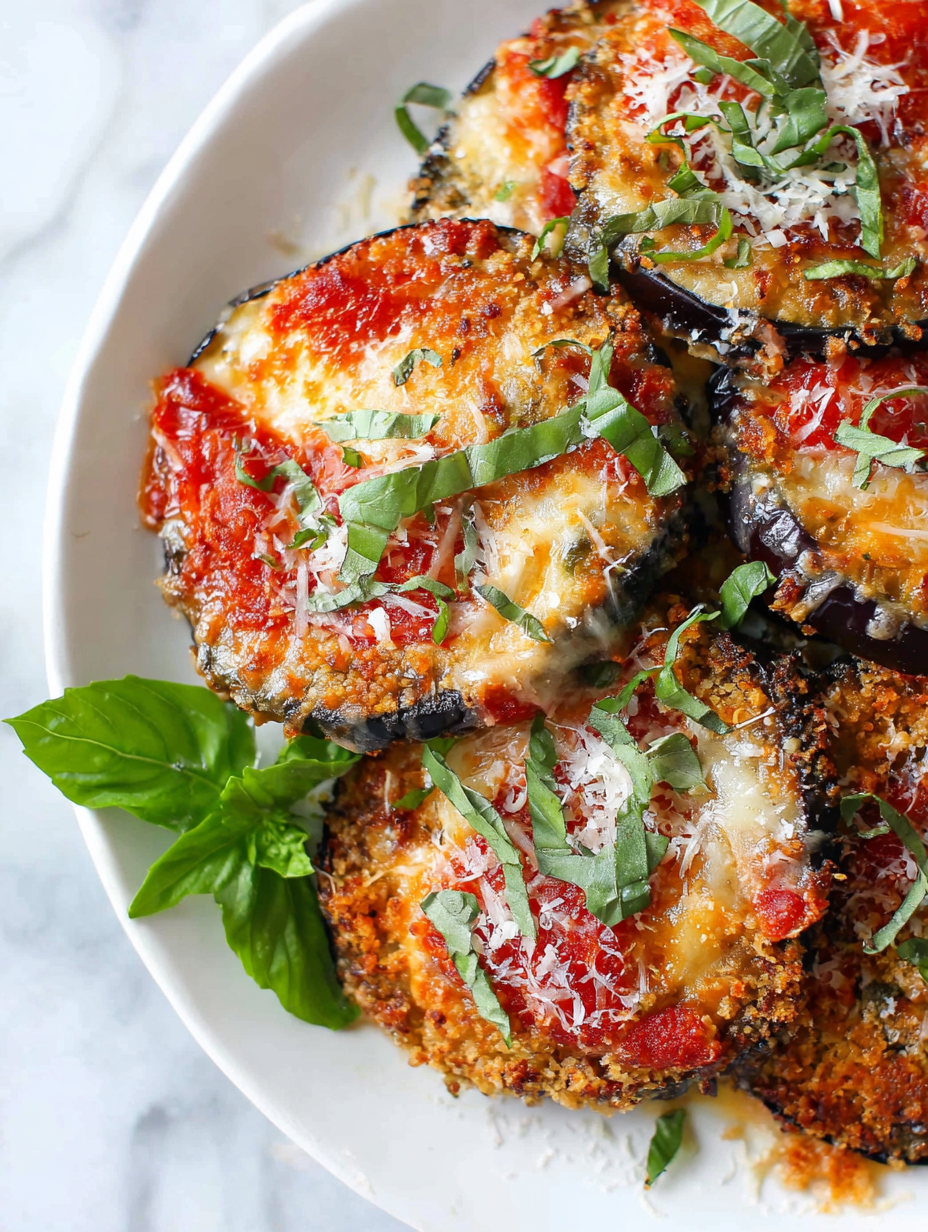
Light Oven-Baked Eggplant Parmesan
Ingredients
Equipment
Method
- Slice the eggplants into 1/2-inch thick rounds and lay them on a paper towel. Sprinkle with salt and let sit for 15 minutes to draw out excess moisture and bitterness. Rinse off excess salt and pat dry thoroughly.
- Preheat your oven to 200°C (390°F). Spread panko breadcrumbs on a baking sheet and toast in the oven for about 3 minutes until golden and fragrant. Transfer to a shallow dish and season with salt, pepper, and chopped herbs if desired.1 cup panko breadcrumbs
- Set up your breading station: Place beaten eggs in one shallow dish. Dip each eggplant slice first into the eggs, then dredge in the toasted breadcrumbs, pressing lightly to adhere. Arrange the coated slices on a parchment-lined baking sheet.1 cup panko breadcrumbs
- Bake the breaded eggplant slices in the oven for 20-25 minutes, flipping halfway, until they are golden brown and slightly crispy around the edges. The aroma of toasted breadcrumbs and roasted eggplant should fill your kitchen.
- Meanwhile, heat the tomato sauce in a skillet over low heat until warmed through, about 5 minutes. Tear fresh basil into the sauce just before assembling.1 cup panko breadcrumbs
- Spread a thin layer of tomato sauce in the bottom of a baking dish. Layer the baked eggplant slices on top, then dollop with slices of fresh mozzarella and sprinkle with Parmesan cheese. Repeat the layering until all ingredients are used, finishing with cheese on top.1 cup panko breadcrumbs
- Bake the assembled dish uncovered at 180°C (350°F) for 20-25 minutes, until bubbling and the cheese turns golden brown. The smell of melted cheese and roasted tomato sauce will beckon you.
- Remove from the oven and let it rest for 10 minutes. Garnish with torn basil leaves. Serve slices warm, enjoying the tender eggplant with crispy edges and gooey, flavorful cheese.1 cup panko breadcrumbs
Pro tips for perfect Eggplant Parmesan
- Bolded mini-head: Use panko breadcrumbs for a lighter, crunchier coating that crisps perfectly in the oven.
- Bolded mini-head: Toast your breadcrumbs lightly before breading; it adds a nutty aroma and enhances the crispness.
- Bolded mini-head: When roasting eggplant, slice evenly and lay out in a single layer; avoids sogginess and promotes even browning.
- Bolded mini-head: Keep an eye on cheese topping during baking; remove once it’s bubbling and golden to prevent burning.
- Bolded mini-head: Rest the assembled dish for 10 minutes after baking; helps the layers set and makes slicing neater.
- Bolded mini-head: Use a gentle, even drizzle of good olive oil on top before baking; adds flavor and helps cheese brown beautifully.
- Bolded mini-head: For a smoky flavor, briefly broil the eggplant slices after baking; watch carefully to prevent charring.
Common mistakes and how to fix them
- FORGOT to preheat the oven → Ensure oven hits temperature before baking.
- DUMPED too much oil on eggplant → Use a light spray or brush for controlled oil application.
- OVER-TORCHED cheese → Keep an eye on the cheese; remove once bubbly and golden, not burnt.
- MISSED salting eggplant slices → Salt and rest to draw out moisture and bitterness.
Quick Fixes for Eggplant Parmesan
- When eggplant slices are soggy, splash with a little vinegar to brighten flavors.
- If breadcrumbs aren’t sticking, patch with a touch of beaten egg or milk for better adherence.
- DUMPED too much oil? Shield with parchment to prevent excess greasiness and promote crispness.
- When cheese isn’t browning, increase oven temp slightly or broil for a quick golden finish.
- Splash some lemon juice if the sauce tastes flat—brightens and lifts the overall flavor.
Prep, store, and reheat tips
- Prepare the eggplant slices and salt them early; they can sit salted for up to 30 minutes, drawing out bitterness and moisture, which helps achieve a tender texture after baking.
- You can assemble the layered eggplant Parmesan a day ahead—cover tightly and refrigerate for up to 24 hours. The flavors meld better, and the dish develops a richer tomato aroma.
- Refrigerated leftovers will keep for 3-4 days. Reheat in the oven at 180°C (350°F) until bubbling and cheese is gooey, about 20 minutes. Expect the top to be slightly more concentrated in flavor.
- For freezer storage, tightly wrap individual portions or the whole dish and freeze up to 2 months. Thaw overnight in the fridge, then bake as usual, watching for extra moisture that may need draining.
- Sensory note: reheated eggplant Parmesan should smell savory with a hint of roasted cheese and have a firm, tender bite, with the cheese bubbling invitingly.
Top questions about Eggplant Parmesan
1. How do I select the best eggplant?
Use large, firm eggplants with shiny skin. Roast or bake until soft with a smoky aroma—no need to fry for tenderness and flavor.
2. Should I salt the eggplant before cooking?
Salting eggplant slices for 15-20 minutes helps draw out bitterness and excess moisture, resulting in a better texture after baking.
3. What’s the ideal oven temperature and time?
Bake the breaded slices at 200°C (390°F) for about 20-25 minutes until golden and crispy around the edges.
4. Can I use different breadcrumbs?
Use panko breadcrumbs for a lighter crunch. Toast them lightly in a skillet before breading for added flavor and crispness.
5. What type of cheese works best?
Fresh mozzarella melts into gooey layers, creating that signature stretch. Low-moisture mozzarella offers a more consistent melt but less creaminess.
6. How should I assemble and serve?
Layer the dish with sauce, eggplant, cheese, and repeat. Let it rest for 10 minutes after baking to help set the layers.
7. Can I make it in advance?
You can prepare and layer the dish a day ahead, cover tightly, and refrigerate. Reheat at 180°C (350°F) until bubbling and cheese is golden.
8. What if the cheese doesn’t brown?
If cheese isn’t browning, increase oven temp slightly or briefly broil for a golden, bubbly top—watch carefully to prevent burning.
9. How do I cut the eggplant?
Use a sharp knife to slice eggplant evenly. Keep the slices uniform for even baking and consistent texture.
10. How do I store and reheat leftovers?
Leftovers keep for 3-4 days in the fridge. Reheat in the oven until bubbly and hot, about 20 minutes, for best texture.
This baked eggplant Parmesan might not have the greasy crunch of fried versions, but it’s honest and comforting in a different way. The smoky, tender slices layered with gooey cheese and bright tomato sauce are a reminder that simplicity can be really satisfying. Plus, it’s a dish that’s forgiving enough to adapt to whatever you have on hand, making it a reliable go-to.
In the end, this dish is about that slow, warm oven smell and the first cheesy, tomato-slicked bite. It’s a humble plate, but one that feels like a small victory—something I keep coming back to, season after season, when I want real, honest food without fuss.

Hi, I’m Isabella Cury, the creator behind Elevating Simple. Food has always been my passion, but it’s not just about creating meals—it’s about taking everyday ingredients and transforming them into something extraordinary.
My journey in the culinary world has been a blend of education, dedication, and a deep love for sharing food with others. Through this blog, I aim to inspire people to find joy in simple, flavorful cooking.


