
Perfect scrambled eggs aren’t about rushing or high heat; they’re about patience and gentle movement. I’ve learned that slow, consistent stirring transforms humble eggs into something creamy and almost custardy. It’s a small ritual that makes breakfast feel like a treat, not just a quick bite.
I used to think scrambled eggs were just eggs until I started paying attention to the details—low heat, butter, and constant motion. The magic happens when you stop rushing and let the eggs slowly come together, releasing a silky texture that’s worth the extra minutes. It’s a simple change that turns a basic breakfast into a moment of quiet satisfaction.
Focusing on the importance of gentle, slow heat and continuous stirring to achieve a creamy, custard-like texture that elevates simple scrambled eggs from average to truly luxurious.
The art of gentle stirring
- There’s a quiet joy in watching eggs slowly turn from glossy yellow to soft, creamy curds.
- Getting the texture just right feels like a small victory—creamy, fluffy, not rubbery or overcooked.
- I love how a splash of butter and patience turn simple eggs into something indulgent, even on a hectic morning.
- Sometimes, I remember my grandma’s tiny kitchen, where she’d make these eggs with a pinch of love and a lot of gentle stirring.
- Nothing beats the satisfying feel of a perfectly soft, custard-like scramble that melts in your mouth.
The art of gentle stirring
One quiet Sunday morning, I found myself craving something more than just plain scrambled eggs. I remembered my aunt’s secret—slow heat and continuous gentle stirring—and decided to give it a shot. The result was a silky, custard-like scramble that felt like a small, indulgent moment before the day took off. From then on, I’ve stuck to that method, turning a simple dish into a gentle ritual that feels special even on the busiest mornings.
Historical and cultural tidbits
- The technique of gentle scrambling dates back to European breakfast traditions, emphasizing patience over speed.
- In France, eggs cooked slowly with butter and stirring are considered the hallmark of a refined breakfast.
- The term ‘scrambled’ likely originates from 16th-century culinary texts describing eggs that are ‘scrambled’ into a soft mass.
- Historically, scrambled eggs were a luxury item in medieval Europe, often enriched with cream and herbs.
- Quick to prepare but requiring finesse, perfect scrambled eggs are often seen as a sign of a seasoned home cook.
Key ingredients for perfect eggs
- Eggs: I always crack fresh eggs into a bowl, feeling that satisfying splash and seeing the bright yellow yolks. Use older eggs if you want slightly firmer curds—they hold together better during gentle stirring.
- Butter: I love the richness of real butter melting into the eggs, adding a nutty aroma and creamy texture. Swap for a neutral oil if you prefer a lighter scramble, but miss out on that toasty note.
- Salt: I add a pinch of sea salt early to enhance the eggs’ natural flavor and help break down the proteins. Too much salt can make them tough, so keep it light until the end.
- Pepper: Freshly cracked black pepper gives a subtle bite and complexity. I prefer adding it at the end to keep the aroma sharp and fresh.
- Cream (optional): A splash of heavy cream makes the scramble extra silky, like a soft custard. Skip if you want a leaner version, but the texture won’t be as luxuriously smooth.
- Milk (alternative): If I don’t have cream, a tiny bit of milk adds moisture without heaviness. Use whole milk for best results, but avoid skim—less richness that way.
- Herbs (optional): Fresh chives or parsley chopped finely brighten up the dish. They add a fresh, vibrant contrast to the creamy eggs, especially when sprinkled on top just before serving.
Spotlight on key ingredients
Eggs and Butter:
- Eggs: I crack fresh eggs, feeling that satisfying splash and seeing the bright yellow yolks. Slightly older eggs can help produce firmer curds during gentle stirring.
- Butter: I love the richness of real butter melting into the eggs, adding a nutty aroma and silky texture. Swap for a neutral oil if you prefer a lighter scramble, but you’ll miss that toasty note.
Notes for ingredient swaps
- Dairy-Free: Swap butter for a neutral oil like avocado or light olive oil. Expect a slightly less nutty aroma but still creamy texture.
- Vegan: Use silken tofu blended until smooth as a substitute for eggs. It creates a custard-like consistency, though flavor will be milder.
- Lower Fat: Replace butter with a splash of water or broth added at the end. This keeps the eggs moist without added richness.
- Salt Alternatives: Use soy sauce or tamari sparingly for seasoning if avoiding salt, adding umami instead.
- Herb Variations: Fresh dill or basil instead of chives or parsley. They bring different aromatic notes but maintain freshness.
- Cream Substitute: Coconut cream or cashew cream can be used for richness, adding a subtle sweetness or nutty tone.
- Pepper: White pepper for a milder, less visually noticeable spice, especially if you want a softer appearance.
Equipment & Tools
- Non-stick skillet: Provides gentle heat for smooth, even cooking without sticking.
- Silicone spatula: Allows slow, gentle stirring without damaging the eggs or scratching the pan.
- Small bowl: For whisking eggs quickly and uniformly.
- Stove with precise low heat: Maintains a gentle, consistent temperature to prevent overcooking.
Guide to Perfect Scrambled Eggs
- Gather your equipment: a non-stick skillet (preferably small, 20cm/8in), a silicone spatula, and a small bowl for whisking. The right tools make gentle stirring easier and more effective.
- Crack 3 large eggs into the bowl. Whisk lightly—just enough to break the yolks and combine the whites and yolks. No need for fluffing, keep it loose and quick, about 10 seconds.
- Set your skillet over very low heat—around 90°C/200°F. Add a tablespoon of butter, letting it melt gently until it just starts to foam with a faint nutty aroma, about 30 seconds.
- Pour eggs into the skillet. Immediately start stirring with your silicone spatula in slow, steady circles. Maintain the low heat and keep the motion gentle, about 2 minutes. The eggs should be just beginning to set at the edges.
- a. When the eggs are mostly opaque but still slightly runny on top, reduce heat slightly if needed. b. Continue stirring slowly, making soft, curd-like folds, about 1–2 more minutes. c. Keep the smell buttery and watch for a matte, velvety texture forming.
- If the eggs start to look dry or crackle loudly, remove the pan from heat immediately. If they’re still too glossy and runny, give them another 20 seconds on the stove, stirring constantly.
- Transfer the eggs to a warm plate. Let them rest for just 10 seconds—this allows residual heat to finish the gentle setting. Finish with a pinch of salt and freshly cracked pepper, then serve immediately.
Once cooked, transfer eggs immediately to a warm plate. Allow them to rest for 10 seconds—this lets any residual heat finish the process. Finish with a pinch of sea salt and a crack of black pepper, then serve right away to enjoy their creamy texture.
How to Know It’s Done
- Eggs are creamy, not rubbery or watery.
- Curds are soft, moist, and slightly glossy, not stiff or dry.
- The color is uniformly pale yellow, with no browning or cracking.
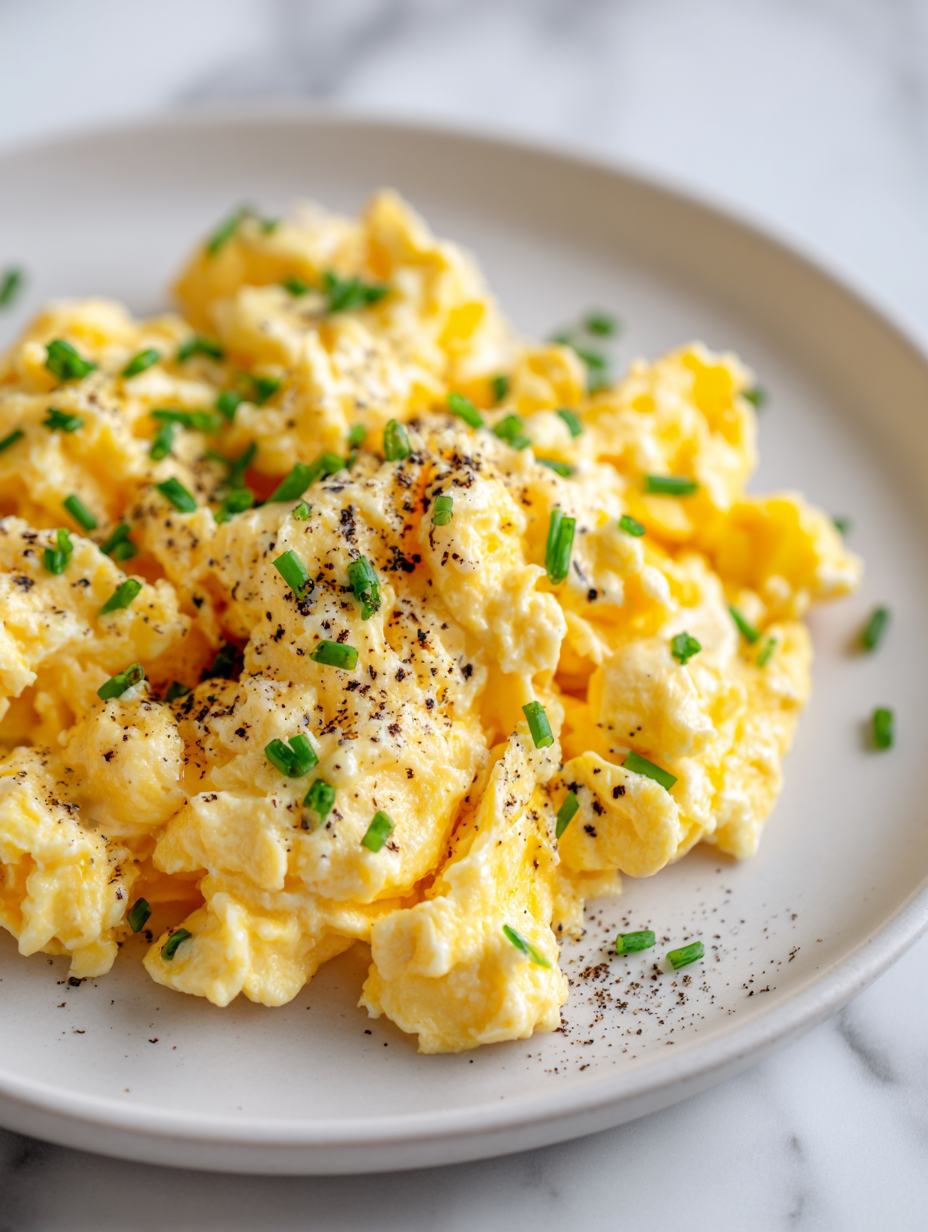
Creamy Slow-Stir Scrambled Eggs
Ingredients
Equipment
Method
- Crack the eggs into a small bowl and whisk lightly just until the yolks and whites are combined, about 10 seconds. Set aside.
- Place your non-stick skillet over the lowest heat setting and add the butter, allowing it to melt slowly until it just begins to foam softly and releases a faint nutty aroma.
- Pour the whisked eggs into the skillet, then immediately start stirring gently in slow, circular motions with a silicone spatula. Keep the heat very low and listen for a soft sizzling sound as the eggs start to set at the edges.
- Continue stirring slowly and steadily, making soft folds, for about 2 minutes. The eggs should begin to form soft, glossy curds and turn a pale, creamy yellow. Maintain low heat to prevent overcooking.
- Once the eggs are mostly opaque but still slightly runny on top, add a splash of heavy cream if using, and keep stirring gently for another 1-2 minutes until the mixture is velvety and just set but still moist.
- Remove the skillet from the heat as soon as the eggs are soft, creamy, and slightly glossy. Let them rest for about 10 seconds to finish setting with residual warmth.
- Season with a pinch of sea salt and freshly cracked black pepper, then give a gentle final stir to distribute the seasoning evenly.
- Serve immediately on a warm plate, enjoying the soft, custard-like texture and rich, buttery aroma.
Notes
Tips and tricks for perfect eggs
- Gentle heat: Keep your stove on the lowest setting to avoid rubbery eggs and maintain silky creaminess.
- Constant stirring: Use a silicone spatula to move the eggs slowly, creating soft curds and preventing sticking.
- Timing is key: Remove from heat just as the eggs are slightly runny; residual warmth finishes the job beautifully.
- Add butter early: Melt butter gently in the pan before pouring in eggs for extra richness and flavor.
- Avoid overcooking: If eggs start to crackle loudly or look dry, lower heat or pull the pan off immediately.
- Finish with care: Season with salt and pepper at the end to preserve their fresh aroma and flavor.
- Use fresh eggs: Fresh eggs yield more vibrant color and better texture, but slightly older eggs hold together better during slow cooking.
Common Scrambled Eggs Mistakes and Fixes
- FORGOT to keep heat low → Use very low heat to prevent overcooking.
- DUMPED eggs into hot pan → Wait until butter just foams, then add eggs.
- OVER-TORCHED eggs → Remove from heat as soon as eggs are just set.
- MISSED stirring constantly → Stir slowly and continuously for creamy texture.
Quick Fixes for Scrambled Eggs
- If eggs look rubbery, splash cold water in the pan to stop cooking instantly.
- When eggs are too runny, increase stirring speed or lower heat slightly.
- Splash a little milk or cream if eggs turn out dry or stiff after cooking.
- Patch over dry eggs with a dollop of butter or a sprinkle of cheese to add moisture.
- Shield overcooked eggs with a damp paper towel and reheat gently to restore creaminess.
Prep, store, and reheat tips
- Whisk eggs ahead of time in a sealed container; keep in the fridge for up to 24 hours, ensuring a fresh, slightly frothy texture.
- Prepare and melt butter in a small jar or dish, then refrigerate; reheat gently in the microwave or on low stove, smelling faintly nutty.
- Store cooked scrambled eggs in an airtight container in the fridge for up to 2 days; reheating causes slight moisture loss, so stir in a splash of milk or butter for creaminess.
- Reheat eggs slowly over low heat, stirring constantly until just warmed through—look for a silky texture and gentle steam, not dryness or cracking.
- Avoid freezing scrambled eggs; texture becomes grainy and less appealing after thawing, so only prep leftovers for short-term fridge storage.
Top questions about scrambled eggs
1. Should I use fresh eggs or slightly older ones?
Use eggs that are fresh but not super fresh; about a week old is ideal for better curd formation. The fresher the eggs, the brighter the yolk and the richer the flavor, but slightly older eggs hold together better during slow cooking.
2. How much should I whisk the eggs?
Whisk the eggs just until combined—no need to beat air into them. Over-whisking can make the eggs tough, so keep it simple and quick for a tender scramble.
3. What heat setting is best for perfect scrambled eggs?
Keep your heat very low—around 90°C/200°F. High heat will cook the eggs too fast, leading to rubbery curds, not the soft, custard-like texture I aim for.
4. How should I stir the eggs while cooking?
Stir continuously with a silicone spatula, slowly and gently. This creates soft, fluffy curds and prevents sticking or overcooking. Patience is key here.
5. When should I take the eggs off the heat?
Remove the eggs from heat just before they look fully set—about 80% done. Residual heat will finish cooking them to that creamy, moist texture without overdoing it.
6. Can I add butter or oil? When?
Yes, adding a small knob of butter early in the pan adds richness and a nutty aroma. It also helps prevent sticking and creates a silky texture.
7. When should I season the eggs?
Season with salt and pepper at the end, after cooking. Adding salt too early can cause the eggs to become tough during gentle stirring.
8. Can I make scrambled eggs in advance?
Yes, you can prepare the whisked eggs ahead in a sealed container and store in the fridge for up to 24 hours. Just give them a quick stir before cooking.
9. How do I reheat leftover scrambled eggs?
Reheat gently over low heat, stirring constantly until just warm. Watch for the eggs to become silky again; avoid high heat to prevent dryness and rubberiness.
10. What if my eggs turn out dry or rubbery?
If eggs become too dry or rubbery, splash cold water into the pan and stir quickly. This helps restore some moisture and softens the texture.
There’s something quietly satisfying about taking the time to make scrambled eggs just right. When they’re creamy, softly curdled, and warm, it feels like a small, personal victory. It’s a humble dish that rewards patience and gentle handling, especially on busy mornings.
In the end, these eggs aren’t just breakfast—they’re a moment of calm, a chance to slow down and enjoy the simple pleasure of good, honest food. No matter how hectic the day, a perfect scramble can make everything feel a little more manageable, a little more nourishing.

Hi, I’m Isabella Cury, the creator behind Elevating Simple. Food has always been my passion, but it’s not just about creating meals—it’s about taking everyday ingredients and transforming them into something extraordinary.
My journey in the culinary world has been a blend of education, dedication, and a deep love for sharing food with others. Through this blog, I aim to inspire people to find joy in simple, flavorful cooking.


