
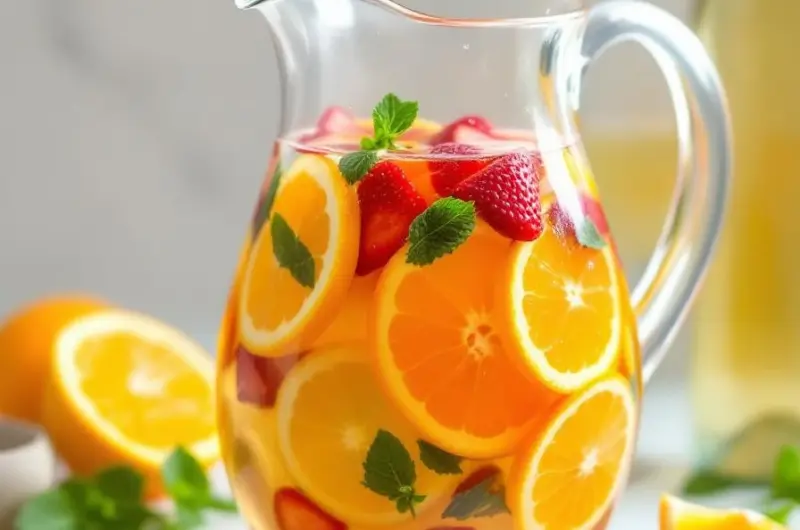
I start by slicing up a handful of fruit—orange rounds, lemon wedges, maybe some berries—right into a sturdy pitcher. The sound of the knife crunching through the fruit’s firm flesh is satisfying, and I keep an eye on the juice that pools at the bottom.
Pouring in the wine, I listen for the soft splash, then stir everything gently to release the fruit’s oils and aromas. It’s a quick, messy process—stains on the counter, juice dribbling down my hand—and I like it that way, no fuss, just real life.
The gentle plop of sliced fruit dropping into the glass, followed by the fizz of soda as I top it off, all while keeping an eye on the colorful mix swirling slowly, releasing fruity aromas.
What goes into this dish
- White wine: I prefer a dry, crisp Sauvignon Blanc—it’s zesty and bright. Skip the cheap stuff; it’ll taste flat and dull, but a decent bottle brings out citrus and herbal notes that lift the fruit.
- Fruit: Sliced oranges, lemons, maybe some berries—go for fresh, ripe, and fragrant. Skip overly soft fruits; they turn mushy fast and muddle the drink’s clarity, but fresh whole fruit keeps it lively and juicy.
- Sweetener: Simple syrup is my go-to—just sugar and water heated till clear. You can swap in honey or agave for a richer, more floral note, or skip it if your fruit is sweet enough already.
- Soda: A splash of club soda adds fizz right before serving. Sparkling water works too. Skip flavored sodas—they’ll overpower the fresh fruit and keep it feeling clean and refreshing.
- Herbs (optional): A sprig of mint or basil adds herbal brightness. Skip if you dislike greens; they can turn bitter if left too long, but fresh herbs make it smell like a garden on a summer day.
- Extras (optional): A splash of brandy or orange liqueur deepens the flavor. Skip if you want it lighter, but it adds a comforting warmth and aroma—like a whisper of spice.
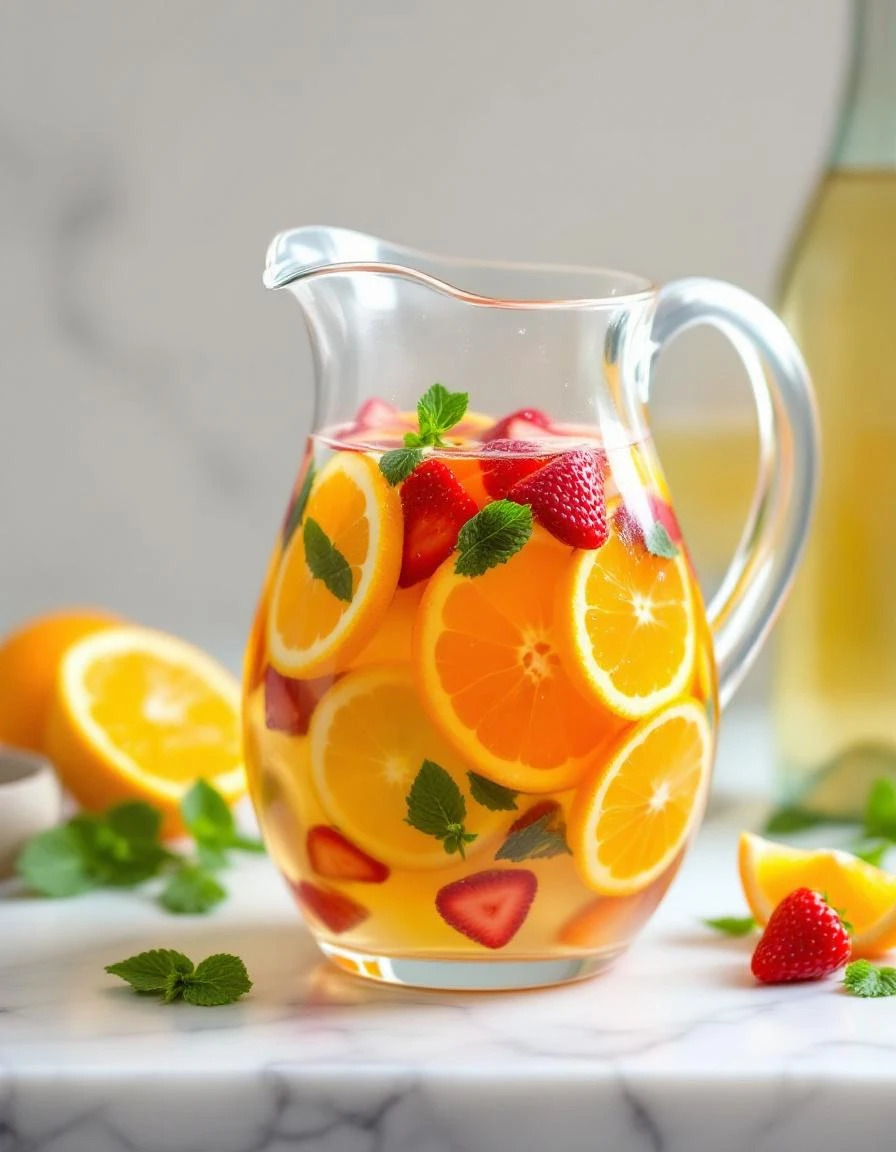
Fruity White Wine Sangria
Ingredients
Equipment
Method
- Start by slicing fresh oranges into thin rounds and lemons into wedges, then place them directly into a large pitcher. Add berries for color and extra flavor, gently pressing them to release some juice.
- Pour in the chilled white wine, watching it splash softly over the fruit. Then stir in the simple syrup and optional orange liqueur or brandy, gently mixing to combine all the flavors.
- Place the pitcher in the fridge and let it sit for at least 2 hours, allowing the fruit to soften slightly and the flavors to meld beautifully. This step is key for a well-rounded taste.
- Just before serving, give the sangria a gentle stir to re-mix the fruit and liquid. Add the club soda or sparkling water for a bubbly lift, pouring it in gradually to preserve the fizz.
- Finish by garnishing with a sprig of fresh mint or basil for a fragrant, summery touch. Serve the sangria poured over ice or straight from the pitcher for a vibrant, refreshing drink.
Notes
Common Mistakes and How to Fix Them
- FORGOT to taste before serving? Adjust with more citrus or sweetener to balance acidity.
- DUMPED in too much soda? Add gradually to keep the fizz lively and prevent dilution.
- OVER-TORCHED the fruit? Use a gentle simmer for syrup, avoid direct heat to keep flavors fresh.
- MISSED the chill time? Let sangria sit at least 2 hours, flavors meld better and fruit softens.
Make-Ahead and Storage Tips
- You can prep the fruit and slice it a day ahead; keep it in an airtight container in the fridge to prevent oxidation.
- The sangria base (wine, fruit, sweetener) can sit in the fridge for up to 24 hours, flavors melding and fruit softening slightly.
- Adding soda or sparkling water should be done just before serving; mixing it in too early will flatten the fizz.
- If you want a more intense fruit flavor, let the mixture sit longer, but beware the fruit breaking down and muddling the clarity.
- Refrigerated sangria is best enjoyed within 48 hours; beyond that, the fruit loses its firmness and the wine can start to oxidize.
- To serve, give it a gentle stir, check the aroma—should smell fruity and fresh—and add sparkling water for a lively finish.
FAQs
1. What wine works best?
Use a chilled, dry white like Sauvignon Blanc; it’s crisp and citrusy, making the sangria lively. Skip sweet wines, they’ll make it cloying and dull on the palate.
2. How should I prepare the fruit?
Slice the fruit thin and even; the softer, juicier pieces release flavor faster. The crunch of fresh fruit adds texture, and the aroma is more vibrant as it sits.
3. When should I add sparkling water?
Add soda just before serving to keep the bubbles lively. If mixed earlier, the fizz will fade, and the drink turns flat and dull in the glass.
4. How long should it sit before serving?
Taste the sangria after an hour; the fruit and wine meld, and flavors intensify. Over time, the fruit softens and releases more aroma, making each sip richer.
5. How far ahead can I prepare?
Keep it in the fridge for up to 24 hours; the fruit softens, and the flavors develop. After that, the fruit can turn mushy, and the wine might oxidize, losing brightness.

Hi, I’m Isabella Cury, the creator behind Elevating Simple. Food has always been my passion, but it’s not just about creating meals—it’s about taking everyday ingredients and transforming them into something extraordinary.
My journey in the culinary world has been a blend of education, dedication, and a deep love for sharing food with others. Through this blog, I aim to inspire people to find joy in simple, flavorful cooking.


