
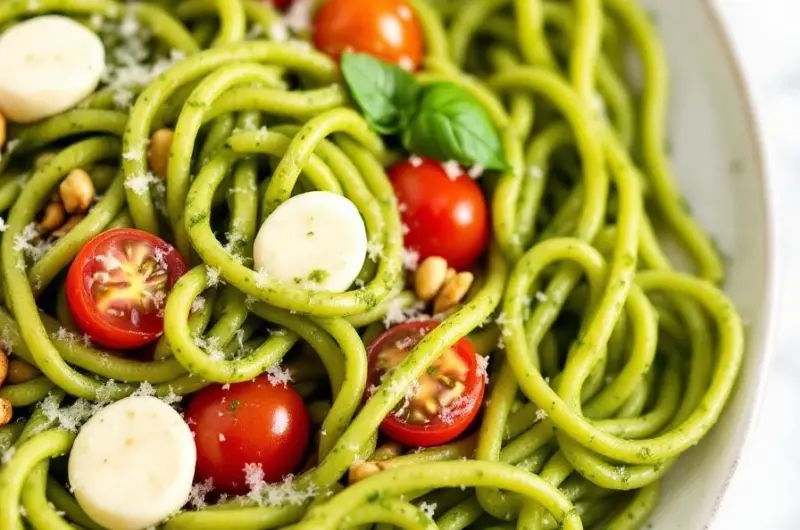
Making this cold pesto pasta salad starts with boiling pasta—nothing fancy, just enough salt in the water to make it taste like the sea. Once cooked, I drain it, rinse it under cold water, and give it a good shake to stop the cooking and cool it down fast.
The prep gets messy quick—chopping basil, garlic, and nuts, then blending everything into a thick, oily sauce. I toss the pasta directly in the bowl with the pesto, stirring until every strand is coated and glistening, ready to chill or serve immediately.
The unexpected crunch of chilled pasta against teeth, a cool contrast to the punchy, herby pesto.
Essential Ingredients & Substitutes
- Basil: Fresh basil leaves smell like sweet pepper and pine—just pick the vibrant green ones. Swap with parsley if basil is out; it’s milder but still fresh.
- Pesto: Store-bought pesto saves time but can be thick—stir in a splash of warm water or olive oil to loosen it for easier mixing. Homemade pesto? Use more garlic for a punch.
- Pasta: I like good-quality spaghetti or fusilli; it holds pesto better. Regular penne works too, just make sure it’s cooked al dente and rinsed under cold water to stop cooking.
- Garlic: Raw garlic adds a sharp kick—smash, chop finely, or even roast for a smoky sweetness. Skip if you’re sensitive, but it’s the flavor backbone here.
- Nuts: Toasted pine nuts or walnuts bring a buttery crunch and smoky aroma. If nuts aren’t available, toasted sunflower seeds or pepitas add a similar texture and flavor.
- Lemon: Brightens the pesto and cuts richness—use fresh lemon juice, not bottled. Lime can be a tangy alternative if that’s what you’ve got.
- Cheese: Pecorino or Parmesan grated fresh makes a salty, umami boost. Skip cheese for a dairy-free version, just add a pinch of nutritional yeast for depth.
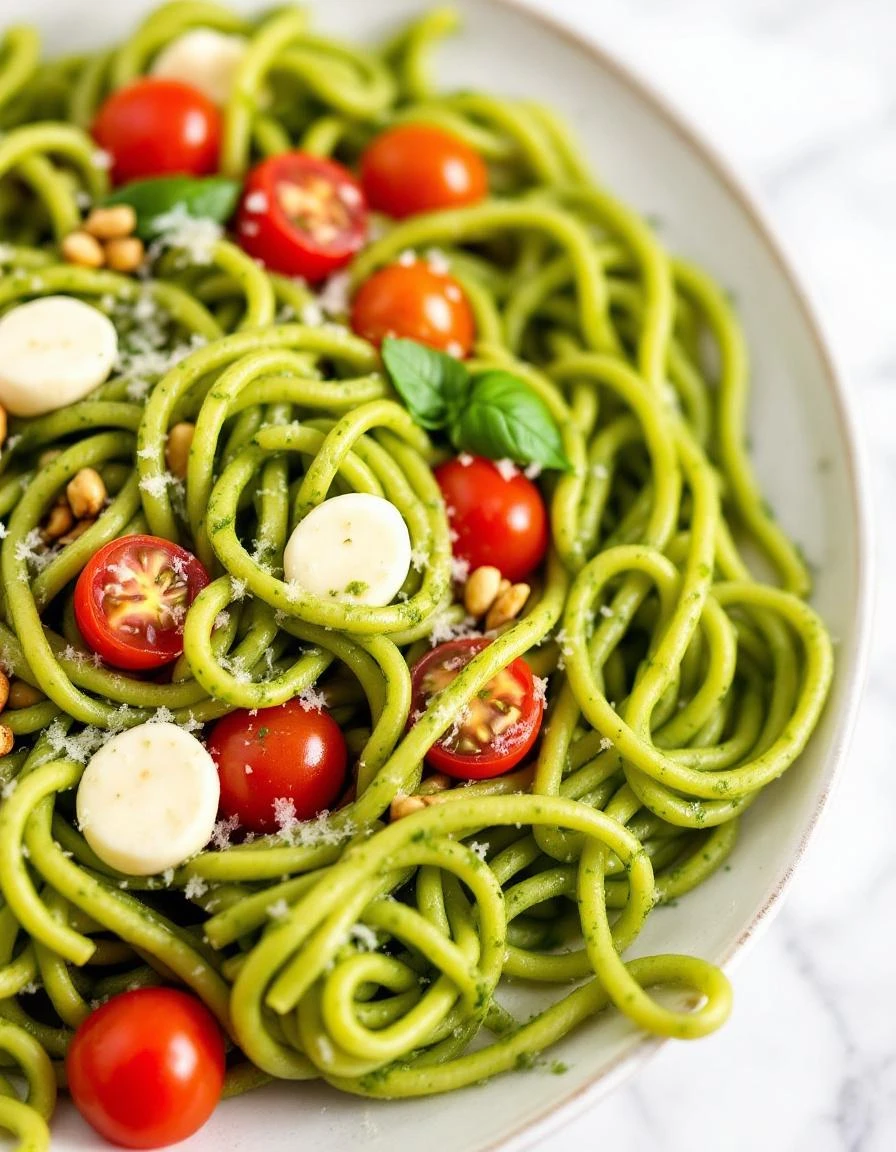
Cold Pesto Pasta Salad
Ingredients
Equipment
Method
- Bring a large pot of salted water to a boil, then add the pasta and cook until just al dente, about 8-10 minutes. Drain and rinse under cold water to stop the cooking process, then shake off excess water and set aside.
- While the pasta cooks, toast the nuts in a dry skillet over medium heat until fragrant and lightly golden, about 2-3 minutes. Let them cool slightly.
- Add the basil leaves, garlic, toasted nuts, pesto, lemon juice, and grated cheese to a food processor or blender. Blend until smooth and creamy, stopping to scrape down the sides as needed. Taste and season with salt and pepper, adjusting as desired.
- Transfer the cooled pasta to a large mixing bowl. Pour the pesto over the pasta and toss gently until every strand is evenly coated with the vibrant, herby sauce. The pasta should glisten and look well-dressed.
- Serve immediately for a fresh, chewy texture or cover and refrigerate for up to 24 hours. If refrigerating, toss again before serving to redistribute the pesto and refresh the coating.
- Enjoy the chilled pesto pasta salad straight from the fridge or at room temperature, savoring the bright flavors and satisfying crunch of the cooled pasta coated in herby pesto.
Common Mistakes and How to Fix Them
- FORGOT to taste the pesto before mixing—adjust salt or lemon to brighten flavor.
- DUMPED hot pasta into the pesto—always rinse with cold water to stop cooking and avoid mush.
- OVER-TORCHED the garlic while roasting—use gentle heat and watch closely for a sweet, mellow flavor.
- MISSED to drain pasta thoroughly—excess water dilutes the pesto and makes the salad watery.
Make-Ahead and Storage Tips
- Cook and rinse the pasta ahead of time, store in an airtight container in the fridge for up to 24 hours. It thickens slightly but still works well.
- Prepare the pesto and chop herbs a day in advance. Keep refrigerated in a sealed jar or container, bring to room temp before mixing.
- Assemble the salad a few hours before serving. Toss pasta with pesto and add any fresh toppings right before serving to keep textures crisp.
- Flavors meld and deepen after a day in the fridge—expect a slightly more concentrated herb aroma and richer taste.
- Refrigerate leftovers in an airtight container for 2–3 days. The pasta absorbs pesto, and the texture softens gradually.
- To reheat, let it come to room temp or serve cold—if you prefer it warmer, briefly microwave, tasting for the perfect warm herb punch.
FAQs
1. How should the pasta feel when served cold?
Cold pesto pasta has a firm, chewy texture with a bright, herby aroma. The flavors are sharp and fresh, with a slight oily sheen from the pesto coating every strand.
2. What should the pesto smell and taste like?
The pesto should be vibrantly green, fragrant with garlic and basil, and slightly oily. If it smells muted or tastes bland, toss in a squeeze of lemon or a pinch more cheese.
3. Can I use different pasta shapes?
Use a variety of pasta shapes—fusilli, spaghetti, or penne. Cook until al dente, then rinse with cold water until the starchy heat is gone, leaving it cool and firm.
4. How long can I store it in the fridge?
The salad keeps well in the fridge for up to 24 hours. The flavors deepen, and the pasta softens slightly. For best texture, add fresh herbs or cheese just before serving.
5. Should I reheat or serve cold?
Serve straight from the fridge or let it sit at room temp for about 10 minutes. If reheating, warm gently in the microwave or skillet, tasting for that fresh, herby brightness.

Hi, I’m Isabella Cury, the creator behind Elevating Simple. Food has always been my passion, but it’s not just about creating meals—it’s about taking everyday ingredients and transforming them into something extraordinary.
My journey in the culinary world has been a blend of education, dedication, and a deep love for sharing food with others. Through this blog, I aim to inspire people to find joy in simple, flavorful cooking.


