
This dish is all about playing with contrasts—the crispy, rendered pork belly paired with a silky, tangy apple puree. I love how the crackle of the skin hits your teeth, giving way to that melt-in-your-mouth richness beneath. The apple puree cuts through that fat with bright, fresh acidity, making each bite feel balanced and lively.
I first started making this combo after a weekend at a friends’ farm, where I watched apples and pork belly both get slow-cooked into comfort. There’s something grounding about that crispy crackle and the sweet-tartness of apples. It’s a dish that feels indulgent but also surprisingly fresh—perfect for when you want something cozy but not heavy.
Focusing on the contrast between crispy pork belly and smooth, bright apple puree, this dish explores the harmony of textures and flavors that awaken the senses and evoke nostalgic comfort.
Crispy Pork and Bright Apples
- The crackle of the pork skin still makes me smile, even after dozens of tries; it’s that perfect moment of crispy joy.
- I feel a rush of nostalgia when I mash the apples into a bright, slightly tart puree—reminds me of fall afternoons at grandma’s.
- Cooking this dish always brings a sense of pride, watching that fat render out and the skin turn a deep, glossy gold.
- There’s a quiet relief in sharing this with friends, knowing it’s simple but feels special every single time.
- The balance of crispy pork and vibrant apple has become my go-to for cozy weekend dinners—comfort that feels like a warm hug.
The story behind this recipe
- Making this dish started from a simple craving for that perfect crispy pork skin paired with something fresh and tangy. One day, I had a batch of apples that begged to be turned into a puree, and I thought, why not combine the two? It’s not a fancy, polished dish—just honest, satisfying, and a little wild in its contrast. That crispy crackle and bright puree somehow feel like a celebration of basic ingredients done right.
- This recipe is a bit of an ode to those messy, spontaneous family dinners where everyone fights for the crispy bits and the sweet-tart spoonfuls. I remember the first time I nailed the skin—crisp, crackling, with a perfect melt-in-your-mouth fat underneath—and it made me realize how much joy can be found in simple, honest cooking. It’s a dish that reminds me that good flavors often come from trusting what’s in season and what feels good to eat.
- heading
- story_type
Trivia and Historical Roots
- Pork belly has been a staple in Chinese cuisine for centuries, often slow-roasted to achieve that coveted crispy skin and tender interior.
- Apple and pork pairings date back to medieval Europe, where sweet and savory combinations were a sign of wealth and abundance.
- The technique of rendering pork fat and crisping the skin originated in traditional Chinese roasting methods, now adapted worldwide.
- In France, dishes similar to this—combining rich meats with fruit—are rooted in historic rustic cooking, emphasizing seasonal ingredients.
Key ingredients and tips
- Pork belly: I love that rich, fatty layer that gets irresistibly crispy—just watch the skin turn deep golden and crackle loud enough to hear. If your skin isn’t crisping, increase the oven temp slightly or pat the skin dry before roasting.
- Apples: I prefer tart varieties like Granny Smith for that bright, tangy puree—think about how the natural acidity balances the pork’s richness. For a sweeter note, toss in a little honey or use sweeter apples, but don’t overdo it; the tartness keeps it lively.
- Sugar: I add a touch of brown sugar to the apple puree for depth—if you want less sweetness, skip it or use a splash of maple syrup instead, which adds a smoky, caramel note.
- Vinegar: A splash of apple cider vinegar in the puree heightens the brightness—if you don’t have it, lemon juice works well, just add it gradually to avoid overpowering the fruit.
- Herbs: A few sprigs of thyme or rosemary in the roasting pan lend subtle aromatic notes—skip if you prefer a cleaner, more straightforward flavor, but I think they add a cozy herbal depth.
- Salt: I season the pork generously before roasting—don’t be shy, it’s the key to bringing out that savory, complex flavor. Adjust to taste if you’re sensitive to salt.
Spotlight on key ingredients
Pork Belly:
- I love the way the fat renders out, creating a crackling skin that’s irresistibly crispy. Keep an eye on the oven to prevent burning; a slow, steady roast yields the best texture.
- Apple: Tart varieties like Granny Smith bring a bright, tangy punch to the puree. When cooked, they soften into a silky, slightly thickened sauce that complements the richness perfectly. Use fresh apples for vibrancy and avoid over-sweetening to keep the balance.
Apple:
- I prefer tart apples for that lively contrast, but sweeter apples can be swapped in if you want a softer, honeyed flavor. The key is balancing acidity with sugar so it’s lively but not aggressive.
- Vinegar: A splash of apple cider vinegar heightens brightness and sharpness in the puree. Lemon juice works in a pinch, just add a little at a time to avoid overpowering the fruit’s natural flavor.
Notes for ingredient swaps
- Pork Belly: I prefer a fresh, skin-on piece for that crackling; if unavailable, pork shoulder with skin can work, but won’t be as crispy.
- Apples: Granny Smith are my go-to for tartness, but Braeburn or Fuji add sweetness; adjust sugar accordingly.
- Sugar: Brown sugar adds depth, but honey or maple syrup can lend a different, more floral sweetness—use sparingly.
- Vinegar: Apple cider vinegar brightens the puree; lemon juice is a good quick substitute, just add gradually.
- Herbs: Fresh thyme or rosemary add aromatic layers; dried herbs can be used if fresh isn’t available, but less potent.
- Salt: Kosher or sea salt helps to season evenly; if using table salt, reduce the amount slightly to avoid over-salting.
Equipment & Tools
- Oven: For roasting the pork belly evenly at high and low temperatures.
- Wire rack and baking sheet: Allows hot air circulation for crispy skin and catches drips.
- Sharp knife: To score the pork skin for crackling.
- Saucepan: For cooking and mashing the apple puree.
- Immersion blender or fork: To blend or mash the cooked apples into a smooth puree.
- Chef’s spoon: For tasting and adjusting seasoning.
Step-by-step guide to pork belly with apple puree
- Preheat your oven to 220°C (430°F). Pat the pork belly skin dry with paper towels—this is crucial for crispiness. Score the skin in a crosshatch pattern, about 1 cm apart, without cutting into the meat. Rub the meat side generously with salt, pepper, and herbs if using. Set aside.
- Place the pork belly on a wire rack over a baking sheet, skin side up. Roast in the oven for 25-30 minutes until the skin starts to crackle and turn deep golden. Keep an eye on the crackling; if it’s not crisping, increase oven temperature slightly or broil for 2-3 minutes, watching constantly.
- Reduce oven temperature to 160°C (320°F). Continue roasting for another 1.5 to 2 hours until the meat is tender—probe with a skewer; it should slide in easily. If the skin isn’t crispy enough after the total time, broil for an additional 2 minutes, checking frequently.
- While the pork roasts, peel and core the apples. Chop into chunks. In a saucepan over medium heat, melt a small amount of butter, then add apples and a pinch of salt. Cook, stirring occasionally, until the apples soften and release aroma—about 10 minutes.
- Add a tablespoon of sugar and a splash of apple cider vinegar to the apples. Simmer for another 10 minutes until the apples are very soft and the mixture thickens slightly. Use an immersion blender or mash with a fork to create a smooth, bright apple puree. Adjust sweetness or acidity to taste. Keep warm.
- Once the pork is done roasting, remove from the oven and let rest for 10 minutes. Resting allows the juices to redistribute, ensuring moist meat and crispy skin.
- Slice the pork belly into thick strips. Plate alongside a generous spoonful of apple puree. Drizzle with a little of the pork’s juices or a splash of vinegar for brightness. Serve immediately.
- For the best crackle, serve while the pork skin is still crispy and crackling loudly with each bite. The contrast between the crispy skin and smooth, tangy apple puree is what makes this dish special.
Let the pork rest on a cutting board for 10 minutes, tented loosely with foil. Slice into thick pieces and arrange on a warm plate. Spoon the apple puree beside or over the pork, drizzling with pan juices if desired. Serve immediately for maximum contrast and crunch.
How to Know It’s Done
- Pork skin: Crackling should be deep golden and crackling loudly when pressed.
- Meat: Probe with a skewer or thermometer—internal temp around 85°C (185°F)—meat should be tender and juicy.
- Apple puree: Should be smooth, bright, and slightly thickened, with a vibrant tartness balancing sweetness.
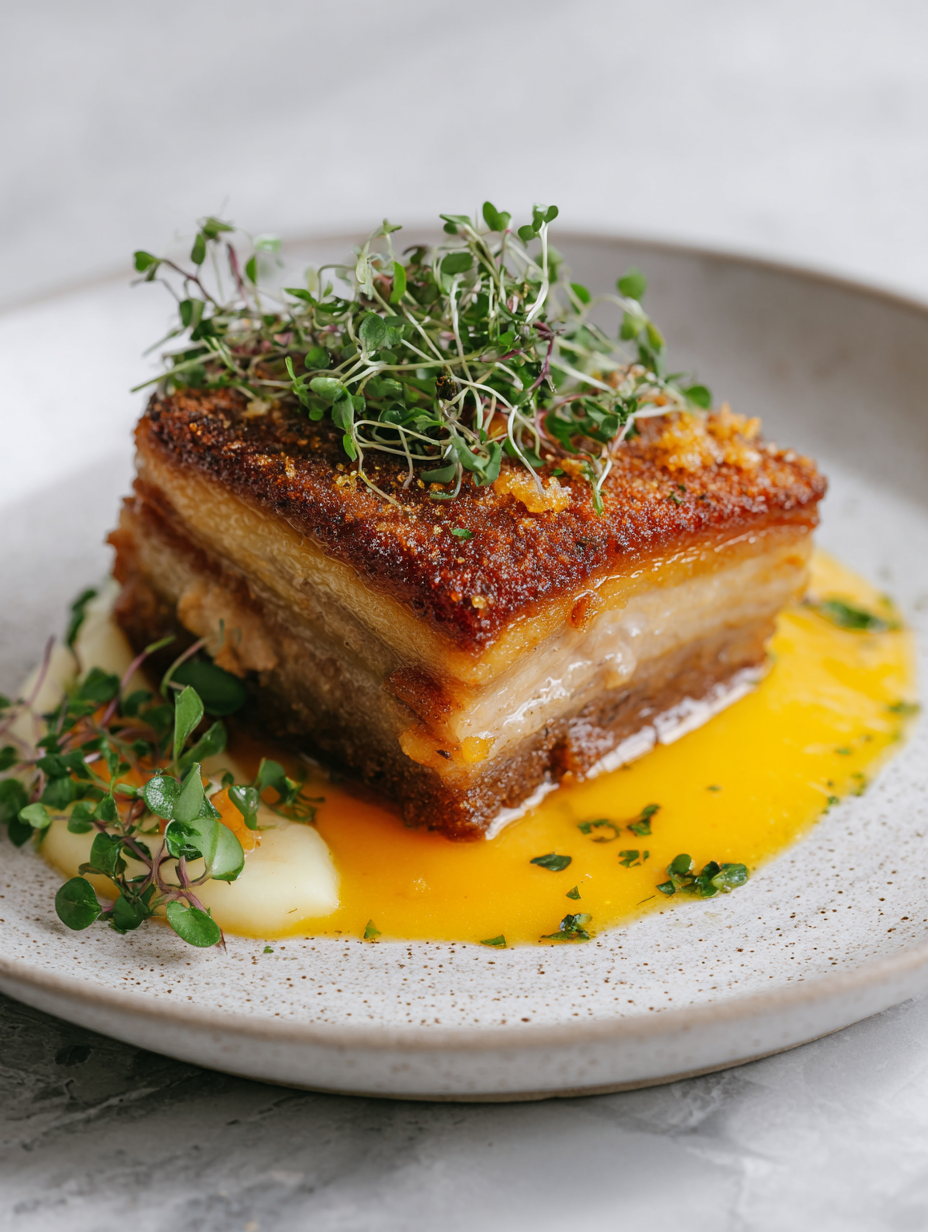
Crispy Pork Belly with Bright Apple Puree
Ingredients
Equipment
Method
- Preheat your oven to 220°C (430°F). Pat the pork belly dry with paper towels, especially the skin, to ensure crispiness. Score the skin in a crosshatch pattern about 1 cm apart, taking care not to cut into the meat. Rub the meat side generously with 1 teaspoon of salt, pepper, and herbs if using. Set aside.
- Place the pork belly on a wire rack set over a baking sheet, skin side up. Roast in the hot oven for 25-30 minutes until the skin begins to crackle and turn a deep golden hue. Keep an eye on it to prevent burning; if needed, broil for an additional 2-3 minutes, watching carefully.
- Reduce the oven temperature to 160°C (320°F). Continue roasting for about 1.5 to 2 hours until the meat is tender and the skin is crispy and crackling loudly when pressed. For extra crispness, you can broil for another 2 minutes, but stay close to prevent burning.
- Meanwhile, peel and core the apples, then chop them into chunks. In a saucepan over medium heat, melt a teaspoon of butter or a splash of water, then add the apples along with a pinch of salt. Cook, stirring occasionally, until the apples soften and release a fragrant aroma, about 10 minutes.
- Add the brown sugar and apple cider vinegar to the cooked apples. Simmer gently for another 10 minutes until the mixture thickens slightly and becomes fragrant. Use an immersion blender or mash with a fork until smooth and vibrant; taste and adjust acidity or sweetness as needed.
- Once the pork has finished roasting, remove it from the oven and let it rest for 10 minutes. Resting helps the juices redistribute, ensuring juicy slices and crispy skin.
- Slice the pork belly into thick, generous pieces. Arrange them on a serving platter and spoon the bright, tangy apple puree alongside or over the slices. Drizzle with any pan juices or a splash of vinegar for extra brightness.
- Serve immediately while the skin is still crackling loudly with each bite, enjoying the contrast of crispy skin, tender meat, and vibrant apple puree. This dish pairs beautifully with a simple green salad or roasted vegetables.
Tips & Tricks for Perfect Pork Belly
- Dry the pork skin thoroughly: Use paper towels to pat the skin until completely moisture-free for maximum crispiness.
- Score the skin evenly: Make shallow, crosshatch cuts without cutting into the meat to help fat render and skin crackle.
- Start high, then lower oven temp: Roast at 220°C (430°F) initially for crackling, then lower to 160°C (320°F) for tenderness.
- Use a wire rack: Elevate the pork on a rack to allow hot air circulation, ensuring even crisping all over.
- Rest before slicing: Let the pork sit for 10 minutes after roasting to keep juices in and avoid dry slices.
- Adjust broiling: If the skin isn’t crackling, broil for 2-3 minutes, but watch carefully to prevent burning.
- Balance puree acidity: Taste the apple puree before serving—add vinegar or lemon gradually to keep it lively and fresh.
Common mistakes and how to fix them
- FORGOT to dry pork skin → Pat thoroughly for crisp crackling.
- DUMPED too much salt → Season generously but taste before salting heavily.
- OVER-TORCHED skin → Reduce oven temp or cover with foil if burning occurs.
- MISSED resting time → Rest pork 10 minutes for juicy slices.
Quick Fixes & Pantry Swaps
- When crackling is soft → Splash with a little vinegar to boost crispness.
- If pork skin isn’t crackling → Broil for 2-3 minutes, watch closely for perfect crunch.
- Dumped too much salt → Rinse briefly and pat dry, then season lightly again.
- Overcooked apples → Reduce heat and cook gently, adding a splash of lemon for brightness.
- When apple puree is too thick → Thin with a little warm water or cider for silky smoothness.
Prep, store, and reheat tips
- You can prepare the apple puree a day in advance and store it in the fridge for up to 2 days. Let it come to room temperature before serving to enhance brightness and smoothness.
- Roasted pork belly can be made a day ahead; keep it tightly wrapped in foil or in an airtight container in the fridge for up to 24 hours. Reheat gently in a warm oven (around 150°C/300°F) until warmed through, with a crispy skin still intact.
- The pork’s fat and skin will lose some crispness after refrigeration, so briefly broil the slices on high for 1-2 minutes just before serving to restore crackle. Watch closely to prevent burning.
- Reheat the apple puree gently on the stove over low heat, stirring occasionally, until steaming and bright. Avoid boiling to preserve its fresh, tangy flavor.
- For longer storage, both the pork and apple puree can be frozen separately for up to 1 month. Thaw in the fridge overnight and reheat as described above, noting that the pork skin may not regain full crispness after freezing.
Top questions about Pork Belly with Apple Puree
1. Can I use different apples for the puree?
Use tart apples like Granny Smith for a bright, tangy puree that cuts through the richness of the pork. Sweeter apples can be used if you prefer a softer, honeyed flavor.
2. How do I get crispy pork skin?
Ensure the pork skin is thoroughly dried and scored before roasting. Starting with a hot oven helps crackle the skin, then lowering the temperature tenderizes the meat.
3. What temperature should I roast the pork at?
Roast the pork belly at 220°C (430°F) initially for crackling, then reduce to 160°C (320°F) for tenderness. Rest the meat for 10 minutes before slicing.
4. My pork skin isn’t crackling, what do I do?
If the pork skin isn’t crackling, broil it for 2-3 minutes, watching carefully to prevent burning. Make sure the skin is dry before roasting.
5. Can I make this dish ahead?
Store the cooked pork and apple puree separately in airtight containers for up to 24 hours in the fridge. Reheat the pork gently in a warm oven and the puree on the stove over low heat.
6. How can I adjust the apple puree’s flavor?
Add a splash of vinegar or lemon juice to the apple puree to brighten its flavor. For a sweeter note, a small amount of honey or maple syrup works well.
7. How do I ensure even crispiness?
Use a wire rack during roasting to allow hot air circulation, which helps achieve crispy crackling. Rest the pork before slicing to keep it juicy.
8. How do I restore the crackle after storing?
If the pork skin becomes soft after refrigeration, briefly broil it on high for 1-2 minutes just before serving to restore crunch.
9. How do I score the pork properly?
Choose a sharp knife to score the pork skin. Proper scoring helps render fat and creates that desirable crackling that crackles loudly.
10. How do I season the pork properly?
Use a gentle hand when seasoning. Salt is key for flavor but add it at the right stage to prevent oversalting the dish.
This dish is a reminder that simple ingredients, when treated with patience, can create moments of real comfort. The crackle of the pork skin and the bright tang of the apple puree make every bite memorable in its honest way.
Cooking this feels like a small celebration of seasonal flavors and straightforward techniques—perfect for when you want something satisfying without fuss. It’s a dish that invites you to slow down and enjoy the process as much as the result.