
Mushroom risotto isn’t just about the taste; it’s about the texture and aroma that fill the kitchen as you cook. I love how the earthy scent of mushrooms intensifies as they caramelize, creating a deep, smoky base for the rice to soak up. It’s a dish that demands your full attention—timing, heat, and patience all come together in a slow dance to achieve that perfect velvety consistency.
The real magic happens when you get that initial sizzle right, and the mushrooms start to release their juices. Every stir, every splash of broth, builds layers of flavor that feel like a warm, comforting hug after a long day. It’s simple, honest cooking that rewards you with a dish rich in aroma and depth, especially perfect for cozy evenings.
Focusing on the textures and earthy aroma of mushrooms, this risotto emphasizes the importance of timing and heat control to achieve a velvety, oozy dish that feels like a warm hug on a chilly evening.
The earthy allure of mushrooms
- Cooking this risotto reminds me of lazy Sunday afternoons with the smell of mushrooms filling the whole house.
- There’s a quiet pride in getting the rice just right—creamy, with a slight bite, that’s pure comfort.
- I love how the earthy aroma of mushrooms lingers long after the dish is gone, making the kitchen smell like a forest floor after rain.
- This recipe has seen me through both chaos and calm—always a reminder that simple, honest food is what truly sustains me.
The magic of slow cooking
Cooking this mushroom risotto takes me back to my early days in a tiny apartment kitchen, where I first learned the joy of slow, deliberate cooking. I remember the smell of garlic and earthy mushrooms filling the air as I stirred, feeling a quiet satisfaction in transforming simple ingredients into something deeply comforting. That moment of patience, watching the rice turn creamy, made me realize how much I love the process as much as the dish itself.
Historical & Cultural Tidbits
- Mushroom risotto has roots in Northern Italy, where farmers used wild mushrooms to flavor their rice dishes centuries ago.
- The use of arborio rice, with its unique ability to absorb liquids and release starch, was a game-changer for creamy risottos.
- In Italy, mushrooms are a seasonal delicacy, making mushroom risotto a celebratory dish during autumn and early winter.
- The term ‘risotto’ comes from the Italian word ‘riso,’ meaning rice, and has been a staple comfort food for generations.
Ingredient breakdown: key components
- Mushrooms: I love using a mix of cremini and shiitake for depth; their earthy aroma is intoxicating as they cook down, releasing a smoky scent that fills the kitchen. Feel free to swap with button mushrooms if that’s what’s fresh, but avoid processed varieties—they lack that rich umami.
- Arborio rice: This is the heart of the dish—creamy, starchy, and perfect for absorbing flavors. If you can’t find arborio, carnaroli works well too; just watch the cook time a bit. Skip long-grain rice—it won’t give you that luscious texture.
- Broth: I prefer homemade veggie or chicken broth—full-bodied and rich, it’s the backbone of flavor. Using store-bought works fine, but look for low-sodium varieties; you can always add salt later. Keep it hot, so it don’t cool down your risotto as you stir.
- White wine: Adds a subtle acidity and brightens the earthy tones. I use a dry, crisp wine—nothing too sweet. If you’re avoiding alcohol, a splash of lemon juice or vinegar can mimic the brightness, but it’s not quite the same.
- Butter & Parmesan: These finishers make the risotto feel indulgent and velvety. I add butter at the end for richness, and Parmesan for that salty, umami punch. Feel free to skip Parmesan for a dairy-free version—just expect a slightly different finish, less creamy and more earthy.
- Garlic & shallots: Sautéed until translucent, they form the fragrant base—warm, inviting, with a slight sweetness. If you’re in a rush, skip shallots and just use garlic, but don’t skip the aromatic sauté; it’s where the magic begins.
Spotlight on key ingredients
Mushrooms:
- I love how cremini and shiitake release a smoky, umami-rich aroma as they cook down, turning deeply earthy and oozy. They behave differently—cremini stay tender, shiitake get chewier and more intense.
- Their texture shifts from firm to velvety, soaking up the broth and fat, creating a rich, earthy burst with every bite. The smell intensifies as they caramelize, filling the kitchen with a forest-floor scent.
Arborio rice:
- This rice is the backbone—creamy, starchy, and absorbent. It releases a glossy starch as it cooks, helping build that velvety texture. If you swap it out, the risotto loses its signature creaminess.
- The grains stay al dente with a slight chew but become tender and rich when cooked right. Keep stirring and adding broth gradually; it’s what makes the dish luscious and cohesive.
Notes for ingredient swaps
- Mushrooms: Cremini or shiitake work great, but button mushrooms are a milder, more common substitute. Avoid processed or dried varieties—they lack that fresh, earthy aroma.
- Broth: Use homemade vegetable or chicken broth for richer flavor. Store-bought low-sodium broth is fine; just warm it up to keep the cooking smooth.
- Wine: Dry white wine adds brightness. For non-alcoholic versions, try a splash of lemon juice or apple cider vinegar—less depth, but still lively.
- Butter & Parmesan: For dairy-free, swap in olive oil and nutritional yeast. You won’t get that creamy, salty punch, but it’s still deliciously earthy.
- Arborio rice: Carnaroli or vialone nano are excellent swaps, but long-grain rice won’t give you the same velvety texture—more fluffy than creamy.
- Onions: Shallots add a subtle sweetness, but yellow onions sautéed until golden work just as well if you’re in a pinch.
- Herbs: Fresh thyme or parsley can be swapped with dried, but use half the amount—fresh really brightens the dish.
Equipment & Tools
- Wide pan: Ensures even cooking and easy stirring.
- Wooden spoon: Gentle on the rice, helps prevent sticking.
- Ladle: For adding hot broth in controlled amounts.
- Measuring cups and spoons: Accurate ingredient measurement.
- Heat-resistant surface or trivet: Protects your countertop from hot pans.
Step-by-step guide to mushroom risotto
- Gather your equipment: a wide, heavy-bottomed pan (about 30cm diameter), a wooden spoon, and a ladle. Have your broth heated and kept at a gentle simmer throughout.
- Prepare your ingredients: chop shallots and garlic finely, slice a mix of mushrooms (cremini, shiitake) into bite-sized pieces, and measure out your rice and wine.
- Heat the pan over medium heat (about 160°C/320°F). Add a splash of oil and sauté the shallots and garlic until translucent—about 2-3 minutes, until they smell sweet and fragrant.
- Add the sliced mushrooms to the pan. Cook until they release their juices and turn a deep brown—about 5-7 minutes. Stir regularly and watch for a rich, earthy aroma filling the air.
- Stir in the arborio rice, coating each grain with oil and mushroom juices. Toast for 1-2 minutes until the edges look slightly translucent, then pour in the white wine. Cook until the alcohol smell fades, about 1 minute.
- Begin adding hot broth, one ladleful at a time. Stir constantly, allowing the rice to absorb the liquid before adding more. Maintain a gentle simmer, around 85°C/185°F. Continue until rice is creamy and al dente—about 18-20 minutes.
- Check the risotto: it should be velvety, with a slight chew. If it’s too runny, cook a bit longer; if it’s too thick, stir in a splash more warm broth. Taste and adjust salt if needed.
- Remove from heat. Stir in butter and grated Parmesan (or dairy-free alternatives) until melted and glossy. Rest for 2 minutes to let the flavors meld and the texture settle.
- Plate the risotto in shallow bowls, garnish with a few fresh mushroom slices or herbs if desired. Serve immediately for the best velvety texture.
Rest the risotto for 2 minutes off heat. Stir in butter and cheese, then serve immediately while velvety and warm.
How to Know It’s Done
- Mushrooms are deeply caramelized and aroma is earthy and smoky.
- Rice grains are tender yet slightly chewy, with a creamy consistency that holds shape.
- Risotto is velvety, not watery or clumpy, with a glossy sheen.
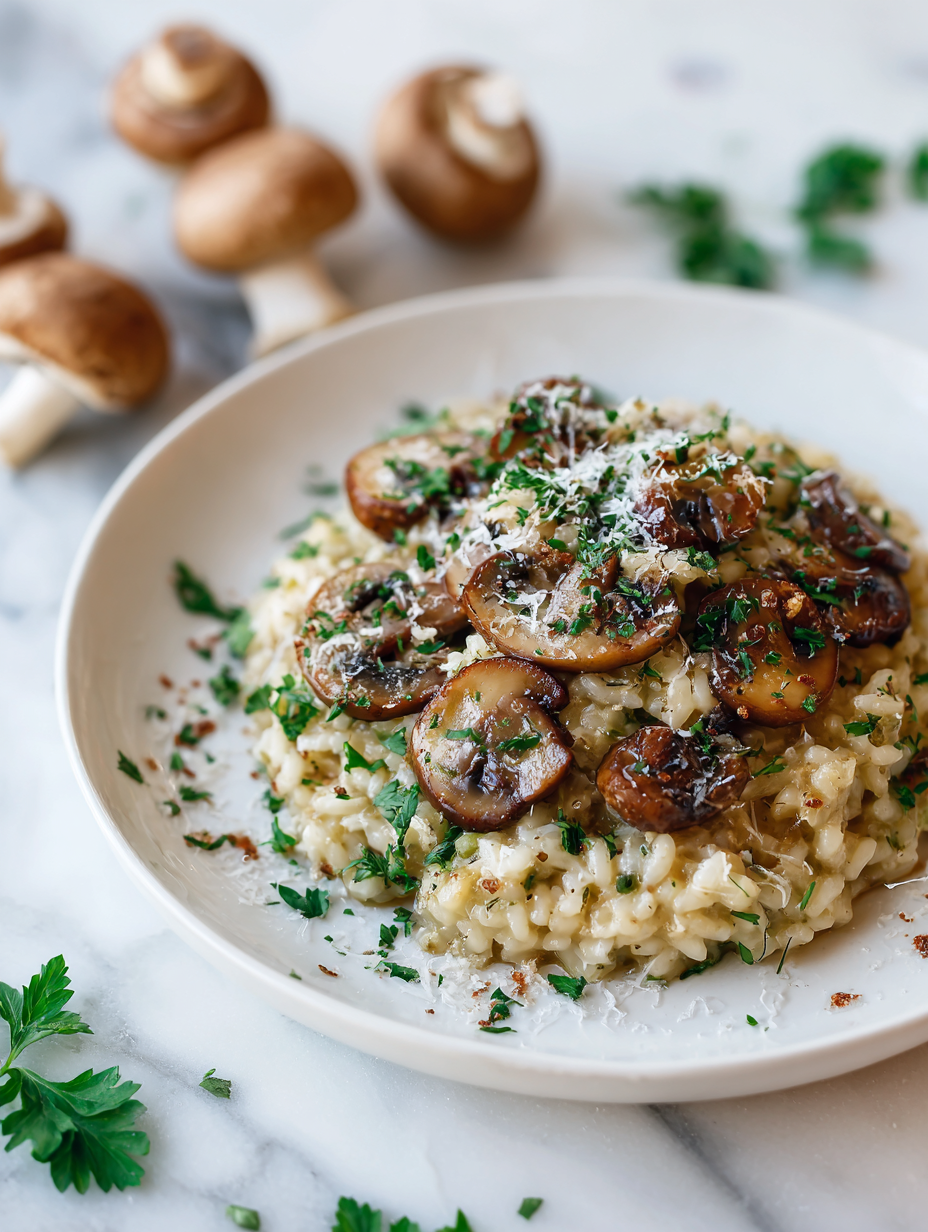
Mushroom Risotto
Ingredients
Equipment
Method
- Heat a wide pan over medium heat and add a tablespoon of olive oil. Once shimmering, add the finely chopped shallots and minced garlic, sautéing until translucent and fragrant, about 2-3 minutes.
- Add the sliced cremini and shiitake mushrooms to the pan. Cook, stirring occasionally, until they release their juices and turn deeply caramelized—about 5-7 minutes—filling your kitchen with a rich, earthy aroma.
- Stir in the arborio rice, coating each grain with the mushroom juices and oil. Toast the rice for 1-2 minutes until the edges become slightly translucent and it starts to smell nutty.
- Pour in the white wine and cook, stirring constantly, until the alcohol evaporates and the mixture is fragrant, about 1 minute.
- Begin adding the warm broth, one ladleful at a time, stirring continuously. Allow the rice to absorb the liquid before adding more. Maintain a gentle simmer and keep stirring to help release starches, creating a creamy texture. Continue this process until the rice is tender but still slightly al dente—around 18-20 minutes.
- Check the risotto: it should be velvety, with a glossy sheen, and the rice grains tender yet slightly chewy. If it becomes too thick, stir in a splash more broth; if too runny, cook a little longer, stirring frequently.
- Remove the pan from heat and stir in the butter and grated Parmesan cheese until melted and smooth. Let it rest for 2 minutes to allow the flavors to meld and the texture to settle into that perfect velvety finish.
- Scoop the mushroom risotto into shallow bowls, garnish with additional mushroom slices or herbs if desired, and serve immediately while warm and creamy.
Pro tips for perfect mushroom risotto
- Use a wide pan to promote even heat and quicker evaporation, resulting in a creamier risotto.
- Stir continuously when adding broth to release starches, creating that velvety texture that defines good risotto.
- Cook mushrooms over medium heat until deeply caramelized—rich, smoky, and oozy with flavor, not soggy.
- When to add wine—wait until mushrooms are fragrant and browned, and toasting rice until edges turn translucent.
- Taste and adjust salt at the end—mushrooms’ earthy notes can be subtle, so seasoning is key for balance.
- Rest the risotto off heat for 2 minutes before serving—this helps the flavors meld and improves texture.
- Finish with a knob of butter and Parmesan while hot—creates a glossy, velvety finish with rich depth.
Common mistakes and how to fix them
- FORGOT to stir constantly → Stir regularly to prevent sticking and ensure creaminess.
- DUMPED all broth at once → Add broth gradually, about a ladleful at a time, for proper absorption.
- OVER-TORCHED the mushrooms → Cook mushrooms on medium heat until caramelized, not burnt.
- FAILED to taste and adjust salt → Always taste before serving; season to enhance earthy flavors.
Quick fixes and pantry swaps
- If mushrooms release too much moisture, splash in a little dry white wine to deglaze and concentrate flavors.
- When broth cools, do a quick rescue—warm it before adding to keep risotto creamy and prevent clumping.
- Splash a bit of olive oil or broth if rice sticks or burns at the bottom, then gently stir to loosen.
- Patch a watery risotto by stirring in a spoonful of grated Parmesan—adds richness and thickens slightly.
- Shield overcooked mushrooms by removing pan from heat immediately—fresh ones hold better texture and flavor.
Prep, store, and reheat tips
- Prep the broth and keep it warm; this prevents cooling the rice during cooking, ensuring a smooth, velvety texture.
- Slice mushrooms and chop shallots ahead of time; store in airtight containers in the fridge for up to 24 hours, keeping their earthy aroma intact.
- Assemble ingredients and tools on your counter; having everything ready speeds up the cooking process and keeps you from rushing once started.
- Refrigerate leftover risotto in an airtight container for up to 2 days; it will lose some of its creaminess but still retains good flavor.
- Reheat gently on the stove over low heat, stirring frequently; add a splash of hot broth to revive the creamy texture and release fresh earthy aroma.
FAQs about Mushroom Risotto
1. Why is my risotto too watery?
Use a wide, shallow pan to help the rice cook evenly and absorb flavors better.
2. How do I get a creamy texture?
Stir continuously when adding broth to release starches, making the risotto creamy and velvety.
3. Why are my mushrooms soggy?
Cook mushrooms until deeply caramelized, releasing their smoky aroma and adding richness to the dish.
4. Can I skip stirring?
Add broth gradually—about a ladleful at a time—and stir often for proper absorption and creaminess.
5. Can I make it dairy-free?
Use freshly grated Parmesan and a knob of butter at the end for a glossy, rich finish.
6. How do I reheat leftovers?
Reheat risotto gently over low heat, adding a splash of broth to restore creaminess and aroma.
7. Can I use dried mushrooms?
Choose earthy mushrooms like cremini or shiitake for depth of flavor. Button mushrooms work too, but are milder.
8. What rice is best for risotto?
Use arborio rice for the best creaminess. Other short-grain rice can work, but won’t be as velvety.
9. Can I skip the wine?
Add a splash of white wine after the mushrooms are browned to brighten and deepen the flavor.
10. When should I season the risotto?
Taste and season at the end—mushrooms have earthy undertones that can be subtle, so adjust salt accordingly.
This mushroom risotto is a reminder that slow, honest cooking brings out the best in simple ingredients. The earthy aroma and velvety texture make it perfect for cozy nights or a quiet weekend treat.
No matter how many times I make it, I’m always surprised by how deeply comforting and layered the flavors become. It’s a dish that invites you to slow down and savor every bite, reminding you of the beauty in patience and good, honest food.