
Cooking in Hell’s Kitchen isn’t neat. It’s loud, fast, and messy, but somehow, that chaos sparks flavor in every dish. This mac and cheese isn’t about perfection — it’s about capturing that unpolished, adrenaline-fueled energy. You toss ingredients together with a sense of urgency, trusting that the boldness will shine through.
I’ve stood behind that busy pass, hearing the frantic clang of pans and the rush of orders. This recipe is my way of recreating that raw, unfiltered kitchen spirit at home. It’s comfort food with a punch, a dish that’s as imperfect as it is crave-worthy, made with quick improvisations and unrelenting flavor.
Focusing on the chaotic, adrenaline-fueled environment of Hell’s Kitchen, this recipe captures the raw, unpolished energy of a busy, high-pressure kitchen. It’s about embracing imperfections, quick improvisations, and bold flavors that stand up to the intensity of a professional line, all while making something comforting and crave-worthy.
Chaos-inspired comfort
- Cooking under pressure reminds me of that one chaotic night in Hell’s Kitchen, where flavors came alive in the chaos.
- This dish is my way of channeling the raw energy of a busy kitchen—messy, loud, but full of bold flavors.
- There’s a strange pride in tossing ingredients together quickly, trusting that imperfect will still taste damn good.
- Making this mac and cheese makes me nostalgic for those midnight shifts, where every spoonful felt like a small victory.
- It’s a comfort food that refuses to be polished—just like that high-stakes, adrenaline-fueled kitchen environment I still miss.
Chaos-fueled comfort
- This recipe was born out of late-night chaos in the kitchen, where I needed something fast, bold, and satisfying. I remember the adrenaline rush of a busy service, where ingredients were thrown together without hesitation, trusting instinct over precision. That unpolished, raw energy is what I try to capture here—no fuss, just flavor unleashed. It’s a dish that embraces imperfections, like those wild, unpredictable nights behind the line.
- Cooking this mac and cheese feels like a small rebellion—rejecting neatness in favor of bold, unfiltered comfort. It’s my culinary antidote to the high-pressure, noisy environment of a hectic kitchen, made simple enough to throw together but packed with enough punch to make you feel that rush. That imperfect, chaotic spirit is what keeps me coming back to this dish, especially when I need a reminder that good flavor doesn’t need to be polished.
- heading:
Kitchen rebellion in every bite
- This mac and cheese gained fame in Hell’s Kitchen for its unapologetic, bold flavors that mirror the intense, no-holds-barred environment of the show.
- Inspired by the chaotic energy of Gordon Ramsay’s kitchen, this dish is designed to stand up to loud, fast-paced cooking with robust, punchy ingredients.
- The recipe’s roots trace back to late-night kitchen improvisations, where chefs tossed together whatever was on hand, trusting flavor over finesse.
- Originally a secret weapon for line cooks needing quick comfort food, it’s now a badge of honor for those who love unpolished, gutsy flavors.
Ingredient breakdown: flavor and chaos
- Cheddar cheese: I love the sharp, pungent aroma that fills the kitchen as it melts—use a good aged cheddar for that punch. You can swap in Monterey Jack for milder creaminess, but don’t skip the real stuff if you want that bold flavor.
- Cream: Rich, velvety, it’s what makes this dish indulgently smooth. Heavy cream is best, but whole milk with a touch of butter can save you if you’re out—just expect slightly less lusciousness.
- Pasta: I prefer a sturdy shape like cavatappi or elbows that hold sauce well. Whole wheat or gluten-free options can work, but keep an eye on cooking time—don’t overdo it.
- Butter: It’s the base for that nutty, toasty smell. Salted butter adds depth, but unsalted is fine if you want to control the salt level. Use a generous knob to really boost flavor.
- Spices: A pinch of smoked paprika or cayenne gives it that extra kick—think of it as the secret weapon to elevate the chaos. Adjust heat to your taste, but don’t go overboard, or it’ll overpower.
- Breadcrumbs: I like a crispy topping—panko mixed with a bit of melted butter and grated cheese. For crunch, toast them until golden, and if you want a smoky hint, toss in a dash of smoked paprika.
- Mustard: Just a teaspoon of Dijon adds a subtle tang that cuts through the richness. If you’re out, a splash of hot sauce can mimic that sharp, piquant note—trust me, it works.
Spotlight on key ingredients
Cheddar cheese:
- I love the sharp, pungent aroma that fills the kitchen as it melts—use a good aged cheddar for that punch. You can swap in Monterey Jack for milder creaminess, but don’t skip the real stuff if you want that bold flavor.
- Cream: Rich, velvety, it’s what makes this dish indulgently smooth. Heavy cream is best, but whole milk with a touch of butter can save you if you’re out—just expect slightly less lusciousness.
- Pasta: I prefer a sturdy shape like cavatappi or elbows that hold sauce well. Whole wheat or gluten-free options can work, but keep an eye on cooking time—don’t overdo it.
Cream:
- It’s the silky backbone that makes the sauce cling and coat every bite—aim for heavy cream for richness or a thickened milk if you’re lightening up.
- Pasta: The shape matters—something with ridges or holes like elbows or cavatappi traps the cheesy goodness, making every forkful satisfyingly saucy.
- Butter: Adds a toasty, nutty aroma and smoothness to the sauce—use a generous amount for depth, especially if you’re skipping processed shortcuts.
Notes for ingredient swaps
- Dairy-Free: Swap regular cheese for a plant-based version. It won’t melt as smoothly, but it still delivers that cheesy punch.
- Cream: Use evaporated milk or a thick cashew cream as a lighter alternative. Expect slightly less richness, but still creamy.
- Pasta: Whole wheat or gluten-free pasta works—just watch the cooking time; they might need a minute less or more.
- Butter: Olive oil or vegan margarine can replace butter, offering a different flavor but still providing fat for richness.
- Breadcrumbs: Panko works best for crunch, but crushed tortilla chips or crispy fried onions can add interesting texture.
- Cheddar: Gouda or Monterey Jack can stand in, but they’ll alter the sharpness—choose based on your flavor preference.
- Hot sauce: A dash of sriracha or cayenne can boost heat if you’re out of cayenne or smoked paprika, adding smoky or spicy notes.
Equipment & Tools
- Large saucepan: Cook pasta evenly and quickly.
- Deep skillet or cast-iron pan: Simmer cheese sauce and toss pasta; withstand high heat.
- Whisk: Blend cheese and cream smoothly without lumps.
- Baking dish: Finish with crispy topping in the oven.
Step-by-step guide to Hell’s Kitchen Mac and Cheese
- Gather all your equipment: a large saucepan for pasta, a deep skillet or cast-iron pan for sauce, a whisk, and a baking dish if finishing in the oven. Preheat oven to 200°C (390°F) if baking.
- Boil water in the large saucepan, salt generously, and cook pasta until just al dente, about 2 minutes less than package instructions. Drain and set aside.
- While pasta cooks, melt a generous knob of butter in your skillet over medium heat, about 160°C (320°F). Once melted, add grated sharp cheddar, stirring until it begins to melt and smell nutty, about 2-3 minutes.
- Pour in heavy cream or whole milk mixture, stirring constantly. Bring to a gentle simmer—look for a slight thickening and a fragrant, cheesy aroma. If it’s boiling, reduce heat.
- Add cooked pasta to the sauce, tossing to coat thoroughly. Taste and adjust salt, adding a splash of hot sauce or a pinch of smoked paprika for extra punch.
- If you want a crispy topping: mix panko breadcrumbs with melted butter and grated cheese, sprinkle evenly over the pasta in your baking dish, then bake for 15 minutes until golden and bubbly.
- Remove from oven, let rest for 5 minutes—the sauce thickens slightly. Plate generously, sprinkle with extra cheese or herbs if desired, and serve hot.
- Checkpoints for doneness: the cheese should be gooey and bright yellow-orange, pasta tender but not mushy, and topping crispy and browned. The sauce should coat the pasta evenly without separation.
Let the dish rest for 5 minutes off heat to allow the sauce to set slightly. Finish with a sprinkle of extra cheese or herbs for visual contrast. Serve straight from the dish or plated with a quick garnish.
How to Know It’s Done
- Cheese is fully melted and bubbly, with no oily separation.
- Pasta is tender but holds shape, with a slight bite.
- Topping is golden brown and crispy, not burnt.
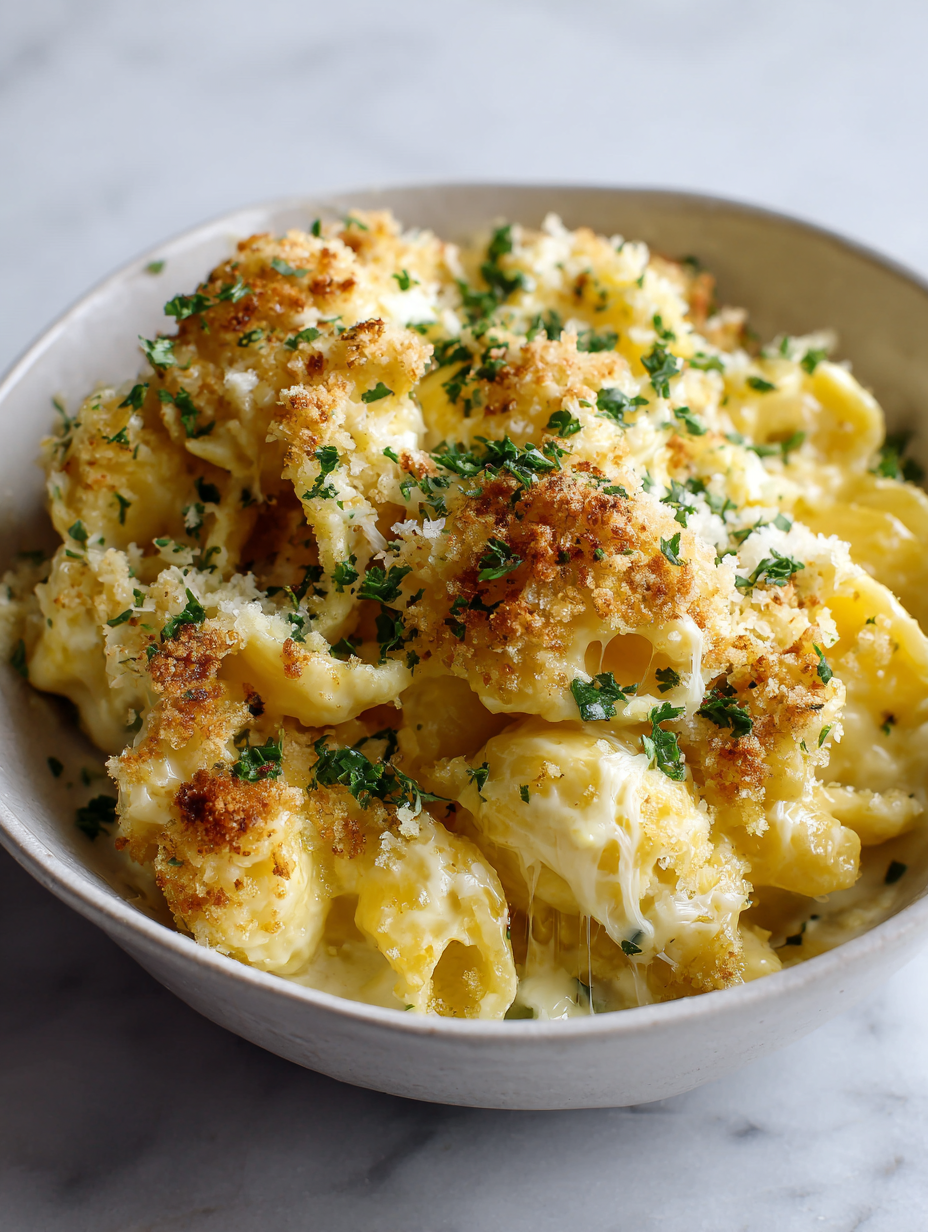
Hell’s Kitchen-Style Mac and Cheese
Ingredients
Equipment
Method
- Bring a large saucepan of salted water to a boil. Add the pasta and cook until just al dente, about 1-2 minutes less than package instructions. Drain and set aside.
- In your deep skillet, melt the butter over medium heat until fragrant and slightly bubbling, about 1-2 minutes. Add the grated cheddar and stir until it begins to melt and smells nutty, about 2-3 minutes.
- Pour in the heavy cream and add a teaspoon of Dijon mustard, stirring constantly to combine. Simmer gently until the mixture thickens slightly and releases a cheesy aroma, about 3-4 minutes.
- Add the cooked pasta to the sauce, tossing gently to coat all the noodles evenly. Stir in smoked paprika or cayenne for a spicy kick. Taste and adjust seasoning if needed.
- Preheat your oven to 200°C (390°F). In a small bowl, combine panko breadcrumbs with melted butter and grated cheese, mixing until evenly coated. Sprinkle this mixture over the pasta in a baking dish.
- Bake the dish in the oven until the topping is golden brown and crispy, about 15 minutes. Once done, remove from oven and let sit for 5 minutes to allow the sauce to set.
- Serve hot, garnished with extra cheese or herbs if desired, enjoying the gooey, crispy, and chaotic flavors that mimic a busy kitchen’s energy.
Tips & tricks for perfect chaos
- Bold cheese: Use a sharp, aged cheddar for that intense, gooey melt. Skip mild cheeses if you want punch.
- Simmer gently: Bring your sauce to a gentle bubble—avoid boiling to keep the cheese smooth and not grainy.
- Stir constantly: Keep the cheese and cream moving to prevent sticking and burning on the bottom of your pan.
- Breadcrumb crunch: Toast breadcrumbs until golden and fragrant—this boosts flavor and ensures a crispy topping.
- Taste as you go: Adjust salt, spice, and acidity mid-cook—senses will tell you when it’s just right.
- Rest briefly: Let the baked dish sit for 5 minutes after coming out of the oven—sauces thicken and flavors meld.
- Broil for finish: For ultimate crispiness, broil the top for 2-3 minutes—watch carefully to prevent burning.
Common mistakes and how to fix them
- FORGOT to read the entire recipe before starting? Prep all ingredients first to avoid chaos.
- DUMPED in all cheese at once? Add cheese gradually, stirring to prevent clumping and burning.
- OVER-TORCHED the breadcrumbs? Keep a close eye and remove from heat when golden and crispy.
- SKIPPED tasting during cooking? Taste sauce at every stage and adjust seasoning immediately.
Quick fixes and pantry swaps
- When cheese clumps, splash in a bit of warm milk to smooth it out.
- If sauce separates, stir vigorously or add a teaspoon of cornstarch slurry.
- Dumped too much salt? Rinse pasta briefly under cold water before adding.
- Over-torched breadcrumbs? Patch with a quick sprinkle of fresh breadcrumbs and a quick broil.
- Splash a little lemon juice or vinegar if sauce tastes flat or dull.
Prep, store, and reheat tips
- Prep the cheese, cook the pasta, and assemble the sauce a day ahead. Keep the sauce in an airtight container in the fridge—bright, cheesy aroma will intensify overnight.
- Store the baked dish, once cooled, in the fridge for up to 3 days. The flavors meld and deepen, but reheated cheese may lose some of its original gooeyness.
- Reheat slowly in a saucepan over low heat or in the oven at 180°C (350°F) until heated through, about 15-20 minutes. Expect the sauce to thicken; stir in a splash of milk to loosen it up.
- For best sensory results, serve immediately after reheating—cheese should still be gooey and fragrant, with a crispy topping if baked fresh. Over-reheating can make it grainy or dry.
Top questions about Hell’s Kitchen Mac and Cheese
1. Can I use a milder cheese instead of cheddar?
Use a sharp cheddar for that gooey, punchy flavor. Mild cheeses won’t melt as smoothly and lack bite.
2. Can I make the sauce with milk instead of cream?
Yes, you can swap heavy cream with whole milk mixed with a tablespoon of butter for less richness.
3. How should I cook the pasta for best results?
Cook pasta until just al dente—about 1-2 minutes less than package instructions—so it doesn’t turn mushy after baking.
4. How do I keep the cheese from clumping or burning?
Stir the cheese sauce constantly over medium heat to prevent burning and clumping. Keep the heat steady, not high.
5. What’s the best way to get crispy breadcrumbs on top?
Bake topped with breadcrumbs at 200°C (390°F) until golden, about 15 minutes, for a crispy, chaotic topping.
6. My cheese sauce has separated—how do I fix it?
If sauce separates, stir vigorously or add a teaspoon of cornstarch slurry to bring it back together.
7. What pasta shape works best for this dish?
Use a sturdy pasta shape like elbows or cavatappi that traps sauce well and holds up during baking.
8. How long can I keep leftovers, and how should I reheat?
Store leftovers in an airtight container in the fridge for up to 3 days. Reheat gently on the stove or in the oven.
9. How do I know when it’s perfectly baked?
Avoid over-baking; check that the cheese is bubbly and the topping is golden. Let it sit for 5 minutes before serving.
10. How can I add more heat or smoky flavor?
For extra spice, add a pinch of cayenne or smoked paprika—just enough to give it a punch without overpowering.
This mac and cheese isn’t about polish; it’s about channeling that chaotic, adrenaline rush energy of a busy kitchen. It’s rough around the edges but full of bold, unapologetic flavor that makes every bite feel like a small victory.
Making this dish reminds me that sometimes the best comfort food comes from embracing imperfections and quick improvisation. It’s a messy, loud, satisfying dish that captures the spirit of those high-pressure, adrenaline-fueled nights I still carry with me.