
This vegan potato soup is my go-to for those days when I need comfort but also want to keep things flexible. It’s like a blank canvas—whatever you’ve got in the pantry can find a way in here. No fancy ingredients, just honest, simple stuff that turns into something cozy and satisfying.
I love how forgiving this soup is. A few potatoes, some broth, maybe a splash of coconut milk or a handful of frozen greens, and suddenly it’s a meal that warms you from the inside out. It’s perfect for improvising, especially when shopping’s tight or you’re just feeling lazy but craving something hearty.
Plus, it’s a reminder that good food doesn’t have to be complicated. Sometimes, the best meals come from what’s already in your kitchen, whipped together without fuss. This soup’s got a bit of chaos, a lot of heart, and enough flexibility to make it your own every single time.
Focusing on how this simple soup can be a canvas for pantry improvisation, turning everyday ingredients into something cozy and nourishing, especially when time or shopping options are limited. It’s about embracing the chaos of spontaneous cooking with what’s on hand, making each bowl uniquely yours.
Pantry Magic for Cozy Suppers
- This soup became my unexpected comfort during long, cold winters, filling the house with a smoky, potato aroma that feels like a warm hug.
- I remember experimenting with leftover herbs and ending up with a surprisingly bright, lemony twist that woke up my tired taste buds.
- There’s a quiet pride in turning humble ingredients into something so creamy and satisfying without any dairy or fuss.
- Sometimes, I toss in a dash of hot sauce just to watch the color shift and feel that little kick of heat brighten the whole bowl.
- It’s the kind of meal that’s forgiving and adaptable, reminding me that simplicity often makes the best memories around the table.
The story behind this recipe
- This recipe started as a way to use up a mountain of potatoes from my garden. One rainy weekend, I just threw everything into a pot—no real plan, just intuition. Turns out, that rough-and-ready approach makes the most comforting soup. It’s honest, a little rustic, and totally adaptable to whatever’s in your fridge or pantry.
- I love how this soup feels like a warm, humble hug—something I make when I need a bit of calm or a quick fix. Over the years, I’ve tweaked it to include everything from spicy paprika to a splash of coconut milk, each variation carrying a little piece of my kitchen chaos. It’s a dish that reminds me that simplicity, with a dash of improvisation, can be deeply satisfying.
- heading: ‘The story behind this recipe’
Fun Facts and Historical Tidbits
- Potato soup has roots in peasant cuisines across Europe, where it was a humble, hearty staple.
- Vegan adaptations of potato soup gained popularity during the rise of plant-based eating in the 20th century.
- The use of potatoes in soups dates back to the Incas, who cultivated them thousands of years ago in South America.
- Adding herbs like thyme or rosemary to potato soup became common in medieval Europe for flavor and medicinal properties.
- Modern vegan potato soups often incorporate ingredients like coconut milk or nutritional yeast to mimic creaminess and umami.
Key Ingredients in Focus
- Potatoes: I love using starchy Russets for that soft, melt-in-your-mouth texture. If you prefer a creamier soup, go for them; for a lighter feel, try Yukon Golds.
- Vegetable broth: I opt for homemade or store-bought to build depth. A rich, savory broth makes all the difference—skip if you want a milder base.
- Onion: Sautéed until golden, it adds sweetness and aroma. If you’re in a rush, use onion powder but don’t skip this step for flavor.
- Garlic: I crush mine to release more pungent, aromatic oils. Roast or sauté it until fragrant—if you burn it, start over, it turns bitter fast.
- Coconut milk: I add a splash for creaminess and a subtle sweetness. For a lighter version, use a dash of plant-based milk, but the coconut keeps it luscious.
- Seasonings: Salt, pepper, and a pinch of smoked paprika give it a cozy, smoky depth. Adjust to your taste—don’t be shy with the salt at the end.
- Optional toppings: Chopped green onions or crispy chickpeas add texture and brightness. Feel free to toss in herbs or a squeeze of lemon for freshness.
Spotlight on key ingredients
Potatoes:
- I prefer starchy Russets—they break down easily, creating a naturally creamy base. If you want a lighter soup, Yukon Golds are milder and slightly waxy, holding shape better.
- Vegetable broth: I often make my own or find a robust store-bought brand. It’s the flavor foundation—if it tastes bland, the soup can fall flat; skip the salt if your broth is salty enough.
Onion:
- Coconut milk: I add just enough for a silky texture with a hint of sweetness. It’s thick, velvety, and gives the soup a subtle tropical note—if you prefer neutral, swap with almond or oat milk, but you’ll lose that richness.
- I sauté until golden and fragrant—deepens sweetness and aroma. If you’re in a rush, onion powder works but won’t develop the same caramelized depth, so add a pinch early in the sauté.
Notes for ingredient swaps
- Dairy-Free: Use coconut cream or cashew cream instead of dairy. Keeps the soup rich and velvety, with a hint of tropical sweetness.
- Low-Sodium: Swap regular broth for a low-sodium version or homemade veggie stock. Keeps the salt in check without sacrificing flavor.
- Potato Varieties: Yukon Golds give a buttery, smooth texture. Russets are fluffier and more starchy—perfect for melting into the soup.
- Oil Options: Olive oil for a fruity note, or use a neutral oil like vegetable or avocado oil. No need for butter or margarine here.
- Herbs & Spices: Fresh thyme or rosemary offer bright, aromatic accents. Dried herbs work too but add earlier for fuller flavor.
- Add-ins: Frozen greens or corn can be stirred in at the end for extra texture and color, especially in a pinch or to brighten the bowl.
- Garlic & Onion: Use garlic powder and onion powder if fresh aren’t available. Less pungent but still good for depth of flavor.
Equipment & Tools
- Large heavy-bottomed pot: Distributes heat evenly, preventing scorching.
- Sharp knife: Efficiently and safely dice potatoes and vegetables.
- Potato masher or immersion blender: Achieves desired texture, from chunky to smooth.
- Measuring cups and spoons: Ensures accurate liquid and seasoning measurements.
Step-by-step guide to potato soup
- Gather your equipment: a large heavy-bottomed pot (for even heat distribution), a sharp knife (for safe, quick chopping), and a potato masher or immersion blender (for smooth texture).
- Peel and dice potatoes into 1-inch chunks. Keep them roughly uniform for even cooking. Set aside.
- Heat the pot over medium heat (about 160°C/320°F). Add a splash of oil, then toss in diced onions. Sauté until translucent and starting to golden, about 5-7 minutes. The smell should turn sweet and fragrant.
- Add minced garlic (about 2 cloves). Cook for another minute until fragrant, being careful not to burn it—if it turns bitter, start over with fresh garlic.
- Pour in vegetable broth (4 cups). Bring to a gentle simmer. Add potatoes, a pinch of salt, and a few sprigs of thyme or rosemary if you like. Cover partially and simmer for 15-20 minutes, until potatoes are tender when pierced with a fork.
- Check the potatoes: they should be soft, and the broth will smell deeply savory. If the potatoes are falling apart, that’s good. If not, give them a few more minutes.
- Remove the herbs if used. Use a potato masher to mash the soup directly in the pot until slightly chunky or smooth (or blend with an immersion blender for creaminess). If the soup thickens too much, stir in a splash more broth or plant-based milk.
- Stir in coconut milk or your preferred plant-based cream (about ½ cup). Adjust seasoning with salt and pepper. Heat gently for 2-3 more minutes until warmed through.
- Taste and adjust seasoning. The soup should be rich, with a velvety texture and a balanced flavor. It’s ready to serve hot, garnished with fresh herbs or a drizzle of olive oil if desired.
Ladle the hot soup into bowls. Let sit for a minute or two to settle. Garnish with fresh herbs or a dash of paprika. Serve immediately for best texture and flavor.
How to Know It’s Done
- Potatoes are easily pierced with a fork, indicating tenderness.
- The soup has a creamy, homogeneous appearance with no raw onion or garlic smell.
- The flavor is balanced—savory with a hint of sweetness from the coconut milk, no overpowering raw notes.
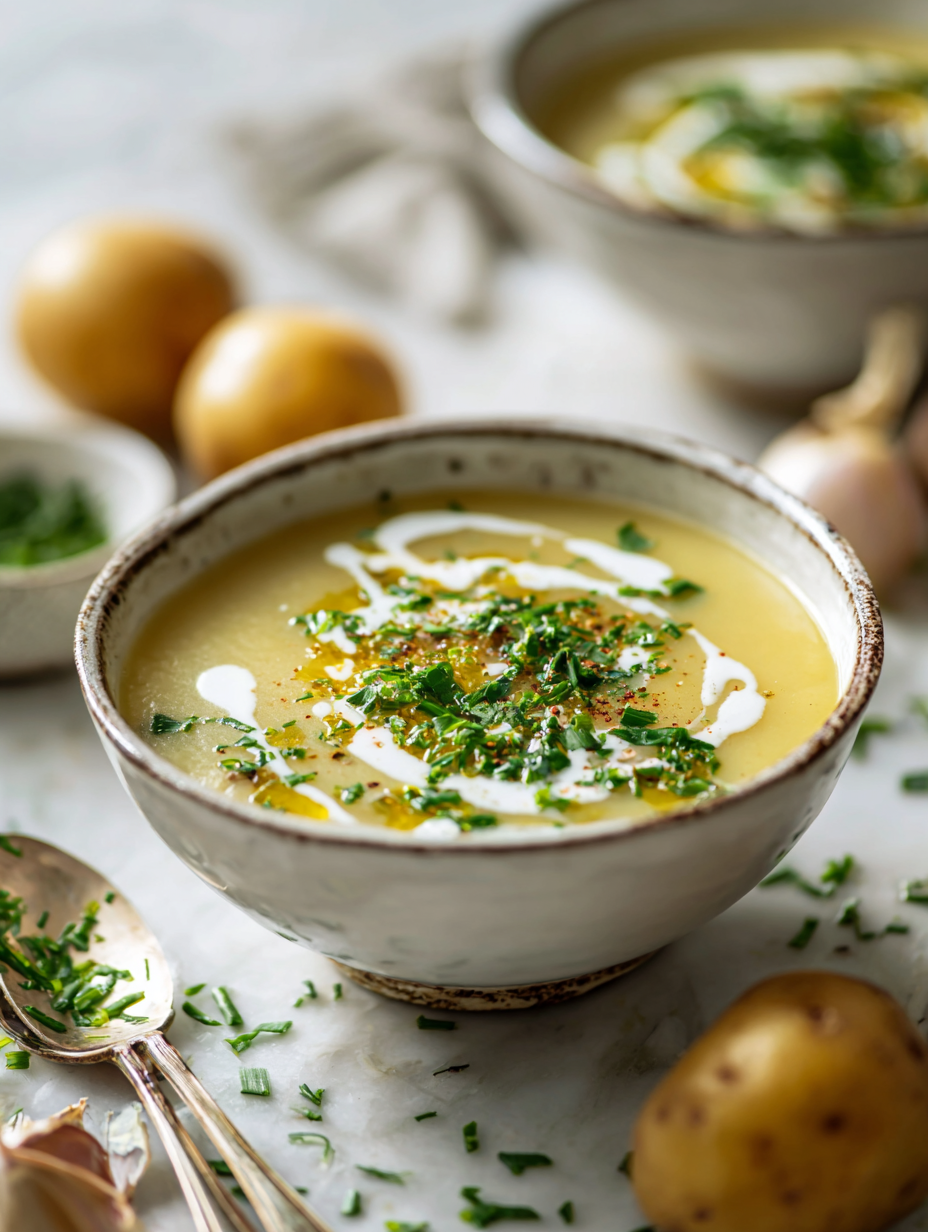
Vegan Pantry-Style Potato Soup
Ingredients
Equipment
Method
- Start by peeling and dicing the potatoes into roughly 1-inch chunks, keeping them uniform for even cooking.
- Heat your large pot over medium heat and add a splash of oil. Toss in the diced onion and sauté, stirring occasionally, until it turns translucent and begins to golden, filling your kitchen with a sweet aroma—about 5-7 minutes.
- Add the crushed garlic to the pot and cook for another minute until fragrant, making sure not to burn it—that bitter taste isn't what we're after.
- Pour in the vegetable broth and bring the mixture to a gentle simmer. Add the diced potatoes along with a pinch of salt, and if you like, a sprig of thyme or rosemary for extra flavor. Cover the pot partially and let everything simmer for 15-20 minutes until the potatoes are tender and easily pierced with a fork.
- Once the potatoes are soft and the aroma is savory, remove the herbs if used. Use a potato masher or immersion blender to mash or blend the soup to your desired consistency—chunky or velvety smooth. If it looks too thick, stir in a little more broth or plant-based milk to loosen it up.
- Stir in the coconut milk to add richness and a silky texture, then season with smoked paprika, salt, and pepper. Warm everything gently for another 2-3 minutes, tasting and adjusting the seasoning as needed—this is your moment to balance flavors.
- Once seasoned perfectly, ladle your hot, velvety soup into bowls. Garnish with fresh herbs or a sprinkle of paprika if desired, and serve immediately while warm and comforting.
Pro tips for perfect vegan potato soup
- Bold onions: Caramelize onions slowly over medium heat until golden for a sweet, rich base flavor.
- Garlic caution: Sauté garlic just until fragrant; overcooking turns it bitter and harsh in the soup.
- Potato prep: Uniformly dice potatoes to ensure even cooking and smooth texture in the final bowl.
- Simmer gently: Keep the broth at a gentle simmer, not a rolling boil, to prevent potatoes from breaking down too much.
- Creamy finish: Stir in coconut milk off the heat to preserve its silky texture and prevent curdling.
- Adjust seasoning: Taste and season gradually—potatoes soak up salt, so don’t overdo at the start.
- Puree for smoothness: Use an immersion blender directly in the pot for a velvety consistency, stopping before it’s completely pureed if you like some texture.
Common mistakes and how to fix them
- FORGOT to adjust heat → Keep an eye on simmer; too high burns, too low prolongs cooking.
- DUMPED ingredients too early → Add seasonings gradually, taste, then adjust for flavor balance.
- OVER-TORCHED the garlic → Sauté garlic until fragrant, not browned, to avoid bitterness.
- SKIPPED tasting → Always taste midway and at the end, adjusting salt and spices to your liking.
Quick Fixes and Pantry Swaps
- When soup is too thick, splash in hot water and stir until loosened.
- If soup lacks flavor, add a pinch of smoked paprika or a squeeze of lemon for brightness.
- Splash a little extra broth if the potatoes are overcooked and becoming mushy.
- Patch dull flavor by stirring in a dash of soy sauce or nutritional yeast for umami.
- Shield from burning by stirring frequently, especially when simmering or blending.
Prep, store, and reheat tips
- Peel and dice potatoes the day before; store in water in the fridge to prevent browning. Keeps for up to 24 hours, with a fresh, clean aroma.
- Chop onions and garlic ahead, seal in an airtight container. These aromatics keep well for 1-2 days in the fridge, maintaining their pungent, savory scent.
- You can make the broth in advance—cool and store in a jar or container for up to 3 days. Reheat gently, smell for a rich, savory aroma before using.
- Reheat leftovers on the stovetop over low-medium heat, stirring occasionally. The soup should shimmer with steam and regain its velvety texture within 5-7 minutes.
- Soup can be stored in the fridge for 3-4 days or frozen for up to 2 months. Thaw in the fridge overnight for best flavor and texture, then reheat until steaming hot.
Top questions about vegan potato soup
1. Should I peel the potatoes?
Peeling potatoes is optional; leaving the skin on adds texture and nutrients, but peel if you prefer a smoother soup.
2. What type of potatoes work best?
Yes, using starchy potatoes like Russets creates a creamier, melt-in-your-mouth texture. Waxy potatoes hold shape better if you want chunks.
3. Can I use water instead of broth?
You can substitute vegetable broth with water plus bouillon or miso paste for a richer flavor. Adjust seasoning accordingly.
4. How do I make it creamier?
Adding a splash of coconut milk or plant-based cream at the end makes it extra velvety. For a lighter version, skip or reduce the coconut milk.
5. How long does it last?
Store leftovers in an airtight container in the fridge for up to 4 days. Reheat on the stove until steaming, watching for separation.
6. What if the soup is too thick?
If your soup is too thick, stir in hot water or broth gradually until it reaches your preferred consistency. It should shimmer and loosen up.
7. Can I add greens?
Yes, you can add greens like spinach or kale at the end. Stir until wilted, adding a fresh, slightly bitter note that balances richness.
8. How do I get a smooth soup?
Use an immersion blender directly in the pot for a smooth, velvety texture. For chunkier soup, mash with a potato masher instead.
9. How do I fix flat flavor?
If the soup tastes flat, add a squeeze of lemon or a dash of soy sauce to boost umami and brightness.
10. How should I season it?
Adjust seasoning gradually—taste as you go. Salt enhances flavors; too much can overpower, so add little by little near the end.
This humble soup is a reminder that simple ingredients can come together to nourish and comfort in unexpected ways. Its warmth and creamy texture are especially welcome as the days grow cooler, echoing a tradition of making do and making it your own.
Whenever I make this, I think about how a few potatoes and a splash of coconut milk can turn a chaotic pantry into something satisfying and familiar. It’s a dish rooted in improvisation, just like good cooking should be—imperfect, honest, and full of small surprises.

Hi, I’m Isabella Cury, the creator behind Elevating Simple. Food has always been my passion, but it’s not just about creating meals—it’s about taking everyday ingredients and transforming them into something extraordinary.
My journey in the culinary world has been a blend of education, dedication, and a deep love for sharing food with others. Through this blog, I aim to inspire people to find joy in simple, flavorful cooking.


