
There’s something about using just a handful of fresh ingredients that really makes this spaghetti shine. It’s not about complex techniques or fancy gadgets, but about letting the natural flavors do the talking. When the tomatoes are ripe and the basil is fragrant, each bite feels like a small celebration of summer.
I’ve always loved how simple this dish is, yet how utterly satisfying it can be. It’s the kind of meal that comes together quickly, but leaves a lasting impression. The aroma of garlic sizzling, the bright pop of fresh tomatoes, and that hint of sweet basil—this is comfort food at its most honest.
Cooking it feels like a ritual—picking the best ingredients, peeling garlic, tossing everything together while the pasta cooks. It’s not about perfection, really. It’s about capturing the essence of warm weather and fresh produce in a bowl, with a splash of olive oil and a sprinkle of salt—that’s all it takes.
Focusing on how using just a handful of fresh, quality ingredients can turn a simple spaghetti dish into a celebration of summer flavors, emphasizing the sensory experience of each bite.
The sensory joy of fresh basil
- There’s a quiet joy in chopping fresh basil just before tossing it into the hot pasta, the scent suddenly fills the room with summer’s promise.
- I remember the first time I made this dish for friends—watching their faces light up at how simple ingredients can sparkle so vividly.
- This recipe feels like a small rebellion against overcomplicated meals, reminding me that honest, fresh flavors are enough to satisfy.
- Sometimes, tweaking the ripeness of the tomatoes or the freshness of the basil can totally change the dish’s mood—more zing or more mellow warmth.
- Cooking this feels like a little act of gratitude—celebrating the season’s best produce, and the way it instantly lifts my spirits.
The story behind this recipe
- This dish came about during a summer trip to Italy, where I watched a local cook toss ripe tomatoes and fresh basil straight from the market into boiling pasta. It was so simple, yet bursting with flavor, I knew I had to replicate that feeling at home. Since then, it’s become my go-to for those days when I want something honest, quick, and deeply satisfying.
- Every time I make this, I think back to that bustling piazza—sunshine, the smell of basil and garlic in the air, and the joy of connecting with clean ingredients. It’s a reminder that the simplest things often deliver the biggest punch, especially when they’re rooted in tradition and fresh produce.
- heading: ‘The story behind this recipe’
Historical Tidbits of Spaghetti with Tomato and Basil
- This simple spaghetti dish traces its roots to Italy’s heart, where farmers used what was fresh and plentiful—tomatoes and basil—straight from their gardens.
- In the 19th century, canned tomatoes became popular in Italy, making this dish accessible beyond just summer months and local markets.
- The combination of tomato and basil is so iconic that it’s often called the ‘soul of Italian cooking,’ symbolizing freshness and tradition.
Key ingredients and tips
- Roma tomatoes: I love their deep, sweet flavor and juicy flesh. Swap with cherry tomatoes for a burst of acidity, but watch the sweetness level.
- Fresh basil: The fragrant, peppery aroma really makes this dish sing. Dried basil can work in a pinch, but it loses that vibrant, fresh punch.
- Garlic: I prefer slicing it thin so it crisps up slightly and releases a mellow, nutty scent. Mince finely if you want a more intense garlic hit.
- Extra virgin olive oil: It’s the backbone—smooth, fruity, and rich. Use a good-quality oil; skip the cheap stuff to avoid bitterness and dullness.
- Salt: It enhances everything, especially the tomatoes’ natural sweetness. Salt early in cooking helps develop deeper flavors, but taste as you go.
- Spaghetti: I choose a traditional durum wheat variety for al dente bite and that satisfying chew. Gluten-free options tend to be softer, so cook slightly less.
- Black pepper: Freshly cracked adds a subtle heat and complexity. Skip it if you prefer a milder dish, but don’t forget that punch of spice!
Spotlight on key ingredients
Roma tomatoes:
- I love their deep, sweet flavor and juicy flesh. Swap with cherry tomatoes for a burst of acidity, but watch the sweetness level.
- Fresh basil: The fragrant, peppery aroma really makes this dish sing. Dried basil can work in a pinch, but it loses that vibrant, fresh punch.
Extra virgin olive oil:
- It’s the backbone—smooth, fruity, and rich. Use a good-quality oil; skip the cheap stuff to avoid bitterness and dullness.
- Garlic: I prefer slicing it thin so it crisps up slightly and releases a mellow, nutty scent. Mince finely if you want a more intense garlic hit.
Notes for ingredient swaps
- Fresh Tomatoes: I love ripe heirlooms for their sweet, juicy burst—swap with canned San Marzano for convenience, but expect a deeper, less bright flavor.
- Basil: The fragrant pepperiness makes this dish pop. Dried basil can replace it, but it won’t have that vibrant, fresh aroma and flavor.
- Garlic: Thinly sliced garlic provides a mellow, nutty scent. Mince or crush for a more intense, punchy garlic flavor, or use garlic powder in a pinch.
- Olive Oil: Use a good-quality extra virgin for richness and fruitiness. Light or bland oils will dull the sauce’s depth, so skip them if possible.
- Spaghetti: Traditional durum wheat pasta gives that firm bite. Gluten-free options may be softer; cook slightly less and keep an eye on texture.
- Salt: Essential for flavor enhancement. Use sea salt or kosher salt; avoid overly seasoned salts, and taste as you go to avoid over-salting.
- Pepper: Freshly cracked black pepper adds a subtle heat. Skip if you prefer a milder flavor, but don’t miss that slight spicy complexity.
Equipment & Tools
- Large pot: To boil pasta efficiently.
- Colander: To drain pasta, reserving some water.
- Large skillet or sauté pan: To cook the sauce and toss pasta.
- Wooden spoon or tongs: To toss and mix ingredients evenly.
- Measuring spoons: To measure salt and oil accurately.
Step-by-step guide to spaghetti with tomato and basil
- Bring a large pot of water to a rolling boil, add a generous pinch of salt, and cook spaghetti until just al dente, about 8-10 minutes. Drain, reserve a cup of pasta water, and set aside.
- While pasta cooks, heat a large skillet over medium heat. Add 2 tbsp olive oil and swirl to coat. When shimmering and fragrant—about 30 seconds—add thinly sliced garlic. Cook, stirring, until just golden and fragrant, about 1 minute.
- Add chopped ripe tomatoes (about 2 cups) to the skillet. Cook, stirring occasionally, until they soften and release their juices, about 5 minutes. Season with salt and a few grinds of black pepper. Optional: crush some tomatoes with the back of your spoon for a saucier texture.
- Toss in a handful of torn basil leaves (about 1/4 cup). Stir quickly, letting the basil wilt and infuse the sauce for about 30 seconds. If sauce thickens too much, add a splash of reserved pasta water to loosen and meld flavors.
- Add the cooked spaghetti directly to the sauce in the skillet. Toss well to coat evenly, adding a bit more pasta water if necessary to create a glossy, silky sauce. Check seasoning—add more salt or pepper if needed.
- Remove from heat, drizzle with a little extra olive oil, and toss in a few more basil leaves for freshness. Serve immediately, garnished with a sprinkle of grated cheese if desired.
- For best flavor, let the pasta rest for 1-2 minutes after plating. This allows the sauce to settle and flavors to meld, making each bite more harmonious.
Serve immediately, garnished with fresh basil leaves and a drizzle of olive oil. Let sit for 1-2 minutes off heat to allow flavors to meld. Plate with a light sprinkle of grated cheese if desired.
How to Know It’s Done
- Tomatoes are soft and juicy, with a slight caramelized aroma.
- Garlic is golden and fragrant, not burnt or bitter.
- Pasta is glossy, well-coated, and al dente when tossed with sauce.
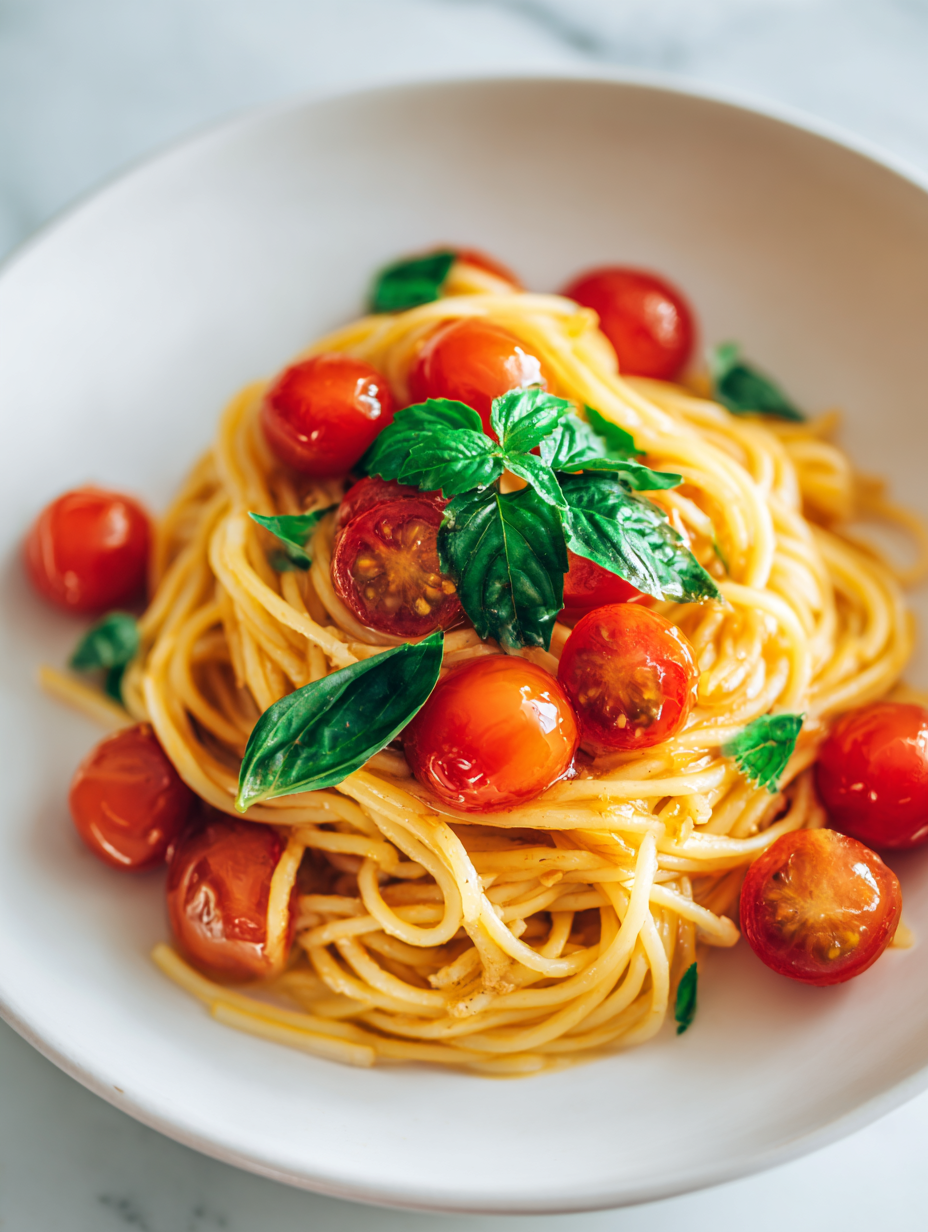
Simple Tomato and Basil Spaghetti
Ingredients
Equipment
Method
- Bring a large pot of salted water to a boil, then add the spaghetti. Cook until just al dente, about 8-10 minutes, until it has a slight firmness when bitten. Drain, reserving a cup of pasta water, and set aside.
- While the pasta cooks, heat the olive oil in a large skillet over medium heat. Once shimmering and fragrant, add the thinly sliced garlic. Cook gently, stirring often, until the garlic turns golden and releases a nutty aroma—about 1 minute.
- Add the chopped ripe tomatoes to the skillet. Cook, stirring occasionally, until the tomatoes soften and release their juices, about 5 minutes. The mixture will become saucy and fragrant. Season with salt and freshly cracked black pepper, tasting and adjusting as needed.
- Stir in torn basil leaves, letting them wilt and infuse the sauce with their aromatic flavor—about 30 seconds. If the sauce thickens too much, add a splash of the reserved pasta water to loosen it up and help it cling to the pasta.
- Transfer the drained spaghetti directly into the skillet with the sauce. Toss well using tongs or a wooden spoon, ensuring each strand is coated with the vibrant tomato and basil mixture. If needed, add a little more pasta water to create a glossy, silky sauce.
- Remove the skillet from heat. Drizzle with a bit more olive oil if desired, then give the pasta a final toss. Serve immediately, garnished with additional basil leaves and a light sprinkle of salt if needed. Enjoy the fresh, summery flavors in every bite!
Pro tips for perfect spaghetti
- Bolded garlic slices: Slicing garlic thinly releases more surface area, giving a fragrant, slightly crispy edge that enhances the aroma.
- Bolded tomato addition: Crush some tomatoes with your spoon for a juicier, more rustic sauce texture and flavor depth.
- Bolded pasta water: Save a cup of starchy pasta water before draining; it’s perfect for loosening the sauce and adding silkiness.
- Bolded basil timing: Add fresh basil at the end to preserve its vibrant aroma and bright green color, avoiding a wilted look.
- Bolded olive oil drizzle: Finish with a light drizzle of good-quality olive oil off heat for a glossy, fruity finish that elevates the dish.
- Bolded seasoning tip: Taste the sauce before adding salt; the tomatoes may be salty enough, saving you from over-seasoning.
- Bolded quick toss: Toss pasta directly into the sauce over medium heat for 1-2 minutes to help flavors meld and coat evenly.
Common mistakes and how to fix them
- FORGOT to adjust pasta salt—season while boiling for better flavor.
- DUMPED cheese in hot sauce—wait for pasta to cool slightly before adding cheese.
- OVER-TORCHED garlic—remove pan from heat early to prevent bitterness.
- FAILED to reserve pasta water—use it to loosen sauce and intensify flavor.
Quick fixes and pantry swaps
- When sauce shimmers, add a splash of pasta water to loosen and shimmer again.
- Splash a bit of olive oil if the sauce feels too thick or dry.
- Patch over over-salted sauce with a squeeze of lemon for brightness.
- Shield burnt garlic by removing pan from heat immediately and starting fresh with new garlic.
- If tomatoes are too tart, stir in a pinch of sugar to balance acidity.
Prep, store, and reheat tips
- Chopping tomatoes and basil in advance saves time; store separately in airtight containers, up to 1 day in the fridge. The basil may lose some fragrance but still fresh enough.
- You can cook and toss the spaghetti with sauce ahead; keep in the fridge for up to 2 days. Reheat gently on the stove over low heat, adding a splash of water or oil to revive the sauce.
- Prepare garlic and oil mixture a few hours ahead; store in a small jar in the fridge. Bring to room temp before using to release full aroma.
- The flavors of this dish deepen slightly overnight, especially if refrigerated for 12-24 hours, making it more robust—just reheat slowly to preserve freshness.
- Reheating: gently warm in a skillet over low heat, stirring often. Expect the sauce to thicken; loosen with a bit of pasta water or olive oil until it’s glossy and fragrant again.
Top questions about spaghetti with tomato and basil
1. Should I use fresh or canned tomatoes?
Use ripe, fragrant tomatoes like heirlooms or San Marzano for the best flavor and juiciness.
2. Can I substitute dried basil?
Fresh basil adds a vibrant, peppery aroma that dried basil can’t replicate; add it at the end for maximum freshness.
3. What’s the best way to prepare garlic for this dish?
Slice garlic thinly so it crisps and releases a mellow, nutty scent—mincing makes it more pungent.
4. Can I use regular cooking oil instead of olive oil?
Good-quality extra virgin olive oil provides richness and fruitiness; cheaper oils can dull the flavor and add bitterness.
5. How do I know when the pasta is ready?
Cook the pasta until just al dente, about 8-10 minutes, then drain, reserving some pasta water for the sauce.
6. When should I add salt during cooking?
Add salt to the boiling water generously for flavor; taste the pasta after draining and adjust seasoning if needed.
7. How do I ensure the sauce coats the pasta well?
Toss the pasta directly into the sauce over medium heat for 1-2 minutes to help flavors meld and coat evenly.
8. Can I make this dish ahead of time?
Reheat leftovers gently in a skillet over low heat, adding a splash of water or oil to rehydrate the sauce.
9. What if the sauce tastes too sour?
If the sauce is too tart, stir in a tiny pinch of sugar to balance acidity and sweetness.
10. What’s the best way to toss the pasta with the sauce?
Use a slotted spoon or tongs to toss the pasta with the sauce; avoid overmixing to prevent clumping.
This simple spaghetti dish is a reminder that some of the best flavors come from just a few fresh ingredients. It’s perfect for those summer nights when tomatoes and basil are at their peak, filling the kitchen with the scent of warmth and herbs.
Cooking it feels like a small celebration—every step, from slicing garlic to tossing pasta, is about appreciating the natural beauty of good food. Sometimes, the simplest meals leave the most lasting impressions, especially when they’re made with care and a touch of seasonality.

Hi, I’m Isabella Cury, the creator behind Elevating Simple. Food has always been my passion, but it’s not just about creating meals—it’s about taking everyday ingredients and transforming them into something extraordinary.
My journey in the culinary world has been a blend of education, dedication, and a deep love for sharing food with others. Through this blog, I aim to inspire people to find joy in simple, flavorful cooking.