
There’s something about getting your hands sticky with a good glaze that feels both rebellious and deeply satisfying. These pork ribs, with their caramelized, sticky exterior, turn cooking into a messy, joyful ritual. It’s a dish that’s about embracing every drip, every finger lick, and every smoky aroma that drifts through the kitchen.
I love how this recipe invites you to slow down, to really pay attention to the caramelization process. The final broil creates that irresistible, crackly glaze that’s just begging to be devoured. It’s not about perfection—it’s about the messy, flavorful moments that make cooking feel like a celebration, not a chore.
Focusing on the sticky, caramelized glaze that forms during the final broil, I see this dish as a messy, joyful celebration of hands-on cooking. It’s about embracing the imperfect, the sticky fingers, and the smoky, sweet aroma that fills the kitchen—making it a dish that invites you to dig in and enjoy every messy, flavorful bite.
Embracing the Messy Joy of Sticky Ribs
- Cooking these ribs always takes me back to summer barbecues, the smell of smoky spice filling the yard.
- I get oddly proud when I see that perfect, sticky glaze clinging to each rib—like a little caramel armor.
- There’s a chaotic joy in licking your fingers clean after these, no shame in the mess, just flavor overload.
The story behind this recipe
- This recipe started from a weekend of experimenting with different glaze techniques, aiming for that perfect balance of sticky, sweet, and smoky. I kept playing with ingredients until I found a combo that really clings and caramelizes just right. It’s become my go-to when I want something messy and satisfying, no fancy tricks, just honest flavors.
- Cooking these ribs reminds me of lazy summer days, the kind where you’re not in a rush and can afford to get everything sticky and smoky. There’s a primal joy in tearing into ribs with your hands, feeling the glaze crackle as it bubbles and browns under the broiler. It’s a dish that’s as much about the process as the end result—an unpolished, joyful mess that tastes like celebration.
- heading
- story_type
Trivia and Origins of Sticky Ribs
- Sticky pork ribs have roots in Asian barbecue traditions, where caramelized glazes are prized for their depth of flavor.
- The technique of glazing ribs with a sugary marinade dates back to ancient Chinese cooking, where balance of sweet and savory was key.
- In the American South, slow-cooked ribs with sticky, smoky sauces became a staple at gatherings, evolving into the messy, caramelized style we love today.
- The caramelization process in these ribs is similar to making a simple caramel sauce—sugar melts and browns, creating that irresistible sticky glaze.
- Some cultures use honey, hoisin, or molasses in their glazes, each bringing a unique sweetness and sticky quality to the final dish.
Key Ingredients and Tips
- Pork ribs: I love how the marbled fat renders down, creating a juicy, tender bite. For a leaner option, try loin ribs, but expect less succulence.
- Soy sauce: It adds umami and depth, making the glaze richer. Swap with coconut aminos for a soy-free, slightly sweeter flavor.
- Brown sugar: The backbone of the sticky glaze, it caramelizes beautifully under high heat. Honey can be a direct swap, but it’s a bit more intense and floral.
- Garlic: Fresh garlic gives a sharp punch that balances sweetness. Dried garlic powder works in a pinch, just use a little less to avoid bitterness.
- Ginger: Adds a zesty brightness and warmth. Fresh ginger is best, but ground ginger can replace it—use half as much for subtlety.
- Rice vinegar: Brightens the glaze with a tangy note. Apple cider vinegar is a good substitute, giving a slightly fruitier kick.
- Sesame oil: Just a splash infuses a nutty aroma. If you don’t have it, toasted oil or a few drops of toasted sesame seeds can add a similar touch.
Spotlight on key ingredients
Pork Ribs and Soy Sauce:
- Pork ribs: I love how the marbled fat renders down, creating a juicy, tender bite. For a leaner option, try loin ribs, but expect less succulence.
- Soy sauce: It adds umami and depth, making the glaze richer. Swap with coconut aminos for a soy-free, slightly sweeter flavor.
Notes for ingredient swaps
- Pork Ribs: I prefer baby back ribs for tenderness, but spare ribs work great for more meatiness and a chewier bite. Adjust cooking time accordingly.
- Soy Sauce: Use coconut aminos if you want a soy-free, milder, slightly sweeter flavor. It won’t be as salty but still adds depth.
- Brown Sugar: Honey or maple syrup can replace brown sugar for a different sweet, but expect a slightly different caramelization and aroma.
- Garlic: Fresh garlic is best for punch, but garlic powder is a quick swap—use half as much to avoid bitterness.
- Ginger: Fresh ginger gives a zesty brightness, but ground ginger works in a pinch—use about half as much for subtle warmth.
- Rice Vinegar: Apple cider vinegar brightens the glaze with a fruity tang. Lemon juice can add a fresh, citrusy note if you prefer.
- Sesame Oil: Toasted sesame oil adds nutty aroma—if unavailable, a few toasted sesame seeds can mimic that scent on the finish.
Equipment & Tools
- Roasting pan: To bake the ribs evenly and catch drips.
- Aluminum foil: To cover and trap moisture during slow baking.
- Basting brush: To apply the glaze smoothly and thoroughly.
- Broiler tray: To position ribs for broiling without excessive splatter.
- Sharp knife: To remove the membrane and serve clean slices.
Step-by-step guide to sticky ribs
- Gather your equipment: roasting pan, aluminum foil, basting brush, broiler tray, and a sharp knife for trimming. Preheat your oven to 150°C (300°F).
- Prepare the ribs by removing the thin membrane on the bone side with a sharp knife—this helps the glaze stick and the meat to tenderize evenly.
- Mix your glaze: soy sauce, brown sugar, minced garlic, grated ginger, rice vinegar, and a splash of sesame oil. Whisk until the sugar dissolves and the mixture is smooth.
- Lay the ribs on the broiler tray, bone side down. Brush generously with the glaze, making sure to coat every nook and cranny.
- Cover the ribs tightly with aluminum foil. Bake in the oven for about 2.5–3 hours. The meat should be tender and almost falling off the bone.
- Remove from oven, increase oven temperature to 220°C (430°F), or switch to broil mode. Carefully brush the ribs with more glaze, focusing on the sticky, caramelized surface.
- Place the ribs under the broiler for 3–5 minutes, watching closely. The glaze should bubble and turn a deep, crackly amber. If it starts to burn, lower the heat or remove immediately.
- Once the glaze is glossy and crackly, take the ribs out. Let them rest for 5 minutes to let the juices redistribute. Slice between the bones and serve hot.
Let the ribs rest for 5 minutes on a cutting board. Slice between the bones, then serve immediately while the glaze is still crackly and sticky. Enjoy with napkins—these get messy fast.
How to Know It’s Done
- The glaze is deeply caramelized and crackly after broiling.
- Meat easily pulls away from the bone with gentle tug—tender and juicy.
- The surface is sticky, glossy, and golden-brown with a smoky aroma.
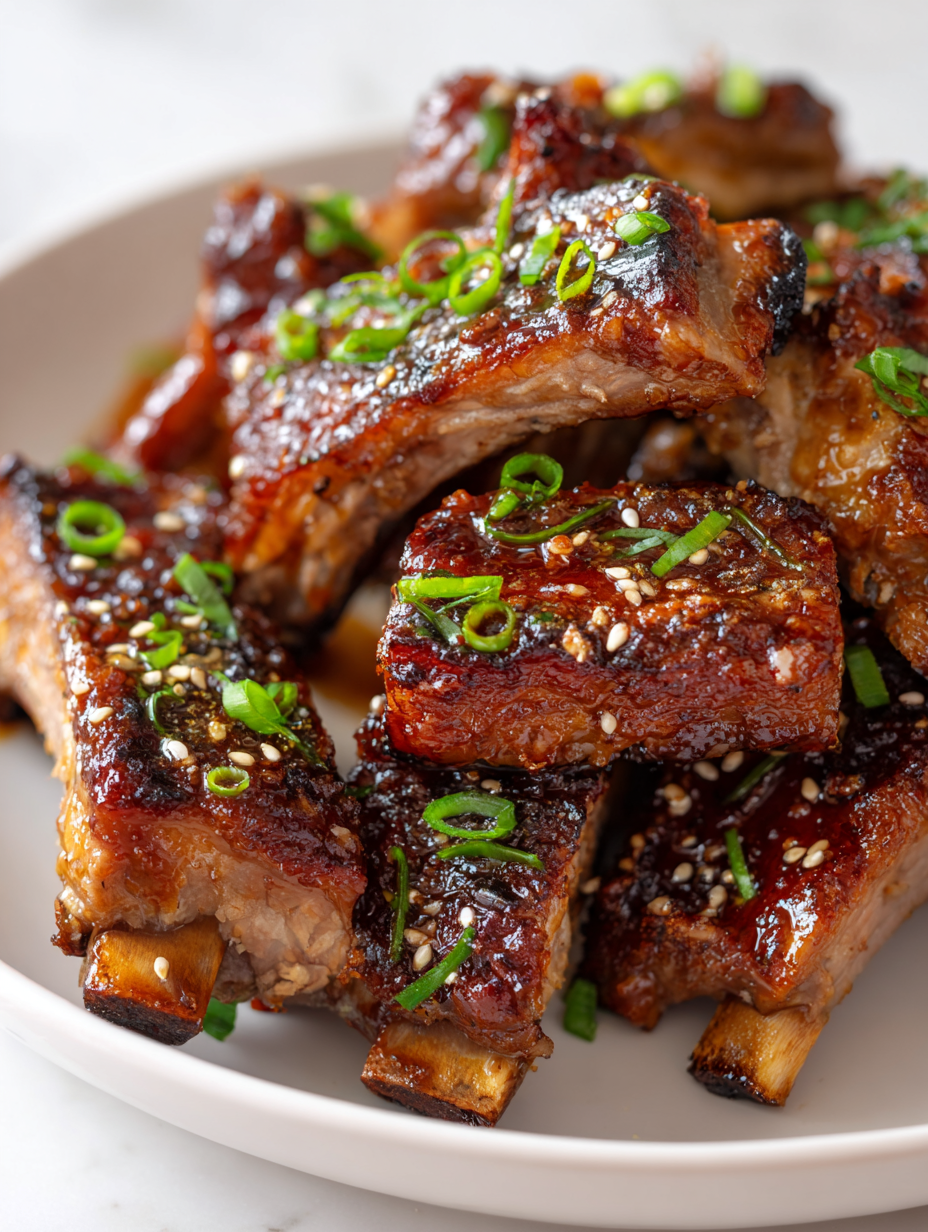
Sticky Caramelized Pork Ribs
Ingredients
Equipment
Method
- Use a sharp knife to carefully remove the thin membrane from the back of the ribs—this helps the glaze stick better and makes the meat more tender.
- In a small bowl, whisk together soy sauce, brown sugar, minced garlic, grated ginger, rice vinegar, and sesame oil until the sugar dissolves and the mixture is smooth.
- Lay the ribs on a broiler tray and generously brush them with the glaze, making sure to coat every nook and cranny.
- Tightly cover the ribs with aluminum foil and bake in a preheated oven at 150°C (300°F) for about 2.5 to 3 hours, until the meat is tender and almost falling off the bone.
- Remove the ribs from the oven, increase the oven temperature to 220°C (430°F), or switch to broil mode. Carefully brush more glaze over the ribs, focusing on building a thick, sticky coating.
- Place the ribs under the broiler for 3–5 minutes, watching closely as the glaze bubbles, deepens in color, and develops a crackly, caramelized crust.
- Once the glaze is glossy and crackly, remove the ribs from the oven. Let them rest for 5 minutes to allow the juices and glaze to set, then slice between the bones and serve hot.
Notes
Pro Tips for Perfect Sticky Ribs
- Use a thick layer of glaze to build sticky, caramelized crust. Don’t skimp on the coating.
- Apply the glaze in thin, even layers; multiple coats create a richer, more crackly finish.
- Broil at a high temperature, but keep a close eye—glaze can burn quickly once it bubbles.
- Rest the ribs for at least 5 minutes after broiling; this helps the juices and glaze set perfectly.
- Use a silicone basting brush for better control and to avoid sticking, especially when applying hot glaze.
- For extra smoky flavor, add a pinch of smoked paprika or chipotle powder into your glaze mixture.
- Keep a spray bottle of water nearby to gently control any flare-ups or to add moisture if the glaze starts to burn.
Common Sticky Ribs Mistakes & Fixes
- FORGOT to check glaze color → Ensure it’s deep amber before broiling.
- DUMPED the sauce directly on ribs → Brush in layers for even caramelization.
- OVER-TORCHED at broil → Watch closely, remove once glaze bubbles and cracks.
- MISSED resting time → Rest 5 minutes for juices and glaze to set.
Quick Fixes for Sticky Ribs
- When glaze shimmers but doesn’t crackle → Increase broil time slightly, watch for burning.
- If ribs stick to foil → Use parchment paper or a non-stick liner for easy removal.
- Splash a little water on flare-ups → Cool flames quickly and prevent charring.
- Patch a sticky glaze that’s too thin → Brush on a second layer and broil briefly for more caramelization.
- Shield ribs with foil if glaze caramelizes too fast → Slow down the browning process, preserve moisture.
Prep, store, and reheat tips
- You can prep the glaze a day ahead; keep it refrigerated in an airtight container. Reheat gently before using to restore viscosity and aroma.
- Assemble the ribs and apply the first glaze layer a few hours in advance. Wrap tightly and store in the fridge for up to 24 hours; the flavors deepen overnight.
- Cooked ribs can be stored in an airtight container in the fridge for up to 3 days. Expect the meat to stay juicy, but the glaze may soften over time.
- Reheat ribs slowly in a low oven (around 150°C/300°F) covered with foil, until warmed through and the glaze starts to bubble. Finish with a quick broil for crackly texture.
- For longer storage, freeze cooked ribs (up to 2 months). Thaw overnight in the fridge, then reheat as above, watching for moisture loss and re-glazing if needed.
Sticky Pork Ribs FAQs
1. How do I choose the best ribs for sticky pork ribs?
Look for ribs that have good marbling and are fresh; avoid overly dry or slimy ones. Freshness makes a big difference in flavor and tenderness.
2. Should I do anything to prepare the ribs before cooking?
Pre-soaking the ribs in cold water or a vinegar solution can help reduce excess blood and impurities, leading to a cleaner flavor. Trimming excess fat also helps the glaze stick better.
3. How do I get that perfect sticky glaze on the ribs?
Yes, coating the ribs with a generous layer of glaze during the final broil creates that crackly, caramelized surface. Applying multiple thin layers helps build a sticky crust.
4. What’s the best way to finish the ribs for maximum stickiness?
Broil the ribs at high heat for 3-5 minutes, watching closely to prevent burning. The glaze will bubble and turn deep amber, crackling as it cools.
5. How do I prepare the ribs before baking?
Use a sharp knife to carefully remove the membrane from the back of the ribs. It’s usually thin, tough, and prevents the glaze from penetrating the meat properly.
6. What temperature and time are ideal for tender ribs?
Cooking at a low, slow temperature (around 150°C/300°F) for 2.5–3 hours makes the meat tender and easy to pull apart. Covering with foil traps moisture for juiciness.
7. What if the glaze burns during broiling?
If the glaze starts to burn, lower the broiler temperature or move the ribs to a lower rack. Keep a close eye—glaze can go from perfect to char quickly.
8. Should I rest the ribs before serving?
Allow the ribs to rest for five minutes after broiling. This helps the juices redistribute and the glaze to set, making each bite juicy and sticky.
9. How can I store and reheat leftovers?
Storing ribs in an airtight container in the fridge for up to 3 days works well. Reheat slowly at 150°C (300°F), then broil briefly to restore crackle.
10. Can I add smokiness to the ribs?
For extra smoky flavor, add a pinch of smoked paprika or chipotle powder to the glaze. It enhances the depth without overpowering the sweet and savory balance.
Cooking these sticky pork ribs is a messy, joyful process that rewards you with crackly, caramelized goodness. The aroma alone—smoky, sweet, with a hint of garlic—fills the kitchen and makes every finger lick worth it.
This dish feels like a celebration of hands-on cooking, where imperfection is part of the charm. It’s a reminder to embrace the messy, flavorful moments and enjoy every sticky, smoky bite.

Hi, I’m Isabella Cury, the creator behind Elevating Simple. Food has always been my passion, but it’s not just about creating meals—it’s about taking everyday ingredients and transforming them into something extraordinary.
My journey in the culinary world has been a blend of education, dedication, and a deep love for sharing food with others. Through this blog, I aim to inspire people to find joy in simple, flavorful cooking.


