
Making lobster ravioli from scratch is a tactile joy. There’s something satisfying about kneading the dough, feeling it soften under your hands, then carefully shaping each little pillow of pasta. It’s a messy, imperfect process, but that’s part of the charm—each step feels personal, almost meditative.
Infusing the pasta with fresh lobster meat transforms it into something special. I love how the sweet, briny aroma fills the kitchen as I work. It’s a dish that feels fancy but is surprisingly approachable when you break it down into small, manageable steps. Plus, the tactile act of shaping the pasta makes it feel like a true craft, not just a recipe.
Focusing on the art of making lobster ravioli from scratch, highlighting the tactile process of shaping the pasta and infusing it with the fresh sweetness of lobster, turning a fancy dish into an approachable, hands-on experience that celebrates the craft.
The tactile joy of handmade pasta
- Making lobster ravioli feels like a small act of luxury, and I savor every tender bite.
- The moment I fold that first ravioli and see the crimped edges, I feel a quiet pride.
- Cooking this dish always takes me back to seaside summers, with the smell of salt and seafood in the air.
- There’s a messy joy in shaping each piece, and it reminds me that good things take time and patience.
The story behind this recipe
- I first tasted lobster ravioli at a tiny seaside trattoria on a rainy afternoon. The chef’s simple approach—fresh lobster, handmade pasta—made me realize how much joy can come from just a handful of good ingredients and a little patience. That moment stuck with me, and I’ve been chasing that feeling ever since.
- Every time I make it, I think about how this dish bridges the gap between luxury and comfort. It’s one of those recipes that feels indulgent but is surprisingly doable when you break it down. Shaping the pasta by hand, feeling the dough give under your fingers—that tactile connection makes this dish feel personal, almost meditative.
- heading: The tactile joy of handmade pasta
Historical & Cultural Tidbits
- Lobster ravioli gained popularity in Italian-American cuisine in the mid-20th century, blending luxury seafood with pasta traditions.
- The dish often appears in high-end restaurants but has roots in home cooks improvising with fresh lobster and simple pasta dough.
- Ancient Italy didn’t have lobster, but modern recipes celebrate coastal ingredients, turning humble seafood into elegant ravioli.
Ingredient breakdown
- Lobster meat: I love how the sweet, briny aroma hits me as I chop it—swap with crab for a slightly sweeter, softer bite.
- Pasta dough: Fresh pasta feels velvety and forgiving—use semolina for more bite, or all-purpose for tenderness, and knead until smooth and elastic.
- Eggs: They bind the dough with a rich flavor—if you’re out, a splash of water plus a touch of oil can help, but flavor and structure shift slightly.
- Lobster filling: Cream cheese or ricotta adds creaminess—try mascarpone for extra silk, but cut back on moisture to keep the ravioli from being soggy.
- Herbs & seasoning: Chopped chives or tarragon brighten the filling—fresh herbs give a lively contrast, dried can work but lack that punch.
- Olive oil: Use good-quality, fruity oil for brushing—skip if you prefer a less greasy finish, but it really enhances the aroma.
- Butter & lemon: Finish with a pat of butter and a squeeze of lemon—skip the lemon for a richer, more decadent sauce, or add chili flakes for heat.
Spotlight on key ingredients
Lobster meat:
- I love how the sweet, briny aroma hits me as I chop it—swap with crab for a slightly sweeter, softer bite.
- Pasta dough: Fresh pasta feels velvety and forgiving—use semolina for more bite, or all-purpose for tenderness, and knead until smooth and elastic.
Herbs & eggs:
- Herbs & seasoning: Chopped chives or tarragon brighten the filling—fresh herbs give a lively contrast, dried can work but lack that punch.
- Eggs: They bind the dough with a rich flavor—if you’re out, a splash of water plus a touch of oil can help, but flavor and structure shift slightly.
Notes for ingredient swaps
- Seafood Swap: Crab meat can replace lobster for a sweeter, softer bite, but it won’t have that briny punch.
- Dairy-Free: Use cashew cream instead of ricotta for a nutty flavor, though it may lack the same richness.
- Eggs: Flaxseed meal mixed with water can stand in for eggs, but dough might be slightly less elastic.
- Herbs & Seasoning: Chives or tarragon brighten the filling—dried herbs work but won’t deliver the same fresh punch.
- Lemon: Lime juice offers a similar bright acidity, or skip citrus altogether for a richer, buttery finish.
- Butter: Use clarified butter for a less greasy finish, or olive oil for a more pronounced fruity aroma.
- Pasta Flour: Semolina adds a firm bite, all-purpose flour makes softer pasta—choose based on texture preference.
Equipment & Tools
- Pasta machine: Rolls and thins pasta sheets evenly.
- Rolling pin: Alternative to pasta machine for hand-rolling.
- Fluted cutter or knife: Cuts individual ravioli shapes cleanly.
- Slotted spoon: Removes ravioli from boiling water gently.
- Mixing bowls: Prepares filling and holds chopped lobster.
- Small spoon or piping bag: Places filling precisely on pasta sheets.
Step-by-step guide to lobster ravioli
- Gather all ingredients: lobster meat, pasta flour, eggs, herbs, butter, lemon, and tools like a pasta machine, rolling pin, and a small spoon. Set up your workspace for efficiency.
- Prepare the pasta dough: On a clean surface, mound 2 cups of flour, make a well in the center, crack 2 eggs into it, add a pinch of salt. Mix with a fork, then knead for about 8 minutes until smooth and elastic. Wrap in plastic and let rest for 30 minutes.
- Cook the lobster: Bring a small pot of salted water to a gentle boil. Add lobster meat, cook for about 3-4 minutes until just opaque. Remove, cool slightly, then chop finely. Reserve some cooking water for the filling if needed.
- Make the filling: In a bowl, combine chopped lobster, 2 tablespoons cream cheese or ricotta, chopped herbs, a squeeze of lemon, and a pinch of salt and pepper. Mix until well incorporated. Adjust seasoning to taste.
- Roll out the pasta: Divide dough into 4 pieces. Using a pasta machine or rolling pin, roll each piece into thin sheets (about 1 mm thick). Keep remaining dough covered to prevent drying.
- Shape the ravioli: Place a teaspoon of filling every 2 inches on one pasta sheet. Moisten edges around each dollop with a little water. Cover with another sheet of pasta, press out air, and seal around each dollop, crimping edges with a fork if needed. Cut into individual ravioli using a fluted cutter or knife.
- Cook the ravioli: Bring a large pot of salted water to a boil, then reduce to a gentle simmer. Gently drop ravioli in, cook for 3-4 minutes until they float and are tender. Use a slotted spoon to remove.
- Finish and serve: In a skillet, melt a tablespoon of butter over medium heat. Add cooked ravioli, sauté lightly until edges are golden, about 1-2 minutes. Squeeze fresh lemon juice over, toss gently. Plate with a drizzle of olive oil or extra herbs.
Let the cooked ravioli rest for a minute on a warm plate. Finish with a squeeze of lemon, a drizzle of olive oil, or a sprinkle of herbs. Serve immediately for best texture and aroma.
How to Know It’s Done
- Ravioli float to surface and feel tender when gently pressed.
- Filling is hot, slightly firm but not runny, with a bright lobster flavor.
- Edges are sealed tightly without air pockets, no leaks during cooking.
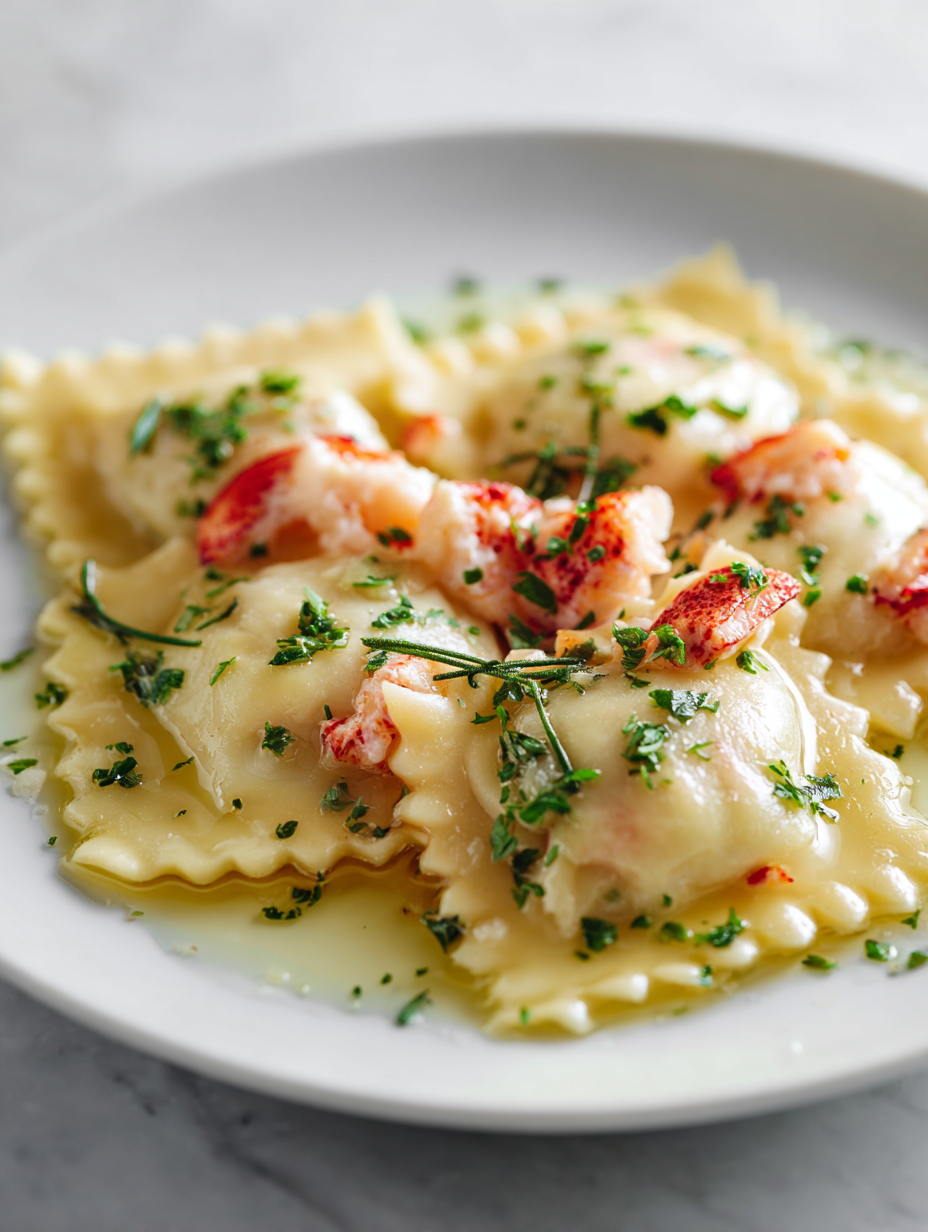
Homemade Lobster Ravioli
Ingredients
Equipment
Method
- Begin by preparing your pasta dough: on a clean surface, mound the flour, create a well in the center, crack the eggs into it, and add a pinch of salt. Gently mix with a fork until combined, then knead with your hands for about 8 minutes until smooth and elastic. Wrap in plastic and let rest for 30 minutes.
- While the dough rests, cook the lobster meat in a small pot of boiling salted water for 3-4 minutes until just opaque. Remove with a slotted spoon, let cool slightly, then chop finely.
- In a mixing bowl, combine the chopped lobster with cream cheese, chopped herbs, a squeeze of lemon juice, and a pinch of salt and pepper. Mix until well blended; this will be your flavorful filling.
- Divide the rested dough into four portions. Using a pasta machine or rolling pin, roll each piece into thin sheets about 1 mm thick, dusting with flour to prevent sticking. Keep the other pieces covered to avoid drying out.
- Lay one pasta sheet flat on your work surface. Using a small spoon or piping bag, place teaspoons of filling about 2 inches apart on the sheet. Lightly moisten the edges around each dollop with water.
- Cover with a second pasta sheet and gently press around each dollop to seal, removing any air pockets. Use a fluted cutter or knife to cut between the filled sections, creating individual ravioli. Press the edges to ensure they are fully sealed.
- Bring a large pot of salted water to a gentle boil. Carefully drop the ravioli in, cooking for 3-4 minutes until they float and are tender. Use a slotted spoon to remove them gently from the water.
- In a skillet, melt the butter over medium heat. Gently sauté the cooked ravioli for about 1-2 minutes until lightly golden around the edges. Squeeze fresh lemon juice over and toss lightly to coat.
- Transfer the ravioli to serving plates, drizzle with any remaining butter, and garnish with lemon wedges or extra herbs if desired. Serve immediately for the best flavor and texture.
Tips & Tricks for Perfect Ravioli
- Bolded mini-head: Use a light touch when sealing ravioli to prevent leaks and ensure even cooking.
- Bolded mini-head: Dust your work surface with flour to keep pasta from sticking during rolling and shaping.
- Bolded mini-head: Slightly undercook the ravioli—they will finish cooking in the hot pan or sauce, avoiding overcooking.
- Bolded mini-head: When cooking the ravioli, gently stir occasionally to prevent them from sticking to the bottom of the pot.
- Bolded mini-head: Finish with a splash of pasta water—starchy and helps the sauce cling beautifully to the ravioli.
- Bolded mini-head: Keep a damp cloth nearby to cover unused pasta sheets—prevents drying out and cracking.
- Bolded mini-head: Sauté the cooked ravioli briefly in butter—adds a crispy edge and intensifies the flavor.
Common mistakes and how to fix them
- FORGOT to thaw lobster completely → Thaw lobster overnight for even cooking.
- DUMPED filling mixture in a rush → Take your time to evenly distribute filling.
- OVER-TORCHED pasta edges → Keep pasta moist and avoid overworking during shaping.
- SCRAMBLED eggs in dough → Use room temperature eggs and mix gently to prevent scrambling.
Quick fixes and pantry swaps
- When sauce shimmers and smells intensely buttery, it’s ready to toss with ravioli.
- Splash a little pasta water if filling leaks—starches help the seal stay intact.
- Patch over a torn ravioli with a tiny bit of water and press gently to reseal.
- DUMPED in too much salt? Rinse briefly and start the sauce with fresh water.
- When pasta sticks, dust generously with flour and work quickly to prevent tearing.
Prep, store, and reheat tips
- Prepare the lobster filling a day in advance; keep it covered in the fridge for up to 24 hours, ensuring the flavors meld and the mixture stays fresh and fragrant.
- You can make and assemble the ravioli a few hours ahead; refrigerate uncovered on a baking sheet. Cover loosely with plastic to prevent drying out, and cook within 4 hours for optimal texture.
- Cooked ravioli can be stored in an airtight container in the fridge for up to 24 hours. Reheat gently in a skillet with a bit of butter or olive oil, until warmed through and slightly crispy around the edges, with a bright aroma of lemon and butter.
- Frozen lobster ravioli is best if wrapped tightly in plastic and then foil; freeze for up to 2 months. Do not thaw before cooking—boil directly from frozen, adding an extra minute or two to cooking time. Expect a tender, briny burst of seafood flavor with each bite.
Lobster Ravioli FAQs
1. Can I use frozen lobster for the filling?
Fresh lobster gives the filling a sweet, briny flavor, while frozen lobster can work if fresh isn’t available, but it’s less vibrant.
2. Is crab a good substitute for lobster in this recipe?
Yes, you can substitute crab meat, which has a softer texture and sweeter taste, but it won’t have the same briny punch.
3. How do I know if my pasta dough is ready?
Make sure your pasta dough is elastic and smooth; if it’s sticky or cracks, add a little more flour or knead longer.
4. How do I know when the ravioli are cooked?
Cook the ravioli until they float and the edges are tender, about 3-4 minutes, and test one for doneness by tasting or feeling the texture.
5. How do I prevent the filling from leaking out?
Use a small spoon or piping bag to place the filling efficiently, and seal edges well to prevent leaks during boiling.
6. What if my ravioli edges rip?
If the pasta tears or doesn’t seal well, dampen the edges more and press firmly to reseal before cooking.
7. How should I cook the ravioli in water?
Cook in salted, boiling water gently; over-aggressive boiling can cause the ravioli to break apart or stick together.
8. How should I finish the ravioli before serving?
Finish the dish with a squeeze of lemon and a pat of butter to brighten flavors and add richness just before serving.
9. Can I make ravioli ahead of time?
Store uncooked ravioli in a single layer on a floured surface or baking sheet, lightly covered, and cook within 4 hours for best results.
10. How do I reheat leftover lobster ravioli?
Reheat cooked ravioli gently in a skillet with butter or olive oil, or briefly in hot water, until warmed through and fragrant.
Making lobster ravioli by hand is a tactile reminder that even fancy dishes can be approachable when you focus on the process. Each step, from kneading dough to sealing each pillow of pasta, feels personal and satisfying, especially when that briny aroma fills the kitchen. It’s a dish that celebrates craftsmanship and patience, perfect for turning a special occasion into a memorable, hands-on experience. In the end, it’s about the joy of creating something from scratch and sharing that effort in every tender, flavorful bite.
This dish isn’t just about indulgence; it’s about reconnecting with the craft of cooking and savoring the small, messy moments that make the meal truly yours. Whether it’s a quiet weekend or a festive gathering, lobster ravioli brings a sense of pride and a touch of seaside magic to any table.

Hi, I’m Isabella Cury, the creator behind Elevating Simple. Food has always been my passion, but it’s not just about creating meals—it’s about taking everyday ingredients and transforming them into something extraordinary.
My journey in the culinary world has been a blend of education, dedication, and a deep love for sharing food with others. Through this blog, I aim to inspire people to find joy in simple, flavorful cooking.


