
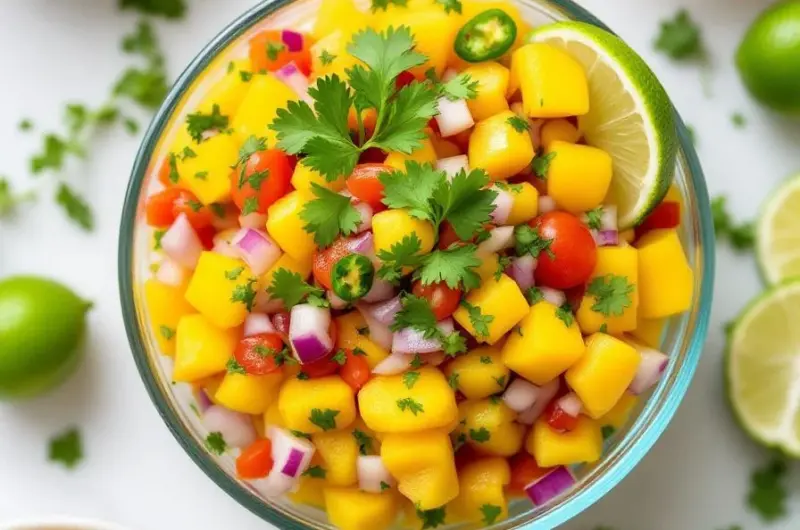
Peeling and chopping mango feels like wrestling with a slippery, oozy fruit—you need a steady hand and a sharp knife. The flesh squishes slightly, releasing a sweet, fragrant aroma that fills the kitchen as you work.
Mixing the salsa means scooping up those juicy, irregularly shaped chunks and tossing them with chopped onion, pepper, and lime juice—everything hits the bowl with a satisfying plop, and the sounds of chopping and stirring echo through the prep.
The sound of the mango flesh giving way under the knife, the juicy squish as you scoop out the pulp, and the way the chopped pieces clatter into the bowl—it’s all about that tactile, messy prep that makes this salsa feel alive.
What goes into this dish
- Mango: I grab ripe mangoes that give slightly under pressure—firm but with a little give. If yours are too hard, they won’t be as sweet or juicy—consider letting them ripen a few days or swapping for canned mango in a pinch.
- Red onion: I prefer a sharp, crisp red onion, chopped finely—adds a nice bite. If you want milder flavor, soak the chopped onion in cold water for 10 minutes, then drain before mixing.
- Jalapeño: I use a small, fiery jalapeño, seeds included for extra heat—be careful not to touch your eyes afterward. For less heat, remove the seeds and ribs; for more, keep them in or add a serrano pepper.
- Lime juice: Freshly squeezed lime juice brings a tangy brightness, and I love the zing it adds. Bottled lime juice is a decent shortcut if you’re in a rush, but it lacks that punch.
- Cilantro: I toss in a handful of chopped fresh cilantro, it brightens the whole thing with a herbal, slightly citrusy note. If you dislike cilantro, parsley works but won’t have the same aroma.
- Bell pepper: I dice a colorful bell pepper for crunch and sweetness—red or yellow, both work. If you don’t have peppers, chopped cucumber adds a refreshing coolness, but skip the crunch.
- Salt & sugar: I season with a pinch of salt and a tiny squeeze of honey or sugar—balances the acidity and enhances the fruit’s natural sweetness. If you’re out of sugar, a splash of agave works fine.
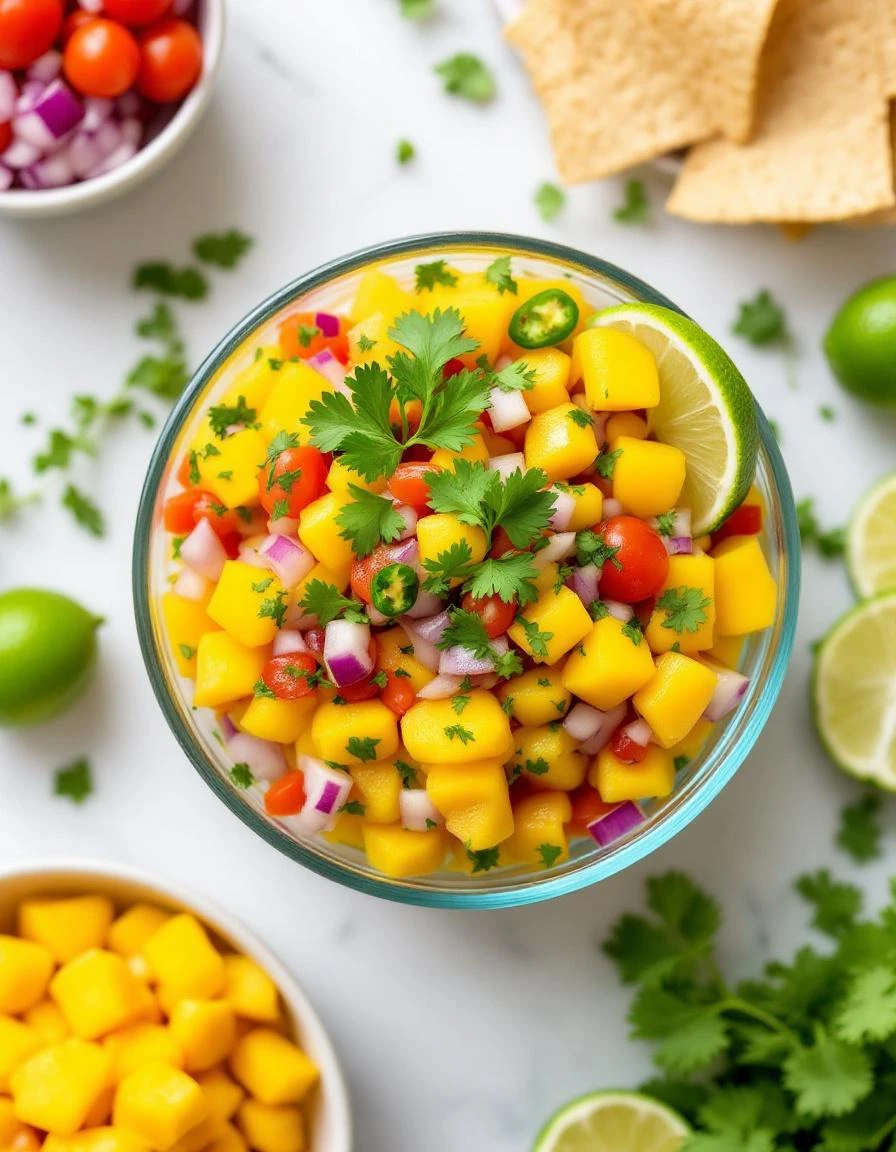
Fresh Mango Salsa
Ingredients
Equipment
Method
- Start by peeling the mangoes carefully with a sharp knife, then slice around the pit and chop the flesh into chunky, irregular pieces. You should hear a satisfying squish as you work, and the aroma of sweet mango will fill the air.
- Transfer the chopped mango into a mixing bowl. Add the finely chopped red onion, which should look crisp and bright, and toss gently to combine.
- Slice the jalapeño in half lengthwise and remove the seeds if you prefer less heat. Finely dice the jalapeño and sprinkle into the bowl, adding a fiery kick to the salsa.
- Squeeze the fresh lime juice over the mixture, unleashing a bright, tangy aroma. Stir everything together with a spoon, making sure the mango, onion, and jalapeño are evenly coated.
- Chop the cilantro finely and sprinkle it into the bowl, then add the diced bell pepper for crunch and sweetness. Mix gently to distribute all the flavors evenly.
- Season the salsa with a pinch of salt and, if desired, a tiny drizzle of honey or sugar to balance the acidity and enhance the natural sweetness. Taste and adjust the seasoning as needed.
- Let the salsa sit for about 10 minutes to allow the flavors to meld. The mango will become juicier, and the aroma will deepen, inviting you to taste.
- Give the salsa a final stir, taste once more, and adjust seasoning if necessary. Serve immediately with chips, grilled meats, or as a fresh topping.
Common mistakes and how to fix them
- FORGOT to taste the salsa before serving—adjust seasoning with more lime or salt.
- DUMPED too much lime juice—balance acidity with a pinch of sugar or honey.
- OVER-TORCHED the mango—use a gentle chopping technique to avoid squishing.
- MISSED removing seeds from jalapeño—adds unwanted bitterness; deseed for milder heat.
Make-Ahead and Storage Tips
- Chop the mango, onion, and pepper a day ahead—keeps everything fresh and juicy. Store in airtight containers in the fridge for up to 24 hours.
- Lime juice and cilantro can be pre-mixed and stored separately in the fridge for a day; flavors intensify slightly overnight, so taste and adjust before serving.
- Avoid freezing the salsa—mango and onion textures get mushy, and flavors dull. Best enjoyed fresh within 24 hours for maximum crunch and brightness.
- Refrigerated salsa may lose some of its vibrant crunch; stir well and taste for acidity before serving. Add a squeeze of lime if it needs a fresh zing.
- If you need to reheat, do so gently—serve cold or at room temperature. The crunch and freshness are part of the charm, so avoid microwave reheating.
FAQs
1. How do I pick a ripe mango?
The mango should feel slightly soft but not mushy, like pressing gently on a ripe peach—this ensures it’s sweet and juicy, ready to burst with flavor when you bite into it.
2. What should I smell and feel for in a good mango?
Look for a mango with a fragrant, fruity smell near the stem and a slight give when pressed—avoid wrinkled or overly soft ones, they might be overripe or starting to spoil.
3. How can I fix bland mango salsa?
If your salsa tastes flat, add a squeeze more lime juice or a pinch of salt—these amplify the brightness and balance the sweetness of the fruit.
4. How do I control the heat from jalapeños?
If your jalapeño is too fiery, remove the seeds and ribs before chopping—they contain most of the heat and will tame the spice level.
5. How can I make the onion less sharp?
For a cooler, milder salsa, soak the chopped onion in cold water for 10 minutes, then drain—this reduces sharpness and makes it gentler on the palate.

Hi, I’m Isabella Cury, the creator behind Elevating Simple. Food has always been my passion, but it’s not just about creating meals—it’s about taking everyday ingredients and transforming them into something extraordinary.
My journey in the culinary world has been a blend of education, dedication, and a deep love for sharing food with others. Through this blog, I aim to inspire people to find joy in simple, flavorful cooking.


