
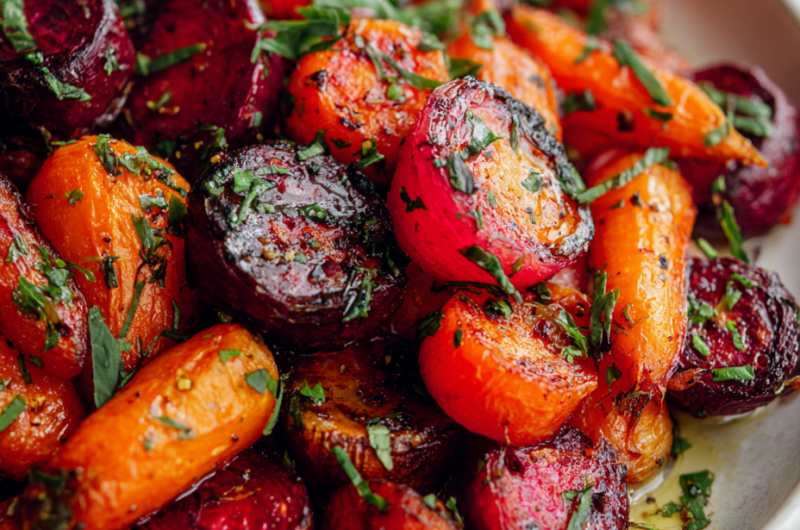
Roasting radishes and carrots might seem odd at first—these roots are usually eaten raw or boiled, right? But when you toss them in a hot oven, they transform into something entirely different: sweet, tender, and a little smoky, with caramelized edges that make even skeptics take notice.
There’s a kind of quiet magic in how heat unlocks new flavors, turning humble vegetables into star players on the plate. I love how simple ingredients become unexpectedly complex, almost like they’re revealing a secret. It’s a reminder that sometimes, the easiest methods—like roasting—bring out the best in everyday produce.
This recipe is perfect for those days when you want something straightforward but delicious, with minimal fuss. Just a handful of ingredients, a hot oven, and you’re set. It’s a little celebration of seasonal simplicity, with the kind of flavor that makes you pause and wonder why you don’t do this more often.
Focusing on how roasting transforms radishes and carrots from simple root vegetables into unexpectedly sweet, tender, and smoky bites, this recipe explores the magic of turning humble produce into a flavorful side, highlighting the beauty of seasonal simplicity with a caramelized edge.
The story behind this recipe
- I first stumbled upon roasted radishes and carrots during a winter farmers’ market visit. The vendor suggested tossing them in olive oil and roasting until caramelized. The smell of smoky, sweet vegetables filling my kitchen was a surprise—way better than I expected from humble roots.
- That day, I realized how roasting reveals hidden depths in ordinary vegetables. It’s like they shed their raw edge and bloom into something richer, more complex. Ever since, I keep coming back to this simple method when I want a side that’s easy but feels like a small celebration.
- This recipe was born from a desire to make the most of seasonal produce without fuss. Just a little patience in the oven, and those radishes turn from sharp and peppery to tender, sweet, and smoky—almost like they’re transformed into something special.
Ingredient breakdown: key components
- Radishes: I love how their peppery bite mellows and turns slightly sweet when roasted—aim for firm, unblemished radishes for the best caramelization, and if they’re too small, cut them in half for even cooking.
- Carrots: Their natural sweetness intensifies in the oven, developing a smoky edge. Use fresh, crisp carrots; if they’re large, slice them thinner so they roast evenly and don’t turn into mush.
- Olive Oil: I prefer a good extra virgin for that rich, fruity aroma. Be generous enough to coat everything well—this helps with even browning and adds a lovely sheen, but don’t drown them.
- Salt: I like coarse sea salt for a crunch and flavor punch. Salt enhances the sweetness and smokiness; sprinkle just before roasting to prevent drawing out too much moisture.
- Herbs & Spices (optional): A sprinkle of thyme or a pinch of smoked paprika can add depth. Use fresh herbs if you want a bright aroma, or smoked paprika for a deeper, smoky flavor—just a pinch.
- Vinegar or Lemon (finishing): A splash of lemon juice or a drizzle of vinegar right after roasting brightens the dish. The acidity cuts through the caramelized notes and adds a fresh contrast.
- Optional Add-ins: A handful of chopped garlic or shallots can boost flavor; toss them in with the vegetables for an aromatic, savory layer that caramelizes beautifully.
Spotlight on key ingredients
Radishes:
- I love how their peppery bite mellows and turns slightly sweet when roasted—aim for firm, unblemished radishes for the best caramelization, and if they’re too small, cut them in half for even cooking.
- Carrots: Their natural sweetness intensifies in the oven, developing a smoky edge. Use fresh, crisp carrots; if they’re large, slice them thinner so they roast evenly and don’t turn into mush.
Olive Oil & Salt:
- Olive Oil: I prefer a good extra virgin for that rich, fruity aroma. Be generous enough to coat everything well—this helps with even browning and adds a lovely sheen, but don’t drown them.
- Salt: I like coarse sea salt for a crunch and flavor punch. Salt enhances the sweetness and smokiness; sprinkle just before roasting to prevent drawing out too much moisture.
Notes for ingredient swaps
- Dairy-Free: Swap butter for olive oil or coconut oil; keep in mind it won’t add richness but still helps with browning.
- Vegan: Use olive oil instead of butter, and skip honey—maple syrup or agave can add a touch of sweetness if desired.
- Herb Variations: Fresh thyme or rosemary can be replaced with dried versions—use less, as dried herbs are more concentrated.
- Spice Boost: Smoked paprika adds smoky depth—if you don’t have it, a pinch of cumin or chipotle powder works well.
- Sweetener: A drizzle of honey or maple syrup after roasting enhances caramelization—skip if you want a more savory profile.
- Acid: Lemon juice can be swapped with apple cider vinegar for a milder tang; both brighten the dish beautifully.
- Root Variations: Turnips or parsnips can replace carrots—adjust roasting time slightly for different textures and flavors.
Equipment & Tools
- Oven: Heat source for roasting vegetables.
- Baking sheet: Holds vegetables during roasting, ensures even heat exposure.
- Mixing bowl: Toss vegetables with oil and seasonings evenly.
- Sharp knife: Trim and cut vegetables uniformly for even cooking.
- Parchment paper: Prevents sticking and makes cleanup easier.
Guide to Roasting Radishes and Carrots
- Preheat your oven to 200°C (400°F). Gather a baking sheet, a mixing bowl, and a sharp knife. Line the sheet with parchment for easy cleanup.
- Wash and dry the radishes and carrots. Trim the radishes, removing any greens if attached, and cut larger radishes in half. Slice carrots into 1/2-inch thick rounds for even roasting.
- In the mixing bowl, toss the radishes and carrots with about 3 tablespoons of olive oil. Ensure all pieces are well coated; this helps with caramelization and a crispy exterior.
- Sprinkle generously with coarse sea salt, and add optional herbs like thyme or spices such as smoked paprika if desired. Toss again to distribute evenly.
- Spread the vegetables in a single layer on the prepared baking sheet. Space them out so they roast rather than steam—give each piece room to caramelize.
- Roast in the oven for 25-30 minutes. Halfway through, shake the pan or use tongs to turn the vegetables for uniform browning. They should be golden and slightly charred at the edges.
- Check for doneness: the radishes should be tender and caramelized, and carrots soft with a smoky exterior. If they need more color, leave them a few minutes longer.
- Remove from the oven. Let rest for 3-5 minutes to allow flavors to settle. Drizzle with a splash of lemon juice or vinegar for brightness, then serve warm.
Let the vegetables rest for a few minutes. Finish with a squeeze of lemon or a dash of vinegar. Plate directly, garnished with herbs if desired, and enjoy their tender, smoky sweetness.
How to Know It’s Done
- Vegetables are golden brown with crispy edges.
- Radishes are tender when pierced with a fork.
- A fragrant, smoky aroma fills the kitchen, indicating caramelization.
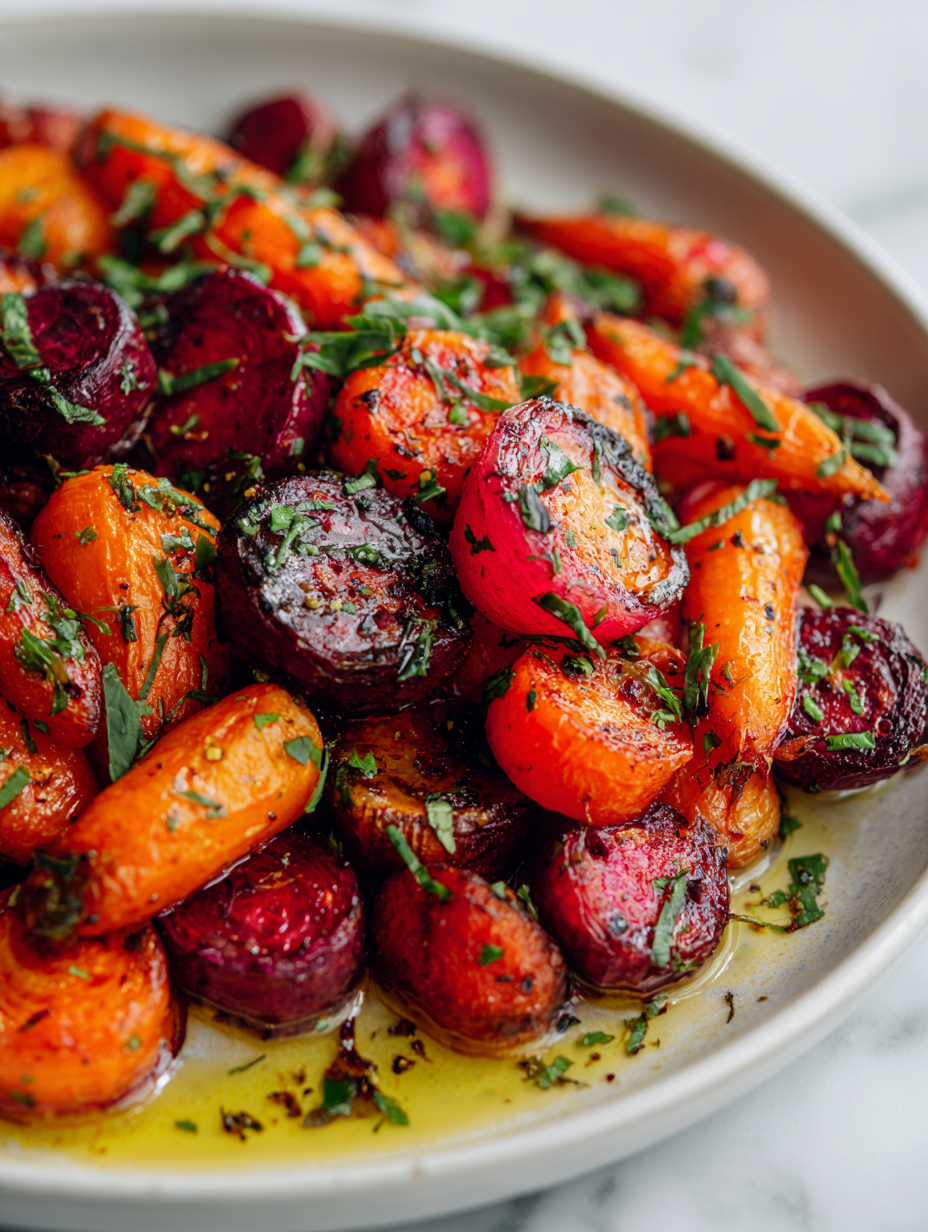
Roasted Radishes and Carrots
Ingredients
Equipment
Method
- Preheat your oven to 200°C (400°F). Line a baking sheet with parchment paper to keep cleanup easy and prevent sticking.
- Wash and dry the radishes and carrots thoroughly. Trim the radishes, removing any greens, and cut larger radishes in half. Slice the carrots into 1/2-inch thick rounds for even roasting.
- Place the radishes and carrots in a large mixing bowl. Drizzle with about 3 tablespoons of olive oil and toss until all pieces are well coated. The vegetables should glisten with oil and feel lightly slick to the touch.
- Sprinkle the vegetables with coarse sea salt and smoked paprika if using. Toss again to distribute the seasonings evenly, ensuring every piece gets a flavor boost.
- Spread the seasoned vegetables in a single layer on the prepared baking sheet. Space them out so they’re not crowded—this helps them develop crisp, caramelized edges.
- Roast in the oven for 25 to 30 minutes, shaking the pan or flipping the vegetables halfway through. You’ll notice the edges turning a deep golden brown and a fragrant smoky aroma filling your kitchen.
- Check for doneness: the radishes should be tender when pierced, and both vegetables will have crispy, caramelized edges. If needed, roast for a few more minutes until perfect.
- Remove the vegetables from the oven and transfer to a serving dish. Squeeze fresh lemon juice over the top to brighten the flavors and add a touch of acidity.
- Garnish with additional herbs if desired, or serve as is. These tender, smoky-sweet vegetables make a beautiful and flavorful side.
Pro tips for perfect roasted roots
- Use high heat to get those veggies crispy and caramelized.
- Toss vegetables with oil thoroughly to ensure even browning.
- Turn halfway through roasting for uniform color and texture.
- Watch for smoky edges—reduce heat or shorten cooking if needed.
- Use a preheated oven for consistent roasting results.
- Add acid at the end to brighten flavors and balance sweetness.
- Don’t overcrowd the pan—space out vegetables for best caramelization.
Common mistakes and how to fix them
- FORGOT to dry vegetables → They steam instead of roast if damp.
- DUMPED too much oil → Use enough to coat, but avoid drowning for crispness.
- OVER-TORCHED vegetables → Reduce oven temp or shorten cooking time to prevent burning.
- MISSED salt seasoning → Salt helps vegetables caramelize and enhances flavor, don’t skip.
Quick fixes and pantry swaps
- When vegetables look soggy → Splash with a little vinegar to revive brightness and crispness.
- If veggies burn quickly → Patch with a foil tent to shield from direct heat and slow browning.
- DUMPED too much oil → Use a paper towel to blot excess and prevent greasy results.
- When roasting stalls → Increase oven temperature slightly or give them a quick blast at a higher heat for a minute.
- If veggies are undercooked → Return to oven, spread out, and roast a few more minutes until tender and caramelized.
Prep, store, and reheat tips
- You can prep the vegetables by washing, trimming, and slicing them a day ahead. Keep in an airtight container in the fridge; they’ll stay fresh and crisp for about 24 hours, with flavors intensifying slightly overnight.
- Roasted radishes and carrots can be stored in an airtight container in the fridge for up to 3 days. They might lose some of their initial crispness but will still be tender and flavorful, with a slightly mellowed spiciness.
- Reheating is best done in the oven at 180°C (355°F) for about 10 minutes. Expect the edges to crisp up again and the aroma of smoky sweetness to revive—watch for overcooking, which can make them mushy.
- For the best sensory experience, reheat until they’re just heated through, with a hint of caramelized aroma and tender texture. Do not microwave as it can make them soggy and dull the smoky flavor.
Top questions about roasted radishes and carrots
1. How do roasted radishes taste compared to raw?
Radishes become tender and slightly sweet, with smoky edges, when roasted at high heat. The peppery bite mellows, making them more mellow and complex.
2. What flavor difference does roasting make to carrots?
Carrots develop a rich, caramelized flavor with a smoky undertone. They soften nicely, adding a sweet, earthy note to the dish.
3. How do I roast radishes and carrots perfectly?
Preheat your oven to 200°C (400°F). Toss the vegetables with oil and seasonings, spread in a single layer, and roast for 25-30 minutes until golden and tender.
4. What ingredients are best for roasting radishes and carrots?
Use fresh, firm radishes and crisp carrots. Slice larger vegetables for even cooking. A good olive oil and coarse sea salt enhance caramelization and flavor.
5. How can I prevent soggy roasted vegetables?
To avoid sogginess, dry vegetables thoroughly before tossing with oil. Roast in a single layer, turning halfway for even caramelization.
6. Can I swap ingredients in this recipe?
Yes, you can substitute olive oil with avocado or sesame oil for different flavors. Use dried herbs if fresh aren’t available, but reduce quantity.
7. How do I finish or dress roasted vegetables?
Add a splash of lemon juice or vinegar after roasting to brighten the flavors. Fresh herbs like thyme or parsley also lift the dish.
8. How should I store and reheat leftovers?
Roasted vegetables can be stored in an airtight container in the fridge for up to 3 days. Reheat in the oven at 180°C (355°F) for about 10 minutes.
9. What if my vegetables burn or are undercooked?
If vegetables look burnt, reduce oven temperature or roast for a shorter time. If undercooked, give them a few more minutes until tender and caramelized.
10. What are some quick tips for perfect roasting?
Use high heat and leave space between pieces for even browning. Toss vegetables halfway through roasting for uniform caramelization.
This dish is a reminder that even the simplest vegetables can surprise you when roasted properly. The smoky aroma and tender texture make it a go-to side, especially when you want something quick and satisfying.
In a season that often feels rushed, taking the time to roast these humble roots feels like a small act of mindful cooking. No fuss, just great flavor that speaks for itself, season after season.

Hi, I’m Isabella Cury, the creator behind Elevating Simple. Food has always been my passion, but it’s not just about creating meals—it’s about taking everyday ingredients and transforming them into something extraordinary.
My journey in the culinary world has been a blend of education, dedication, and a deep love for sharing food with others. Through this blog, I aim to inspire people to find joy in simple, flavorful cooking.